



You’ve probably heard that the current banking system is slow, expensive, and seems like it’s from the last century. Well, someone got tired of waiting and decided to do something about it. That’s where XRP comes in.
To understand it quickly: XRP is a cryptocurrency designed to make sending money to the other side of the world as easy, fast, and cheap as sending a WhatsApp message. Forget waiting three days for an international transfer to «arrive» or losing a fortune in fees that no one explains to you.
Unlike Bitcoin, which was born to be «digital gold» and live outside the system, XRP was born with a «practical hero» mission: to get into the pipes of the financial world to fix them from within. It doesn’t want the system to collapse, it wants it to finally work for you.
It is one of the most consolidated assets in the market because it doesn’t sell smoke, it solves a problem that you and I have every time we want to move our money.
What is the difference between XRP and Ripple?
Although they are often used interchangeably, Ripple and XRP are not the same. Ripple is the company behind the technology and development of the network known as RippleNet, a system that allows banks and financial entities to process international payments more efficiently. XRP, on the other hand, is the native digital token of this network, which acts as a bridge currency to facilitate these transactions.
Really, although Ripple created XRP, the token does not belong to them. XRP is independent. This means that if the company Ripple disappeared tomorrow, XRP would still exist and function on its own decentralized network. This is where many get confused, but it’s simple:
- Ripple is the company(the creators). They are the ones in the offices negotiating so that the financial system stops being a dinosaur.
- XRP is the digital asset (the token). It is the real tool, the technology that travels through the wires so that your value gets where it needs to be without asking permission from anyone.
What is XRP for
Sending money abroad shouldn’t be a torment, this is why XRP was born to retire the current banking system, slow, expensive, and full of intermediaries that add nothing.
So, XRP is the technology that turns international transfers into something instant and ridiculously cheap. Look at the difference between following the old rules or taking control:
|
Characteristic |
Bank |
XRP |
| Speed | 2 to 5 business days (if you’re lucky). | 3 to 5 seconds. Faster than a blink. |
| Cost | Hidden fees and abusive exchange rates. | Almost zero. You pay cents, not fortunes. |
| Intermediaries | A network of banks that pass your money like a hot potato. | None. It’s a direct connection between origin and destination. |
| Availability | Only during banking hours. | 24/7/365. Your money doesn’t take vacations. |
How XRP and its technology work
XRP doesn’t play by the same rules as the rest. While Bitcoin or Ethereum depend on «mining», XRP uses its own infrastructure called XRP Ledger. In this system, there are no miners who need to be rewarded with high fees; instead, there is a group of validators that agree instantly through a consensus protocol.
What this means for you is very simple: pure efficiency. By eliminating the figure of the miner, the system becomes radically lighter and more sustainable. You don’t need to wait for a «block to be confirmed» like on other networks, here, the digital notaries validate your movement in the time it takes you to take a sip of your coffee.

Thanks to this technical approach, XRP achieves what traditional banking and many other cryptos only dream of: settling any operation within an interval of 3 to 5 seconds. It doesn’t matter if you’re sending value to your neighbor or to someone on the other side of the planet, the speed is the same.
The XRP Ledger
The XRP Ledger is the heart where all the magic happens. Imagine it as a large digital, public, and decentralized ledger, where all XRP movements are recorded. Unlike Bitcoin, here there are no miners wasting energy; instead, the system uses a consensus protocol among independent validators. This not only makes it infinitely faster, but also one of the most sustainable and ecological networks in the ecosystem.
Recently, Artificial Intelligence has been integrated directly into the Ledger’s development to protect its security. Through machine learning tools and AI-simulated attacks, the system is capable of detecting and correcting vulnerabilities before they exist.
We’re taking a more proactive, AI-driven approach to strengthening XRPL security.
That includes AI-assisted testing across the development lifecycle, a dedicated red team, and higher standards for how changes are evaluated before they go live.
As XRPL scales to support global…
— J. Ayo Akinyele (@ja_akinyele) March 26, 2026
Behind this maintenance is the XRPL Foundation, an independent entity that ensures the network remains for everyone and for all. Its mission is simple: to guarantee that the infrastructure is robust, efficient, and continues to evolve without depending on a single company, keeping alive the spirit of true decentralization.
Why do developers choose XRP Ledger?
| Benefit |
What it really means |
| Decentralized | It’s open source and community-owned. No one can «turn off» your project or ask you for permission to innovate. |
| Optimized | Ready-to-use tools. Less time fighting with code and more time launching your idea to the market. |
| High Performance | True scalability. Thousands of operations settled in seconds. |
| Minimum Cost | Transactions for fractions of a cent. Opens the door to micro-payments that are impossible elsewhere due to fees. |
| Real Reliability | +10 years running without errors. While others «go down», the Ledger keeps processing without interruptions. |
| Living Community | An ecosystem of rebels and experts improving the network every day. You are not alone in this. |
RippleNet
RippleNet is the global payment network that connects banks and large financial institutions so they stop using slow and obsolete systems. Unlike the Ledger, this is a platform designed specifically for the institutional sector, where more than 300 entities already operate to move capital without the frictions of traditional banking.
What makes this system truly valuable is its ability to use XRP as a bridge currency, allowing value to travel from one country to another in seconds and eliminating the need for banks to keep funds locked in foreign accounts waiting for a transfer to settle.
However, let’s be clear: RippleNet is not a digital democracy like Bitcoin. Here, not just anyone can run a node to validate transactions; it is a network where only authorized companies and banks participate. This generates a constant debate about its centralization, as it breaks with the idea that «no one should have control».
History and origin of XRP
The development of XRP began in 2011, when David Schwartz, Jed McCaleb, and Arthur Britto sought to create an alternative to Bitcoin that did not depend on intensive mining. The XRP Ledger was officially launched on June 2, 2012, with a total supply of 100 billion pre-mined tokens. Shortly after, in September of that year, the company OpenCoin was founded (led by McCaleb and Chris Larsen), which received 80 billion tokens to develop the ecosystem.
To clarify its commercial mission, the company OpenCoin was renamed Ripple Labs in 2013 and, finally, Ripple in 2015. This change allowed the corporate entity to be differentiated from the underlying technology (the ledger) and the digital asset (XRP).

A critical turning point occurred in December 2020, when the U.S. SEC sued Ripple, alleging that the sale of XRP constituted an unregistered securities offering. After years of uncertainty that limited its adoption in the United States, the partial resolution in 2024 marked a historic milestone for its price and legitimacy in the global market.
Having overcome the greatest legal scrutiny in the history of cryptocurrencies, XRP has transformed its technical foundations from 2012 into a robust infrastructure that today seeks to redefine modern cross-border payments.
Timeline: The resistance of a giant
For Bitnovo, it’s not just about dates, but about how XRP has resisted the blows of the system to emerge stronger.
|
Date |
Event |
The real impact |
| 2012 | XRPL is born and Ripple is founded. | Slow mining is over. The foundation of instant payments is born. |
| 2017 | 55 billion XRP are locked in escrow. | No more surprises. Total predictability of how much XRP is out there. |
| Dec 2020 | The SEC sues Ripple. | The system tries to stop XRP. Legal uncertainty in the US. |
| Jul 2023 | Historic ruling: XRP is not a security. | A victory for everyone: it is clarified that buying XRP on exchanges is legal. |
| Dec 2024 | Ripple launches RLUSD (Stablecoin). | Ripple enters the stablecoin war to dominate 1:1 payments. |
| 2025 | Case Closed: SEC and Ripple withdraw appeals. | End of the legal drama. XRP finally has a completely free path to grow. |
| Aug 2025 | Purchase of Rail for $200 million USD. | Less theory and more practice: total boost to stablecoin payments. |
How much is XRP worth today?
The price of XRP is not a static figure, as with other digital assets, it varies constantly 24 hours a day based on supply and demand in the global market. To know the exact value right now, you can check the price of XRP in euros in real time.
Now, the movement of its price depends on multiple factors, including:
- Market sentiment:News about institutional adoption or technological developments.
- Legal context: Judicial resolutions and international regulations.
- Liquidity: The trading volume on major exchanges.
How to buy XRP
Acquiring XRP is a direct process that begins by choosing a trusted platform, completing a quick identity verification, and selecting your preferred payment method, whether by card, SEPA transfer, or even cash at physical points.
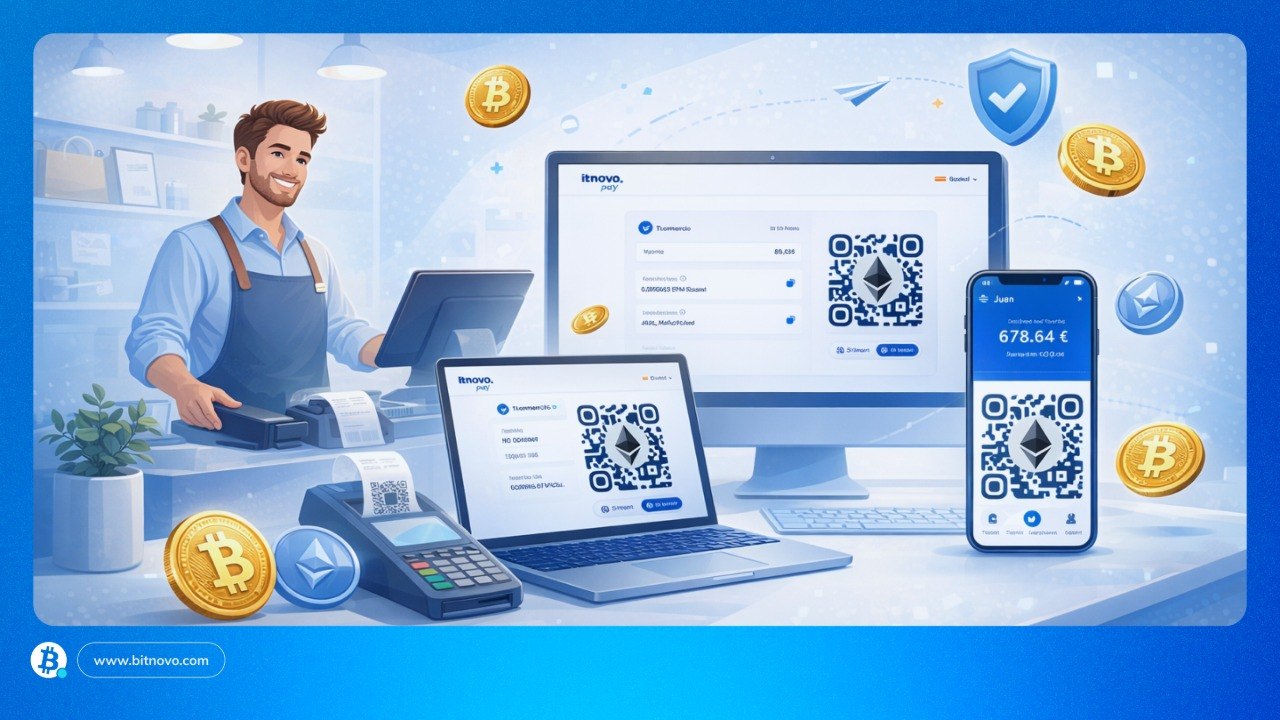
In fact, Bitnovo positions itself as the ideal option for this process, offering an intuitive experience to buy XRP quickly and securely. Once the transaction is completed, remember that the key to protecting your investment is to transfer your funds to a secure wallet where you maintain total control of your private keys.
|
Step |
Action |
Description |
| 1. Platform | Access Bitnovo | Select XRP among the more than 20 cryptocurrencies available. |
| 2. Amount | Define the amount | Enter the amount in euros you wish to invest. |
| 3. Registration | Verification | Enter your email and phone number to validate the transaction. |
| 4. Payment | Choose method | Pay by card, transfer, or vouchers from physical stores. |
| 5. Delivery | Wallet Address | Enter your destination address to receive your XRP securely. |
Frequently asked questions about XRP
|
Question |
Answer |
| Is XRP decentralized? | Yes, its network is based on independent consensus without central control. |
| Does XRP have staking? | No, being pre-mined, it does not support the traditional staking process. |
| Is it safe to use XRP? | Yes, it is a proven technology since 2012 with high security standards. |
As Chris Larsen, co-founder of the company, rightly pointed out: «XRP is the most efficient digital asset for global payment settlement,» a vision that today materializes in an increasingly solid and reliable financial infrastructure.