



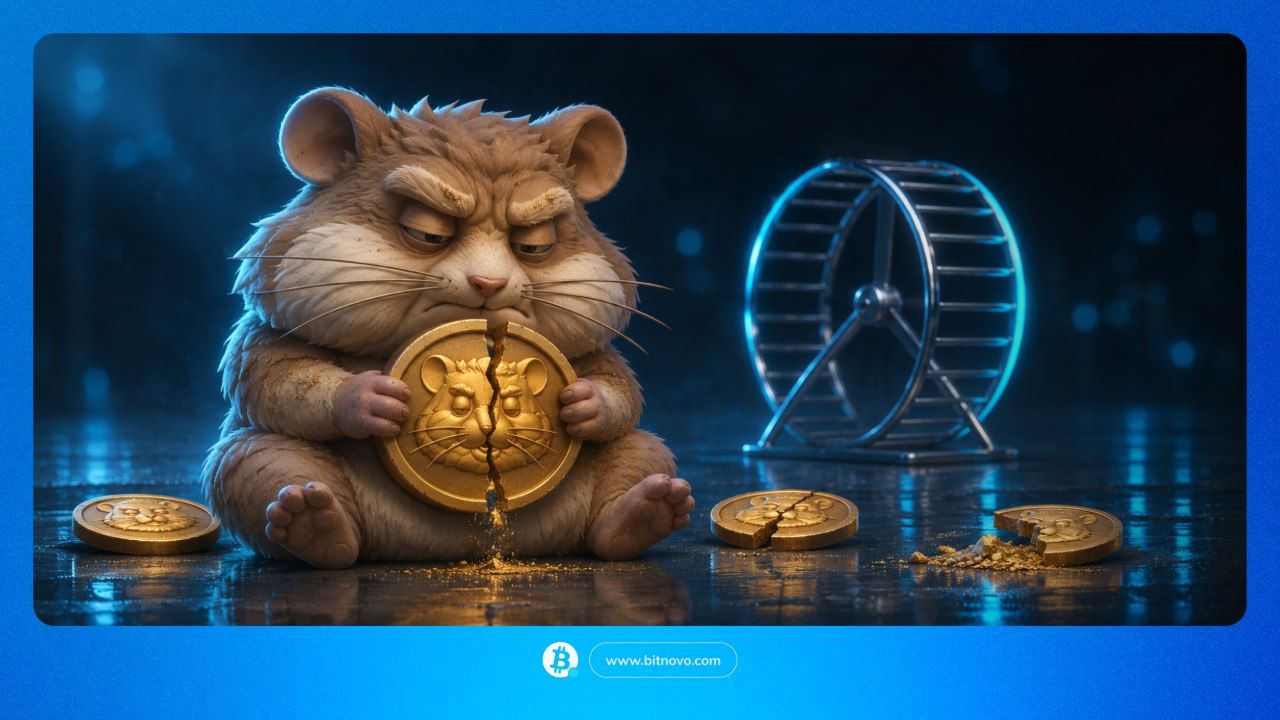
In 2024, millions of people spent the day tapping the screen of a hamster on Telegram with the promise of receiving tokens. The general expectation was to transform months of repetitive clicks into significant financial gains. However, when the day of the massive distribution arrived, market reality imposed itself harshly and deflated the illusions of an entire community.

Below is a detailed breakdown of the mechanics of tap-to-earn games, the trajectory of the HMSTR token, the ecosystem’s alternatives on Telegram, and the key risks of this model.
How Tap-to-Earn Games Worked
Tap-to-Earn games emerged as an accessible subcategory within the GameFi sector and the Play-to-Earn model. Their main proposition was to allow users to generate rewards through extremely simple and repetitive actions, eliminating the usual technical barriers of the crypto ecosystem.
Mini Apps Within Telegram and the Official Architecture
Much of the boom of this phenomenon was due to its direct integration as mini apps within Telegram.
According to the platform’s official documentation, these applications leverage the infrastructure of Telegram Mini Apps (TMA) , which allows interactive web interfaces to run directly within the messaging application. This eliminates the need for additional downloads or heavy installations, facilitating immediate access for hundreds of millions of users worldwide.

Main Mechanics: Clicks, Missions, and Invitations
The daily operation of these titles was structured around several interaction pillars:
- Points for tapping: The central action consisted of repeatedly clicking on an object, coin, or pet on the screen to accumulate virtual balance. This activity was limited by an energy bar that required recharge time.
- Boosters and upgrades: Players invested accumulated coins in optimizations to increase the yield per tap, speed up energy recharge, or automate processes.
- Missions and daily tasks: The titles incorporated periodic challenges, content viewing, or social media interaction to maintain community interest.
- Referral and invitation programs: Virality was actively incentivized through automatic bonuses when a user invited new participants to join via a personalized link.
Relationship with the TON Blockchain
The technological infrastructure behind these projects was closely linked to the TON (Open Network) , originally devised by Telegram.

The integration with TON provided the capacity to process transactions at a large scale with high speed and low fees, indispensable elements for managing millions of simultaneous token allocations. In this way, the points accumulated through digital interaction could become real assets within the network, consolidating a direct bridge between massive gamification and decentralized technology.
The Hamster Kombat Case
The ecosystem of games based on messaging platforms experienced a turning point with tap-to-earn proposals. Among them, Hamster Kombat grabbed massive headlines after its irruption into the digital sector by experiencing unprecedented viral growth.
The project became popular thanks to accessible gameplay: users assumed the role of CEO of a virtual exchange, accumulating digital coins by tapping the screen, completing daily missions, and solving challenges. The distribution within Telegram’s own chat drove an exponential adoption that exceeded 300 million users at its peak, leveraging the TON network infrastructure to process transactions.

Growth and the Massive Distribution Event
According to specialized media, the official launch of the token and its asset generation event took place on September 26, 2024. This event mobilized an initial community of approximately 131 million players eligible for its first massive token distribution (airdrop).
The structure of this distribution was designed under the following key parameters:
- Total supply: A cap of 100 billion HMSTR tokens was set.
- Allocation scheme: 60% of the total was delivered immediately after the close of the game’s first season, while the remaining 40% was subject to a gradual release schedule over 10 months.
- Eligibility criteria: It required active participation during Season 1, linking to a digital wallet compatible with the TON network, and compliance with fair play rules.
What Happened to the Token’s Price
That initial furor contrasts directly with the subsequent behavior of the native digital asset in the secondary market.
According to CoinGecko data, the HMSTR token trades at approximately $0,000136, which represents a drop of over 98% compared to its all-time high recorded on September 27, 2024, when it reached $0.006491.
Other Telegram Games with Their Own Token
The messaging application ecosystem has given rise to multiple proposals that replicate mechanics similar to those of Hamster Kombat. While many of these alternatives allow quick interaction without technical friction, they also carry a series of operational and security risks that are essential to keep in mind.
Below is a summary of the common patterns, the main risks, and the safe-use recommendations associated with these projects:
|
Category |
Key aspects |
| Common patterns | • Use of a proprietary token integrated into the bot. • Direct execution as a mini app without heavy downloads. • Internal systems for progression and point accumulation. • Initial access without requiring complex personal data. |
| Main risks | • Uncertainty in the reward: The time invested does not guarantee a real economic benefit. • Scams and impersonation: Presence of fake bots designed to steal information. • Extreme volatility: Tokens can suddenly lose their value or liquidity. • Data exposure: Improper request for sensitive information. |
| Security recommendations | • Strictly verify the origin and official status of the bots. • Protect privacy by avoiding sharing keys or personal data. • Distrust models that demand prior payments for supposed token releases. |
In reality, exploring interactive messaging applications requires rigorously evaluating the origin of each proposal and maintaining realistic expectations about its economic viability. Understanding the nature of these digital assets allows participating in the digital ecosystem with judgment and prudence.

FAQ
- What is Hamster Kombat? A tap-to-earn game on Telegram where players simulate being the CEO of a crypto exchange by accumulating points by tapping the screen.
- Why did the price of HMSTR fall so much? Due to massive sales after the airdrop, excess initial supply, and little utility within the game.
- What is a tap-to-earn game on Telegram? A mini app where virtual rewards are accumulated by performing simple actions such as tapping the screen.
- What relationship do these games have with the TON blockchain? They use the TON network to process fast transactions and convert game points into real tokens.