




Has Bitcoin’s clock entered its final hour? On Monday, March 16, 2026, the network reached a historic milestone by mining the 20,000,000th unit at block height 939,999, putting 95% of its total supply into circulation.
This event marks the beginning of the “final stretch” in the issuance of the world’s most important cryptocurrency. However, this is an extreme endurance race: due to the difficulty adjustment algorithms and future halvings, that last million coins will take over a century to complete, stretching digital scarcity until the year 2140.
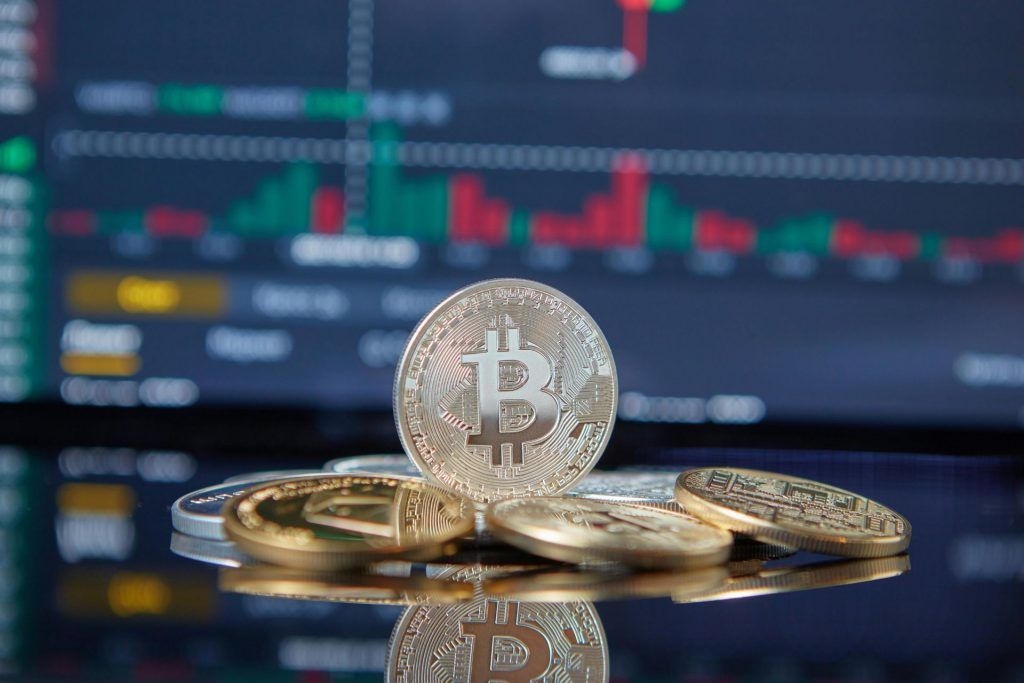
A number that matters: 95% of all Bitcoin already exists
To understand why block 939,999 is a historic milestone, one must first understand Bitcoin “Constitution.” Unlike traditional currencies (such as the peso or the dollar), which central banks can print indefinitely, Bitcoin was born with an immovable cap: there will never be more than 21 million coins.
With the arrival of unit number 20,000,000, we have crossed a fundamental psychological and economic boundary. Today, 95% of all the Bitcoin that will ever exist has already been issued.
In the world of traditional finance, scarcity is a promise that can be broken. In Bitcoin, scarcity is a mathematical certainty programmed into its source code since 2009.
|
Key concept |
Scenario description |
Market impact |
| Decreasing issuance | As the protocol approaches its limit, the creation of new units demands greater computing power and energy. | The production cost per coin increases, which historically has served as a floor for its price. |
| The last million | The remaining 5% (1,000,000 BTC) will not be issued immediately, but over the next 114 years. | Guarantees extreme longevity for the network; the last coin will be mined only in the year 2140. |
| Value by contrast | While traditional (fiat) money can be printed without limits, Bitcoin has an absolute mathematical supply. | Reinforces the “Digital Gold” narrative: an asset with real, predictable, and verifiable scarcity by anyone. |
| End of the massive era | Having reached 95% of the total supply means the initial distribution phase has concluded. | The competition changes: it is no longer about who “produces” more Bitcoin, but about who manages to accumulate what little remains. |
How does Bitcoin mining work?
If the word “mining” conjures images of hard hats with headlamps, pickaxes striking stone, and deep tunnels searching for veins of gold, you are not far from reality. Although in the Bitcoin ecosystem the tunnels are made of fiber optics and the pickaxes are powerful microprocessors, the essence is the same: a massive effort to extract a scarce and valuable resource.
Here there is no need to dig into the earth or get your hands dirty, but it does require brute computational force that works tirelessly to “unearth” each new coin from the network. It is, in every sense, the digital evolution of the gold rush.
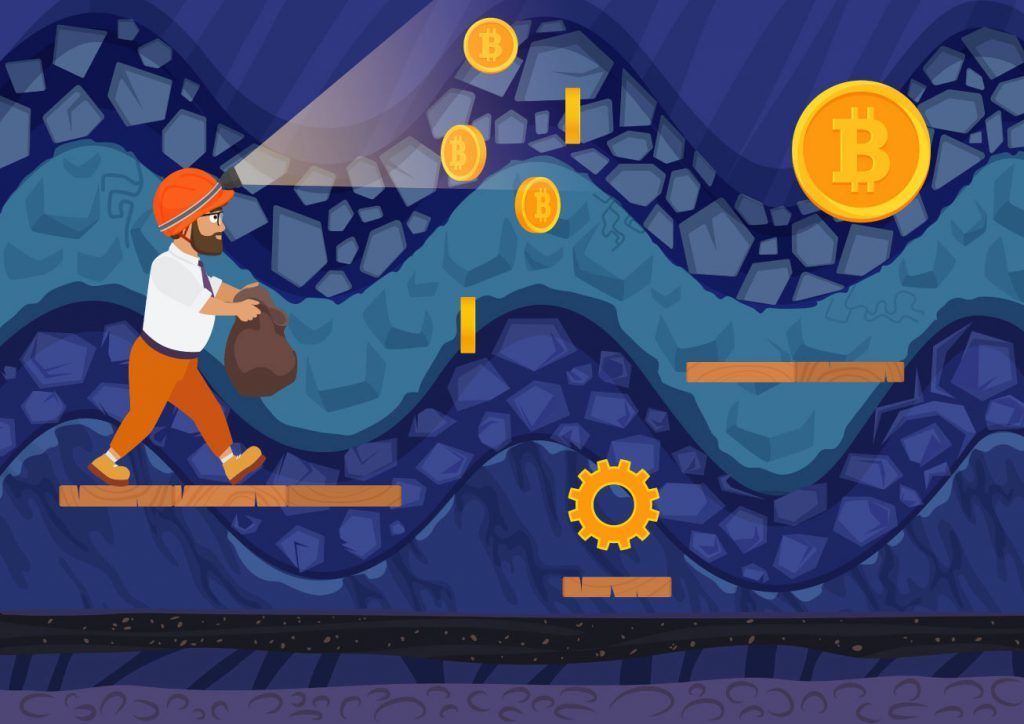
What is Bitcoin mining?
Now, Bitcoin mining is a process that validates Bitcoin transactions and puts new BTC into circulation. It helps to incentivize miners to propose and verify new transactions on the Bitcoin blockchain. It also helps to protect the Bitcoin blockchain from attacks and to manage the creation and flow of new units of the Bitcoin cryptocurrency entering the market for the first time.
Each miner’s goal is to win a competition based on cryptography. The winner of each round receives the coveted block reward in exchange for their efforts. They are also granted the right to propose a new block of pending transaction data that will be added to the blockchain.
In short, Bitcoin mining is the heart that keeps the network alive. Although the term sounds technical, its purpose is clear and essential: to protect the network, process transactions, and ensure that everything runs smoothly.
What is a halving, and when is the next one?
For its part, the halving is the clockwork mechanism that regulates Bitcoin’s economy. Every four years, or more precisely every 210,000 blocks mined, the reward that miners receive for validating transactions is cut exactly in half. This process is neither optional nor dependent on a political decision; it is a rule engraved in the code to slow the issuance of new coins and ensure that the supply grows increasingly slowly, thereby reinforcing its programmed scarcity.
In practical terms, this event transforms the network’s creation rhythm. Currently, Bitcoin issues 3.125 BTC per block processed, but it is estimated that by late March 2028, that figure will fall to 1.5625 BTC. By periodically cutting the incoming supply, the halving ensures that Bitcoin behaves in the opposite way to traditional currencies: while common money often loses value due to excessive issuance, Bitcoin uses these halvings to protect its long-term deflationary design.
Halving timeline: The path to 21 million
|
Era |
Date | Block | Reward |
Supply status |
| Genesis | 2009 – 2012 | 0 | 50 BTC | Initial distribution begins. |
| 1st halving | 2012 – 2016 | 210,000 | 25 BTC | 50% of total reached. |
| 2nd halving | 2016 – 2020 | 420,000 | 12.5 BTC | Supply exceeds 75%. |
| 3rd halving | 2020 – 2024 | 630,000 | 6.25 BTC | Digital scarcity becomes evident. |
| 4th halving | 2024 – 2028 | 840,000 | 3.125 BTC | Current milestone: 20,000,000 surpassed. |
| 5th halving | ~ March 2028 | 1,050,000 | 1.5625 BTC | Less than 5% remains to be mined. |
| … | … | … | … | … |
| Final | ~ Year 2140 | 6,930,000 | 0 BTC | 21,000,000 limit reached. |
When will the last Bitcoin be mined?
Bitcoin’s timer has an end date engraved in its code: the year 2140. After that, following over a century of progressive reductions through halvings, the protocol will cease issuing new units permanently.

It is then that the supply will become perfectly inelastic; an unprecedented economic milestone where no demand pressure, however strong, will be able to force the creation of Bitcoin number 21,000,001. This absolute predictability is precisely what cements its long-term value proposition.
However, the end of issuance will not mean the end of the network. In this scenario of total scarcity, the incentive for miners will shift completely: they will cease to be “creators” of currency to become the guardians of the infrastructure. From 2140 onwards, the security and processing of transactions will depend exclusively on fees paid by users, consolidating a self-sustaining ecosystem where value resides in the utility and security of the network rather than in the generation of new assets.
Programmed scarcity, a milestone that directly impacts the price
Having surpassed 20,000,000 BTC in circulation is not just a number; it is the confirmation that “Satoshi clock” works with unwavering mathematical precision. By reaching 95% of the total supply, Bitcoin reinforces its nature as the first asset in history with programmable and verifiable scarcity. Unlike fiat currencies, subject to the inflationary pressures of central banks, Bitcoin is governed by a maximum cap of 21 million that no one can manipulate.

This design, based on constant mining and halving events that reduce issuance every four years, points us toward a unique scenario in the year 2140. When the last coin is extracted, the network will undergo a critical transition: miners will stop receiving block rewards to depend exclusively on transaction fees. Although it may seem like a distant future, the 2030s will already mark a turning point where issuance will be so low that the system’s security will have to be sustained by its own utility and volume of use.
Beyond speculation, Bitcoin’s value lies in this certainty. In a world of infinite money supply, an asset with a limited supply facing demand that can grow becomes, by economic logic, a store of value. Bitcoin’s success beyond the 21st century will depend on its capacity for adaptation and the trust of a community that, for the first time, has decided to bet on a system that no entity controls.
As William Gibson aptly noted: “The future is already here — it’s just not very evenly distributed.” And today, that future has a codename: scarcity and financial freedom.