




It may surprise you to know that Solana (SOL) didn’t always have it easy. In its early years, this blockchain was famous in the news for suffering constant technical interruptions that left the network frozen. It seemed like a problematic project, but the plot twist it has taken in a short time is worthy of a movie.
Today, Solana has left that stage behind to establish itself as one of the most vibrant, fastest, and most active networks in the entire ecosystem. The secret to this impressive evolution? Its magnet for attracting technical talent.
Behind this rebirth, there is no magic. According to data from the Electric Capital report, the Solana ecosystem has registered spectacular year-over-year growth of 29.1% in full-time developers. In fact, the network closed the year 2025 with 17,708 active developers, a brutal figure that makes it compete with the historical giant: Ethereum.
What Makes Solana Technically Different
If you are wondering how Solana has managed to become the favorite destination for developers to create the next generation of crypto applications, the answer is simple. It’s not about magic, but about a revolutionary technical architecture specifically designed to eliminate the slowness and high fees of traditional blockchains.
|
Key Feature |
How does it work technically? |
Its great advantage for the user |
| The Time Engine (Proof of History) | Works like an internal clock that adds an exact timestamp to each event. Thus, validators don’t have to discuss among themselves to order transactions. | Allows processing thousands of transactions per second (TPS) almost instantly and without delays. |
| Efficient Security (Proof of Stake) | The traditional staking system chooses those responsible for protecting the network based on the SOL tokens they back. | Combined with the internal clock, it secures the network in an ecological and ultra-efficient way. |
| Parallel Highways (Parallel Execution) | Its architecture allows processing multiple transactions and smart contracts simultaneously, instead of one by one. | Avoids network congestion: Your transaction gets through quickly even during peak usage times. |
| Real micropayments (Low cost) | Thanks to all this efficiency, network fees are reduced to a minimum (an average of 0.000005 SOL). | Fees are fractions of a cent, making it viable to create games, Apps, and NFTs for mass use. |

What Is Being Built on Solana
|
Sector |
What is being built on the network |
| Finance (DeFi) | One of the most active ecosystems of decentralized exchanges, liquidity protocols, and lending markets operating daily. |
| NFT Markets | One of the networks with the highest activity in the crypto ecosystem by transaction volume of digital collectibles. |
| Payments and Web3 | Stablecoin gateways for instant massive settlements due to its speed and low cost. |
| On-Chain Games | Video games and metaverses with NFT-based economies that run smoothly without congesting the network. |
| Social Networks and DePIN | Social applications and decentralized physical infrastructure that need to process thousands of economically viable microtransactions. |
The Growth of the Developer Community
If a blockchain doesn’t have developers creating applications, it’s like a shopping mall without stores. Fortunately for Solana, the activity here keeps growing.
In fact, Solana registers a year-over-year growth in active builders that is much higher than most blockchains in the sector. But what is the reason for this success?
- Support from tech giants:A clear example of the solidity of its infrastructure is the strategic alliance with Google Cloud, which ensures top-level technical support for all teams that decide to launch their projects here.
- Goodbye to headaches:The programming tools, technical documentation, and community support have matured a lot. Today, creating an application on Solana is easier and more accessible than ever, minimizing entry barriers for new creators.
Thanks to this ecosystem, Solana developer market share keeps rising quarter after quarter.
Real Use Cases That Demonstrate Its Adoption
|
Use Case |
How is it applied in the real world? |
| Asset Tokenization (RWA) | Digitization of real estate, bonds, and physical assets with total transparency and liquidity. |
| Daily micropayments | Instant sends of fractions of a cent for tips and subscriptions without high fees. |
| Mass consumption Apps | Large-scale platforms and social networks that support millions of users without collapsing. |
| Native Web3 Experience | Smooth integration offering the user navigation as fast and easy as a traditional App. |
| Real, non-speculative volume | Sustained growth in useful and everyday transactions, reflecting organic adoption. |
Future prospects and predictions for Solana
The constant increase in builders on the network not only has a technical impact but also directly influences market expectations. When analyzing mid- and long-term predictions for Solana, experts look not only at speculation but at the fundamental value this blockchain offers.
Compared to other assets, predictions for Solana remain strongly tied to its ability to keep the network stable and continue attracting DePIN projects (decentralized physical infrastructure networks) and NFT markets. Many analysts agree that if developer adoption continues at this growth rate, Solana will consolidate itself as the leading infrastructure for mass-consumption applications, positively influencing the sustainability of its economic ecosystem in the coming years.
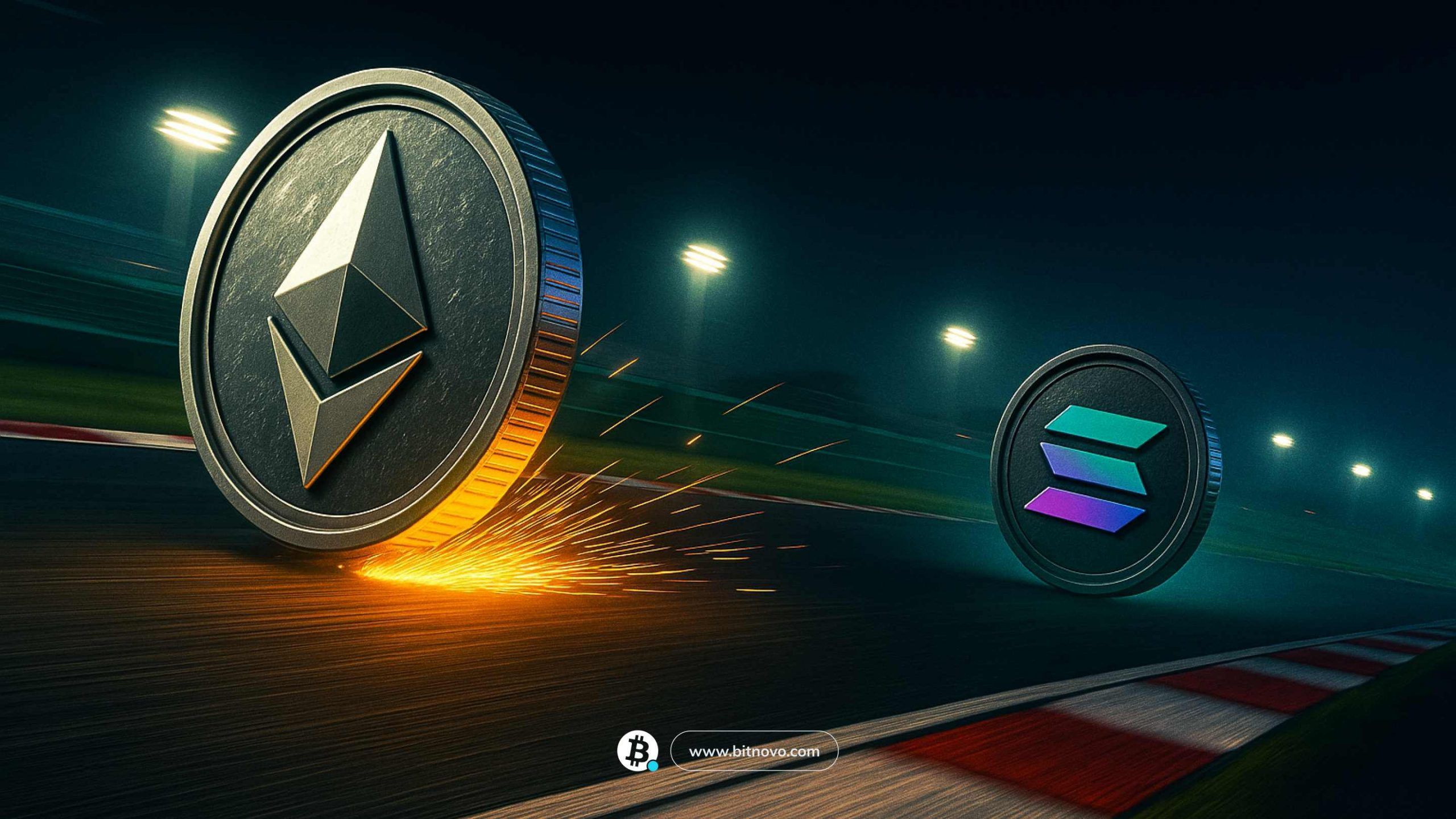
Solana vs. Ethereum: Two Distinct Philosophies
|
Characteristic |
Ethereum |
Solana |
| Design priority | Maximum decentralization and security. It protects the network in an extreme way and resists censorship, sacrificing native speed. | Performance and dizzying speed. It seeks to process the largest number of transactions at the lowest possible cost. |
| Speed and Costs | Slower transactions and variable fees that can spike strongly during high demand times. | Almost instant transactions and stable fees of just fractions of a cent. |
| Infrastructure | Lower hardware requirements for validators, facilitating a highly distributed network globally. | Higher technical complexity and high-end hardware requirements to sustain its power. |
| Role in the ecosystem | Works ideally as an ultra-secure settlement layer for large volumes of value. | Works perfectly as a fast execution layer for mass consumption applications and daily use. |
We must keep in mind that there is no absolute winner, but two proposals for different use cases, and many projects operate on both networks today. Solana has gone from being a technical promise to being real infrastructure with active users. If you want to explore this ecosystem, you can easily start at Bitnovo.