


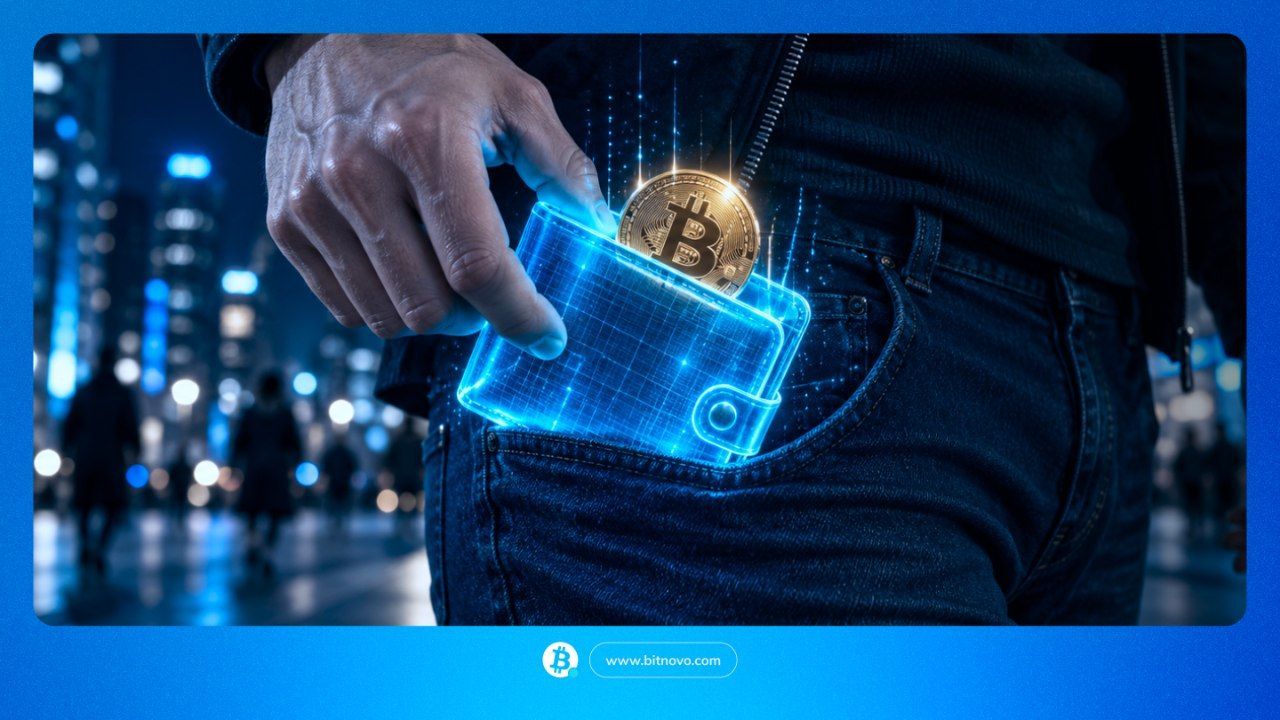
If you have ever bought or transferred cryptocurrencies from your mobile phone or browser, you have most likely already interacted with a hot wallet. In fact, most people who use digital assets operate through one without ever having heard this term.
Unlike physical or offline alternatives, a hot wallet is a cryptocurrency wallet permanently connected to the Internet. This continuous connection is precisely what allows sending, receiving and managing funds almost instantly, making it the ideal tool for daily interaction with the crypto ecosystem.
What a hot wallet is
A hot wallet is a software application designed to store, manage and transfer cryptocurrencies. Unlike hardware alternatives, these wallets are installed directly on everyday devices, such as phones or computers, and are characterized by being permanently connected to the Internet.
For this reason, they act as an essential gateway to interact with today’s crypto market. In addition, by having a unique address on the blockchain, they allow the holder to have clear custody and absolute control over their assets, differing from trading accounts on centralized platforms.
Advantages of a hot wallet
Software wallets have consolidated as the most popular option in today’s market thanks to the combination of practicality and accessibility they offer. Below, their main benefits are highlighted:
- Permanent connection: Being always online, the wallet monitors prices in real time and allows moving funds instantly without requiring additional steps.
- Ease of use: Although the crypto environment can be complex for beginners, these applications stand out for their clear interfaces.
- Multi-device compatibility: It allows synchronizing data between mobile applications (iOS and Android), desktop versions (Windows or Mac) and extensions for browsers such as Chrome, facilitating access from anywhere.

However, precisely because they are connected uninterruptedly to the Internet, these wallets represent an attractive target for cybercriminals. Therefore, although the technology offers comfortable and fast access to assets, it is vital to accompany its use with good security practices to protect capital on a daily basis.
How it works
The main function of a hot wallet is to act as an interface connected to the network infrastructure to manage your keys through asymmetric cryptography principles:
- Address or public key: It works equivalently to a bank account number or IBAN. It identifies your wallet on the network and allows receiving funds or payments without revealing your identity. To facilitate its use and avoid errors when copying long alphanumeric strings, most wallets generate and scan QR codes.
• Private keys and access methods: They correspond to your secret digital signature or security PIN. They serve to authorize operations, unlock functions and prove that you are the legitimate owner of the assets associated with that address.
Consequently, every time you make a transfer or a purchase, the hot wallet uses the private key stored on the device to sign the transaction and transmit it to the network in a matter of seconds.
Types of hot wallet
Although all hot wallets share the essential characteristic of operating connected to the network, not all are used in the same way nor do they offer the same levels of convenience.
In today’s ecosystem, most of these wallets are free, except for very specific paid exceptions, and are mainly divided into three categories according to the device or interface where they run:

- Desktop wallets
They are applications that are downloaded and installed directly on a desktop or laptop computer. Once the program is running, the user can access their funds as long as the equipment has an Internet connection. Because a computer environment allows implementing additional layers of security and stricter software control, they usually offer a level of protection slightly higher than web or mobile options.
- Mobile wallets for smartphones
Designed specifically for Android and iOS devices, these wallets adopt the format of a conventional app. Their main advantage lies in portability and immediacy, since they allow making transactions, sending payments via QR codes and checking balances from anywhere instantly. Although a smartphone screen imposes certain space limitations in the interface compared to a computer, the ease of handling makes them the preferred option for daily use.
- Online wallets (web and browser extensions)
These are wallets that are accessed directly from an Internet browser, often by installing an extension or web add-on. Their great appeal is convenience, since they allow operating online with total fluency.
Custodial and non-custodial hot wallet
When understanding the internal functioning of a hot wallet, the most important distinction lies in who holds control of the private keys. Depending on this factor, asset management is divided into two main architectures.
|
Criterion |
Custodial Hot Wallet |
Non-Custodial Hot Wallet (Self-Custody) |
| Who has the private key? | The exchange or the provider company. | The user themself (total control on their device). |
| Access to the wallet | Through username, password and traditional 2FA. | Through private key or recovery phrase. |
| Level of security | Depends on the platform’s defenses and custody. | Depends directly on the user’s security habits. |
| Access recovery | Possible through the platform’s technical support. | Impossible if the seed phrase is lost (funds are lost). |
| Flexibility and use | Ideal for quick buying and selling on the exchange. | Ideal for interacting with dApps, DeFi, NFT and staking. |
Hot wallet and cold wallet: what each one is for
Choosing between a hot wallet and a cold wallet is not a matter of determining which is better in absolute terms, but of identifying which one adapts to the operational needs of each moment. While hot wallets prioritize agility, free access and immediacy for daily use, cold wallets prioritize digital isolation to safeguard large fortunes in the long term.
|
Characteristic |
Hot Wallet |
Cold Wallet |
| Format and support | Installable application (mobile, desktop or web) | Physical device (USB-type hardware) or paper |
| Connection to the network | Always online | Totally offline |
| Access and speed | Instant and very fluid from anywhere | Requires connecting the physical device beforehand |
| Security management | 2FA authentication, PIN and online backup phrases | Physical encryption, PIN and offline backup phrases |
| Ideal use and purpose | Daily expenses, frequent trading, dApps and staking | Long-term savings (holding) and custody of large amounts |
How to protect your hot wallet
Being permanently connected to the Internet, hot wallets present greater exposure to cyber risks. However, it is totally possible to operate safely by applying good practices and preventing phishing attacks.
Your seed phrase, away from the mobile phone
The recovery phrase is the main backup of your funds:
- Write it down on paper or metal plates and keep it in a safe place.
• Never store it in notepad apps, clouds, emails or screenshots, since any malware could intercept it.

Lock, biometrics and updates
Protecting the device from which you operate is your second layer of protection:
- Activate biometrics (fingerprint or face) and an exclusive PIN code to open the app.
• Use applications such as Google Authenticator or physical keys, avoiding SMS due to the risk of SIM duplication.
• Keep the operating system and the application up to date to have the latest security patches.
Watch out for phishing and fake apps
Social engineering seeks to steal credentials by deceiving the user:
- Obtain applications or extensions only from verified stores or official websites.
• Always check the URLs before connecting your wallet and remember that no legitimate entity will ever request your seed phrase or private key.
Frequently asked questions about hot wallets
- What happens if I lose my mobile phone? You do not lose your funds. As they are on the blockchain, it is enough to install the app on another device and enter your seed phrase to recover access.
• Is a hot wallet secure? Yes, for daily use. Although being online it has greater exposure than a cold wallet, it becomes very secure if you use biometrics, PIN, 2FA and properly safeguard your recovery phrase.
• Can I have several wallets? Yes, it is highly recommended. You can use a mobile wallet for daily expenses, a browser extension for Web3/DeFi and a cold wallet to store your savings.
In short, hot wallets are the most practical option for daily use in the crypto ecosystem. Thanks to advances in security, today it is possible to make the most of their varied functions, being very common to combine different wallets according to each type of interaction with the blockchain.