



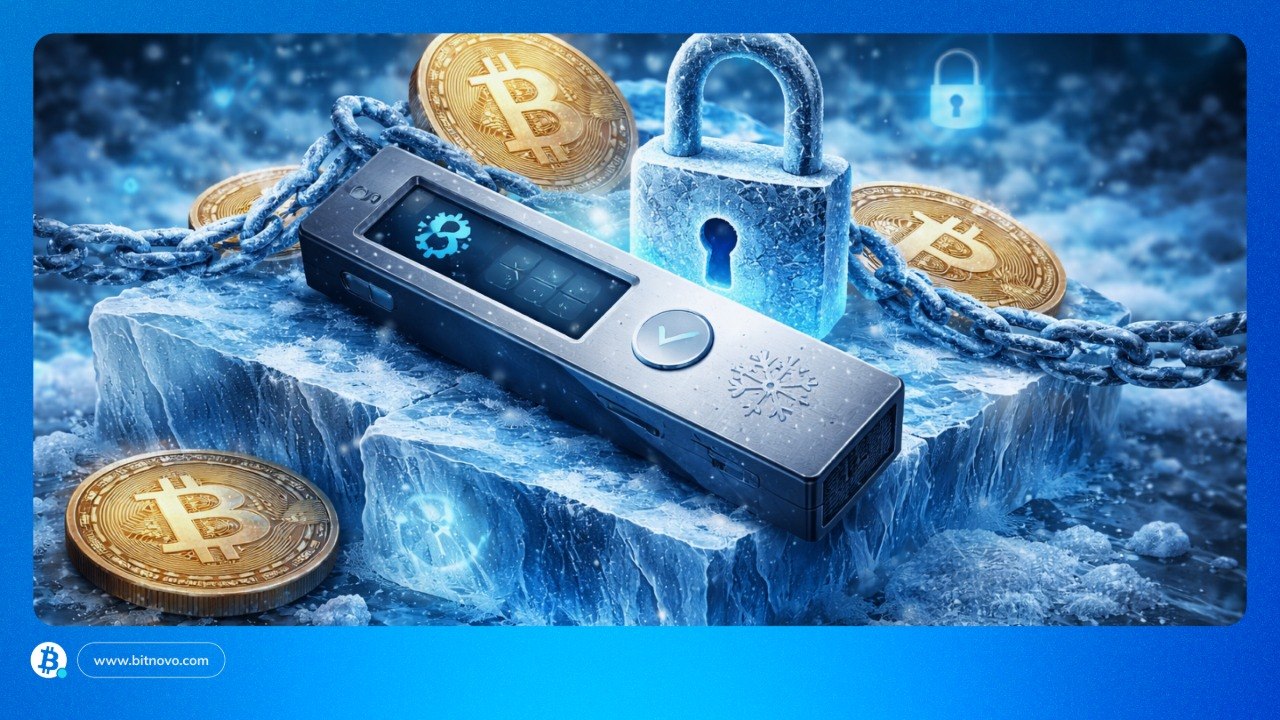
You’ve surely heard of famous wallets, those digital wallets responsible for safeguarding your private keys (basically, the “PIN” that proves those coins are yours). But nowadays, it’s not enough to just store them; you need to know where.
Although Hot Wallets (connected to the Internet) are super convenient for daily use, if you’re looking for maximum security, you need to know the stars of the ecosystem: Cold Wallets or cold wallets.
In a nutshell, they are devices that keep your keys completely disconnected from the online world. It’s like keeping your savings in a physical safe instead of leaving them in an App: by not touching the Internet, hackers simply have no door to enter.

How a Cold Wallet Works
The most incredible thing about a cold Wallet is that it generates your private key totally outside the Internet. Being born in a disconnected environment, it’s as if you kept your money in a safe that has no cables or antenna; simply, hackers have no way in.
When you want to send cryptocurrencies, the process is very ingenious: you prepare the operation on your mobile or PC, but you “sign” it inside the cold wallet. Your private key never leaves the device. Only the authorization, ready for the network to process the shipment, comes out.
In a nutshell: your public address serves to receive funds visible to everyone, but your secret key always remains protected in its digital bunker, far from any Internet connection.
Difference Between Cold Wallet and Hot Wallet
Choosing between a Hot Wallet and a Cold Wallet is a bit like deciding where to keep your money in the real world. Would you carry all your life’s savings in your pants wallet while walking down the street? Probably not. The pocket wallet (Hot) is great for paying for a quick coffee, but significant savings stay in the home safe (Cold).
In the crypto world, the golden rule is simple: Internet connection is what makes the difference. The longer your private key is connected to the network, the more opportunities you give to malicious actors. Therefore, understanding which one to use based on your needs is the first step to sleeping peacefully.
|
Feature |
Hot Wallet |
Cold Wallet |
| Use case | Daily transactions and quick trading. | Long-term savings and large amounts. |
| Connectivity | Always online. Connected to the network. | Always offline. Isolated from the Internet. |
| Security | Vulnerable to hacking and malware. | Immune to online attacks. |
| Convenience | Maximum. Quick and easy to use. | Requires extra steps to operate. |
| Recovery | Seed phrase (12/24 words). | Seed phrase (12/24 words). |
| Examples | Bitnovo App, Trust Wallet, MetaMask. | Bitnovo Cold Wallet, Ledger, Trezor, Yoseyomo. |
As you can see, the key is not to choose one or the other forever, but to use each for what it does best. Security and convenience hand in hand!
Types of Cold Wallets
Not all ways of storing your cryptocurrencies offline are the same. Although the goal is always the same—keeping your private keys away from the Internet—the method you choose will depend on what you prefer to prioritize: the technology and ease of use of a modern device or the simplicity and risks of a physical medium like paper. So you don’t get confused with so many options, here is the definitive summary of the digital bunkers you can use to protect your assets:
|
Type of Wallet |
What is it and how does it work? |
Recommendation for you |
| Hardware wallet | A physical device (like Bitnovo’s) with a special chip that never touches the Internet. Signs transactions internally. | The best option. It’s secure even if your PC has viruses, and you can recover your funds with the seed phrase if the device breaks. |
| Paper wallet | A physical document with your keys printed or written. It’s 100% analog and offline. | For experts only. It has no “recovery button” and is very fragile (fire, water, loss). It’s a somewhat obsolete and impractical method today. |
| Offline software | An application installed on a computer that remains permanently disconnected from the network. | High technical level. Very secure, but the process of moving funds is slow and requires advanced knowledge to avoid mistakes. |
Regardless of the type you choose, your seed phrase is the real treasure. That one must be written in a safe and secret place!
Advantages and Disadvantages of a Cold Wallet
Having a cold wallet is like becoming the security director of your own bank. It offers you unparalleled protection against the dangers of the digital world, but in return, it requires you to be much more careful and organized with your physical devices. Here is the balance so you can decide if it’s the bunker your cryptos need:
|
Aspect |
Advantages |
Disadvantages |
| Security | Immune to online hacking. By being always offline, nobody can enter via the Internet to rob you. | Physical risk. If the device or paper is lost, burned, or gets wet, you are 100% dependent on your backup copy. |
| Control | Total self-custody. You are the sole owner of your private keys; you do not depend on any platform or exchange. | Absolute responsibility. There is no customer service to give you back your password. If you lose your seed phrase, you lose access. |
| Daily use | Ideal for saving (HODL). It is the best way to store high-value assets long-term. | Impractical for trading. Requires manual steps and physical connection for each shipment, making it slow for daily use. |
| Technology | Security chips. They usually include military-grade encryption and protection against malware. | Learning curve. Setting it up requires patience and following strict steps to avoid compromising security. |
| Investment | Durability. A good device (like Bitnovo’s) can last for years working perfectly. | Initial cost. Unlike hot wallets, which are free, here you must purchase the hardware. |
When It’s Convenient to Use a Cold Wallet
The short answer is: whenever the pain of losing your cryptos is greater than the effort of connecting it. But to be more specific, here are the three key profiles:
|
User Profile |
Why is a cold wallet convenient for them? |
| The Long-term Investor (HODLer) | If your plan is to buy Bitcoin or Ethereum and not touch them for months or years, it doesn’t make sense to leave them in a connected App. In the cold, your savings sleep peacefully while the market goes up and down. |
| The Treasure Guardian (Large amounts) | As your portfolio grows, so does the interest of hackers. If you have an amount of money you cannot afford to lose, the investment in a Hardware Wallet (like Bitnovo’s) is insignificant compared to the security it gives you. |
| The Security Enthusiast | Some users simply do not trust third parties (exchanges) or the security of their own smartphone. If you prefer to have total control of your private keys and not depend on anyone, the cold wallet is your only option. |
How to Set Up Your First Cold Wallet Step by Step
Setting up your first cold wallet is an exciting process because it’s the moment when you take total control of your digital money. Although it may seem somewhat technical at first, it’s actually a series of logical steps designed so that no one but you has access to your funds. Here is a quick guide to get your personal bunker up and running safely:
|
Setup Phase |
What should you do? |
Why is it vital? |
| Purchase from official channel | Purchase your device only from the manufacturer’s official website or authorized distributors. Never buy second-hand hardware. | A used device or one from unofficial sites may have been tampered with to steal your funds as soon as you deposit them. |
| Initialization and PIN | Turn on the device and set an access PIN code. This code protects physical access to the device. | Avoid predictable numbers. It’s your first barrier if someone finds your device physically. |
| Create wallet and save seed | The device will generate 12 or 24 random words. Write them down by hand on paper and store them in a safe and secret place. | These words are your master key. Never digitize them (photos or clouds). If you lose them, you lose your funds; if someone sees them, they steal them. |
| Install Apps | From the hardware’s official application, download the modules for the cryptos you want to store (BTC, ETH). | This allows the device to understand the language of each specific network without exposing your keys. |
| Small test send | Before moving all your savings, make a test transfer with a minimum amount and verify that it arrives correctly. | It gives you peace of mind that everything is configured correctly and helps you familiarize yourself with the sending and receiving process. |
Very importantly, before confirming any operation, always verify that the address appearing on the device exactly matches the one you see on your computer or mobile. If the data matches on the offline hardware, you can rest assured: your transaction is secure.
The Best Cold Wallets to Get Started
You don’t need to be a cybersecurity expert to use a cold wallet. These options are designed so that the experience is intuitive from minute one:
|
Model |
Why is it ideal for beginners? |
| Bitnovo Cold Wallet | Combines the simplicity of a card with the power of offline security. It’s ideal if you’re looking for something practical, affordable, and without endless settings. |
| Ledger Nano S Plus / X | Probably the most famous. Its application (Ledger Live) is very visual and guides you step by step through each transaction. |
| Trezor Safe 3 | Stands out for its transparency as it is open source. It’s very robust and has a very friendly interface for those coming from using mobile apps. |

Frequently Asked Questions About Cold Wallets
|
Question |
Quick Answer |
| Is a cold wallet and a hardware wallet the same thing? | Not exactly. Cold wallet is the concept (offline storage), while a hardware wallet is the physical device used to achieve it. |
| Does a cold wallet need the Internet? | No. Private keys live and remain inside the device, always disconnected. You only use the internet on a PC or mobile to send the already-signed transaction to the network. |
| What happens if I lose the cold wallet? | Your funds are safe. As long as you have your seed phrase, you can buy another device and recover everything. |
| Is a cold wallet better than a hot wallet? | It depends on the use. For saving and protecting large amounts, the Cold is superior. For using your cryptos daily for purchases or quick trading, the Hot is more convenient. |
| Can Bitcoin and other cryptocurrencies be stored? | Yes. Most current cold wallets are multi-asset, allowing you to manage Bitcoin, Ethereum, and thousands of different tokens in a single secure place. |
So, it’s time to take control and protect your assets like a pro! Having the best tools, like the ones we offer at Bitnovo, is the only way to secure your financial future and sleep with the peace of mind that no one else has the key to your bunker.