


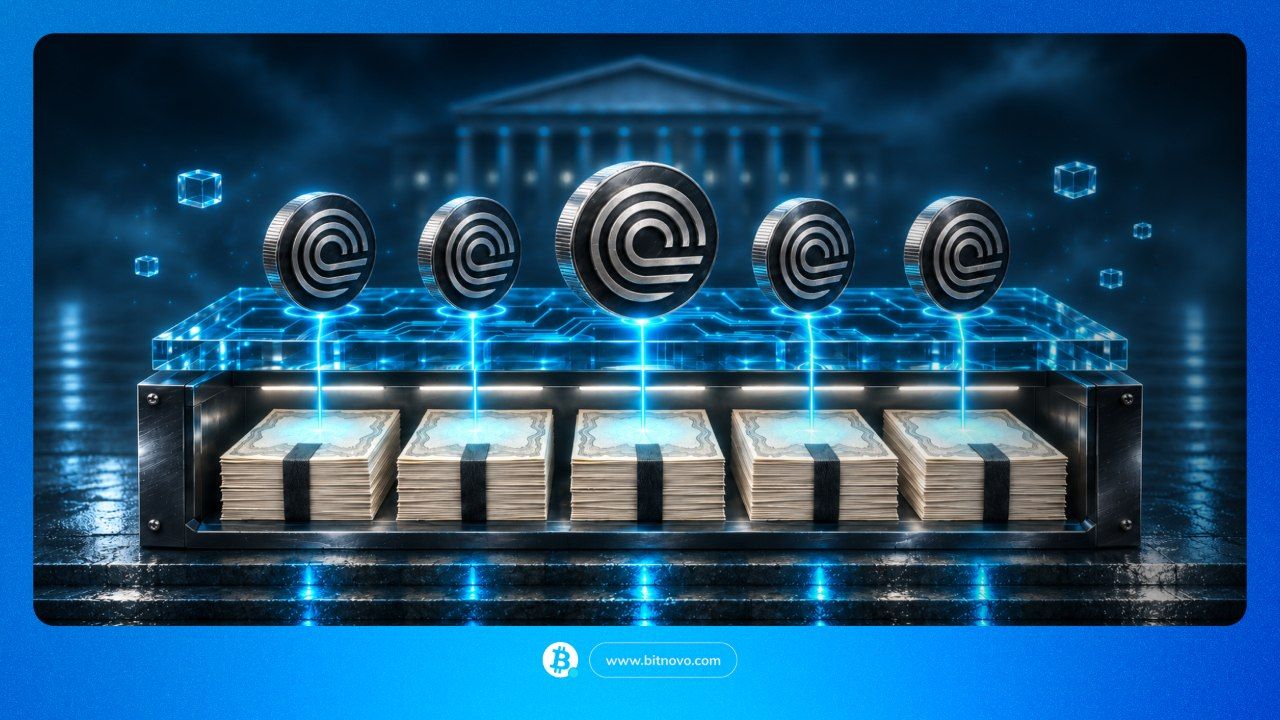
The tokenization of U.S. Treasury debt has consolidated as one of the fastest-growing applications within the crypto industry and the Real World Assets (RWA) sector.

In this context, Ondo Finance stands out in this area as the leading issuer by global volume of tokenized assets under management. It is designed to connect decentralized finance (DeFi) capital and institutional investors with the yield and stability of traditional Wall Street fixed-income instruments.
For exclusively educational and informational purposes and recalling that investment in digital assets involves capital risk and does not constitute financial or legal advice, the following analyzes what this protocol is, how its model works, and what aspects should be considered.
What Ondo Finance Is
Ondo Finance is a protocol focused on real-world asset management that moves traditional financial instruments (mainly U.S. Treasury bills, money market funds, and equities) onto public blockchain networks.
Founded in 2021 by Nathan Allman (former banker in Goldman Sachs’ digital assets division), the project aims to build a bridge between conventional banking and the DeFi ecosystem. Instead of issuing speculative assets, the protocol issues digital representations of traditional fixed-income instruments in order to transfer, fractionalize, and operate them digitally.

The management team includes professionals with backgrounds in finance and software development, notably Chris Tyrrell and David Chen, combining experience in regulated markets with software development.
It is crucial to understand the technical and legal difference between the protocol and its tokens:
- The protocol and its products: They manage the actual investments in traditional instruments and distribute financial returns.
- The ONDO token: Launched in January 2024, it functions strictly as a governance token. It does not represent ownership of Treasury bonds nor automatically distribute yields to its holders.
Its Main Products
Ondo Finance’s main fixed-income offering is divided into two structures differentiated by their level of access and legal nature:
- OUSG (Ondo Short-Term US Treasuries)
It is the institutional-grade product designed for corporate treasury management.
- Underlying backing: It is allocated mostly to BlackRock’s BUIDL government liquidity fund, complemented by vehicles from institutions such as Franklin Templeton, Fidelity, WisdomTree, and Wellington, in addition to liquidity available in cash and stablecoins.
- Access and profile: Exclusive to accredited investors and qualified purchasers. It requires high subscription minimums and involves annual management fees.
- Difference from a stablecoin: It is not a payment token nor a fixed reference currency to $1. It is a tokenized investment fund whose share reflects the net asset value and accumulated interest.

- USDY (US Dollar Yield Token)
It is an alternative structured as a tokenized promissory note that generates dollar yield at a variable rate.
- Legal structure and backing: It is a senior credit right issued by Ondo USDY LLC. It is backed by short-term U.S. Treasury Bills and demand deposits.
- Access and requirements: Designed for users and investors not resident in the United States. It requires completing identity verification (KYC/AML) and complying with regulatory holding periods before transfer.
- Networks and modalities: It is distributed on various chains such as Ethereum, Solana, Mantle, Sui, and Aptos, operating under value-accrual or periodic-distribution versions.
How Debt Tokenization Works
The process by which a Treasury bond becomes a tokenized digital asset encompasses four operational stages:
- Off-chain custody: A regulated financial or depositary entity custodies the real asset (the Treasury Bills or the money market fund shares).
- On-chain issuance: The protocol issues a token on the blockchain network backed in a direct relationship by the value of the custodied assets.
- Trading and use: The token can be transferred between authorized wallets or used within compatible financial applications 24 hours a day.
- Redemption: When the investor wishes to exit, the token is settled and the custodian entity settles the equivalent in fiat money or continuously settling stablecoins such as USDC.
In the secondary market for tokenized debt, institutions such as the Bank for International Settlements (BIS) have observed smaller bid-ask spreads in tokenized bonds compared to traditional channels, thanks to settlement automation and the reduction of intermediaries.

The Size of the Market
The tokenized public debt sector has reached an approximate global volume of $14.65 billion distributed across some 120 active financial products.
Within this segment, Ondo Finance positions itself as the leading issuer by traded volume and capital under management in tokenized treasury products, concentrating a significant part of the total collateralized in U.S. Treasury assets within public networks.
Risks You Should Know About
Despite the backing in U.S. public debt, holding and interacting with these products involves several risk factors:
- Issuer and custodian risk: The security of the value depends on the operational, legal, and financial solvency of the administrators and banking entities that custody the bonds off-chain.
- Country restrictions and ineligibility: Regulatory restrictions prevent acquisition or transfer in certain jurisdictions (such as the express prohibition for U.S. residents in the case of USDY).
- Smart contract risk: Vulnerabilities, mechanical failures, or errors in the code of the contracts that manage the issuance and transfer of the tokens.
- Liquidity mismatch: Although the blockchain network operates uninterrupted, cash subscriptions and redemptions depend on the business days and hours of the traditional banking system.
- Differentiation between the token and the bond: The token is a digital title or share that grants certain credit or fund rights, but it is not legally equivalent to direct holding of the Treasury Bill in a traditional personal custody account.
The advance of real-world assets marks a gradual but constant transformation in the architecture of global fixed-income markets, so understanding the technical and operational structure of projects like Ondo Finance is essential to evaluate the true scope of blockchain technology in the traditional financial system.
In this sense, it should be remembered that this content has a strictly informative and educational purpose, so it should not be interpreted as a recommendation to buy, sell, or a solicitation to invest in digital assets, and it is always advisable to consult an independent financial advisor before making any decision.
FAQ
- What is Ondo Finance? A DeFi protocol that issues traditional assets (such as U.S. debt) on the blockchain.
- What is the difference between USDY and OUSG? USDY is for non-U.S. users. OUSG is an institutional product backed by BlackRock for accredited investors.
- Who can buy Ondo’s tokens? No one anonymously: USDY requires KYC (no U.S. residents) and OUSG requires institutional accreditation.
- What is tokenized Treasury debt? The digital blockchain version of U.S. bonds backed 1:1 by real assets in custody.
- Is a debt token the same as a stablecoin? A stablecoin maintains a fixed price at $1; the debt token accumulates the yield of the bonds.