




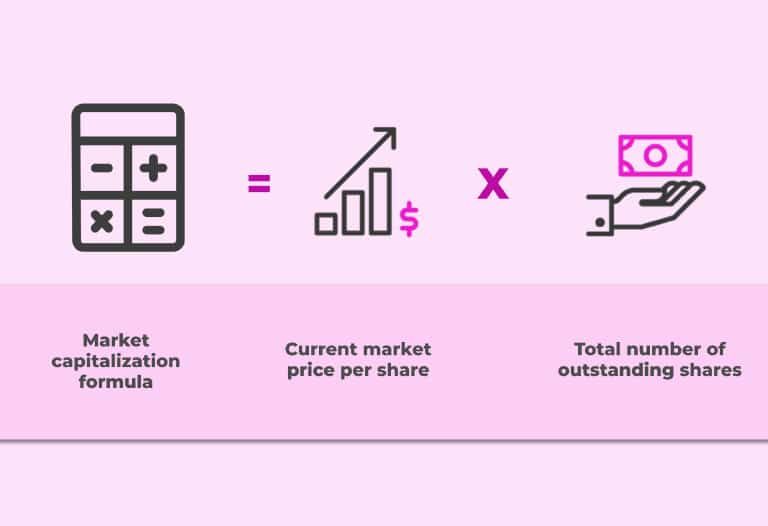
New to crypto? Perfect, nobody was born knowing. Market capitalization, or market cap, is the ultimate metric to know the real value of a crypto project and it is calculated in a simple way: current price x circulating supply. While the price of a single token can be misleading, this figure represents the total value accumulated in the ecosystem, working the same way as in the traditional stock market when measuring the size of a company.
For investors, this metric is a fundamental comparison tool. A high market cap usually indicates greater stability and maturity, but it also suggests that the asset has less room for explosive growth or drastic multiplications in its value. Conversely, projects with low market caps are often seen as higher-risk opportunities with higher return potential.
However, market cap should not be the only decision-making factor. When evaluating an investment, it is crucial to analyze this figure alongside current trends, project stability, and its overall financial situation. In short, it is the compass to understand where an asset is positioned within the global market before making any move.
How market cap is calculated
For traditional companies, you multiply the number of outstanding shares by the value of each one. In the case of cryptocurrencies, it is the number of existing units of a token times its current price. By usage and custom, market cap is measured in US dollars as the reference unit.
Market Cap = price x coins in circulation
Don’t stress, we are going to break it down so you have it super clear. The beautiful thing about the crypto world is that despite how complex it may seem, it is actually very simple. You just need the price of your target crypto and multiply it by the number of coins that are circulating at that moment.
For example, as of April 8, 2026, Bitcoin’s price was around $70,500 and there are 19.9 million mined units, so it has a market capitalization close to 1.4 trillion dollars. Applying the formula would look like this:
Bitcoin Market Cap = $70,500 × 19,920,000 = approximately $1.404 trillion.
Factors influencing market capitalization
A cryptocurrency’s market capitalization is not a fixed number. It changes constantly, this is because several factors directly influence it. Below we explain what they are and how they work exactly.
|
Factor |
How it works |
Impact on Market Cap |
| 1. Price of the coin | It is the most direct factor. If the value of each unit goes up or down, the capitalization reacts the same. | Direct: The higher the price, the higher the capitalization. |
| 2. Circulating supply | It refers to the number of coins available. If new units are issued, the total value of the project increases. | Direct: The higher the supply, the higher the capitalization. |
| 3. Supply and Demand | It is the market force. If there are more buyers than sellers, the price soars. | Variable: Buying pressure raises the value; mass selling lowers it. |
| 4. News and sentiment | External events, regulations, or influential figures that generate emotions (fear or euphoria). | Psychological: Positive news attracts capital; hacks or bans drive it away. |
What is market cap used for in crypto
The true utility of market cap lies in its ability to measure the relative size and weight of a project within the digital ecosystem, whether it is a DeFi protocol, a play-to-earn game, or a Web3 community.
This metric acts as an indicator of stability and risk: while high-capitalization assets tend to be more resistant to mass sell-offs, small projects are much more vulnerable to volatility, since any significant trade can cause sharp movements in their price due to the smaller amount of money involved.
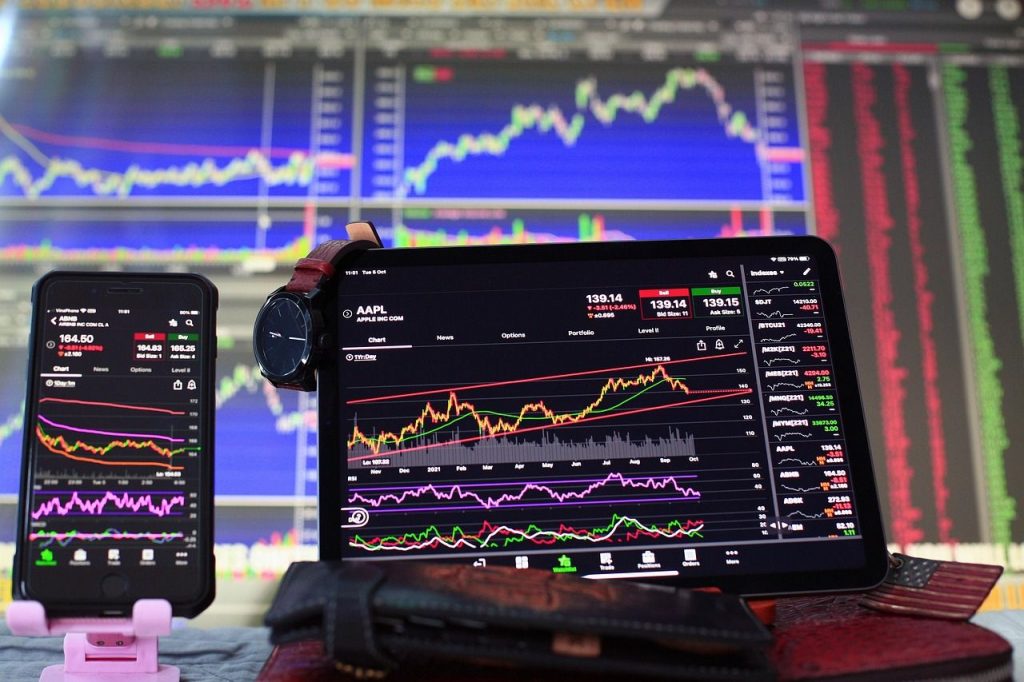
However, market cap should be understood as a risk assessment tool and not as an infallible oracle. Although it helps interpret the growth potential and solidity of an asset against market trends, it cannot predict external factors such as regulatory changes, hacks, or user sentiment.
In the blockchain world, success depends on a series of variables and imponderables that impact both the price and the mood of the market, making this figure just one piece, albeit a fundamental one, of the investment puzzle.
Use and application examples
- Size comparison:Allows comparing the size of different crypto projects (e.g., Bitcoin is the one with the largest market capitalization).
- Assess volatility:Generally, a high market cap suggests greater stability, while a low market cap usually indicates higher volatility and risk.
- Analyze growth:Helps investors determine the stage of a project, for example, identifying high-potential opportunities (small capitalization) or more stable projects (large capitalization).
What market cap tells you and what it doesn’t
Market capitalization is the ideal tool to contextualize the size and relevance of a cryptocurrency, allowing you to compare projects realistically. However, it is vital to understand that this figure measures the volume of money deposited in an asset, but it does not determine its quality or fair price by itself.
|
What market cap DOES tell you |
What market cap DOES NOT tell you |
| Size and relative weight: Allows you to see if a project is a giant (like Bitcoin) or a small venture compared to its competitors. | If it is “cheap” or “expensive”: A low market cap does not mean the coin is on sale, nor does a high one mean it is expensive. Price depends on real valuation. |
| Risk and stability level: High-capitalization projects tend to be more stable, low-capitalization ones are more volatile and risky. | If it is a good investment: A coin can be very popular and have a huge market cap, but be in the middle of a bubble or have weak fundamentals. |
| Popularity and adoption: Indicates how much confidence and money the market has deposited in that protocol, Web3 community, or token. | Project quality: It does not reflect whether the technology is innovative, whether the team is reliable, or whether the project has real long-term utility. |
| Growth context: Helps understand whether the asset has room to double its value or if it is already so large that it will have a hard time continuing to rise. | Future prediction: That a coin is big today does not guarantee it cannot collapse due to regulations, hacks, or lack of use. |
Difference between market cap and trading volume
It is essential not to confuse the size of a project with its daily activity. While Market Cap tells us how much the whole “pie” is worth, Trading Volume tells us how many slices are being bought and sold in the last 24 hours.
|
Metric |
What does it represent? | Simple analogy |
Real utility |
| Market Cap | The total accumulated value of the project in the market. | The total value of an apartment building. | Indicates the size and long-term stability of the asset. |
| Trading Volume | The movement of money (buys and sells) in a period (e.g., 24h). | How many people are entering and leaving the building today. | Indicates the liquidity and immediate interest of investors. |
Difference between market cap and fully diluted valuation
|
Metric |
What does it measure? | Based on… |
Real utility |
| Market Cap | The current market value. | Circulating Supply: The coins that have already been issued and are in people’s hands. | Tells you the real size of the project today. |
| FDV (Fully Diluted Valuation) | The theoretical future value. | Maximum Supply: The total coins that will ever exist (including those not yet issued). | Helps you see the impact of future inflation and whether the price could fall when more coins are released. |
Large cap, mid cap, and small cap in cryptocurrencies
There are different categories within market capitalization. Generally, three types are recognized: small caps, mid caps, and large caps. They are categories that indicate the size of a crypto project, based on its total value (capitalization).

What are small caps?
Small caps are cryptocurrencies with a market capitalization of less than one billion dollars. They are generally new or emerging projects that are still gaining a user or follower base.
These coins are often sensitive to hype generated by influencers and positive market sentiment. They are often bought by people looking for “the new Bitcoin” or who strongly believe in the project’s future. Before investing in a small cap, we recommend doing thorough research on the coin’s plans and background.
What can you expect from a small cap?
- Large price fluctuations.
- Lower liquidity (fewer places to sell the coin).
- Possibility of high gains, but also risk of losing 100%.
What are mid caps?
Mid caps are cryptocurrencies with a market capitalization between one and ten billion dollars. These projects have usually been active for a while, have a functional product, and a loyal user or investor base. They are less risky than small caps, but still offer interesting growth potential. Of course, even these coins are volatile.
Mid caps are usually actively developing: new features, partnerships, or integrations with other blockchains. This can attract more users and thus increase their value.
What can you expect from a mid cap?
- More stable price than small caps, although with movement.
- Long-term growth, especially if the project continues to evolve.
- Greater recognition, so they are often on popular exchanges.
- Risk still present, but with greater probability of project survival.
What are large caps?
Large caps are cryptocurrencies with a market capitalization greater than ten billion dollars. Think coins like Bitcoin, Ethereum, Dogecoin, and Ripple. They are projects that have generally been around for years, are used by millions of people worldwide, and have the trust of both individual and institutional investors.
These coins are usually less susceptible to panic, and are considered the “safest” option within the crypto world (as far as can be stated in this market). Large investment funds, banks, and even governments usually look at these coins first before smaller, unknown alternatives.
What can you expect from a large cap?
- Lower risk than with smaller coins.
- Slower but steady long-term growth.
- Better availability, you can buy and sell them anywhere.
- High liquidity, making it easy to enter and exit the market.
Comparison of capitalization in cryptocurrencies
|
Feature |
Small Cap | Mid Cap |
Large Cap |
| Capitalization | Less than $1 billion | $1B – $10 billion | Greater than $10 billion |
| Project profile | New, emerging, or niche | Active, with functional product | Consolidated and massively used |
| Risk | Very high (risk of total loss) | Moderate / Present | Lowest in the sector |
| Volatility | Large fluctuations (Hype) | Moderate movement | Greater relative stability |
| Liquidity | Low (hard to sell) | Good (popular exchanges) | High (total availability) |
How to use market cap to analyze cryptocurrencies
To analyze a cryptocurrency like a pro, market cap is just the starting point, the first thing you should do is cross-reference it with volume and liquidity. It is useless for a coin to be worth millions on paper if there aren’t enough people buying and selling (volume) for you to exit your position when you want.
Also, don’t lose sight of tokenomics: pay close attention to how many coins are yet to come to market (FDV), because if many are going to be released soon, the price of your coins could fall due to pure inflation.

On the other hand, always put that number in context. Compare the market cap of that coin you like with that of its strongest competitors, that will give you a real idea of how much room it has to grow or if it is already too expensive for the sector.
Remember that while large caps are like that giant ship that better withstands storms, small caps are speedboats: they can fly, but any wave of hype or an influencer’s comment can capsize them. The key is to diversify and not get carried away solely by emotion!
Common mistakes when looking at market cap (Don’t fall for them!)
As we said, market capitalization can give clues about the situation of a cryptocurrency and the perception of it. But it does not always offer a complete picture.
|
What we think (The mistake) |
The reality (What actually happens) |
Why is it a danger for your pocket? |
| “It’s a safe coin because it has a high market cap.” | Market cap can be inflated by pure speculation or momentary hype. | A high number does not guarantee the project is solid, useful, or that it won’t crash tomorrow. |
| “That number is the real money people have put in.” | It is just a mathematical multiplication (Price x Coins). It is not a “safe” with money inside. | If everyone tries to sell at once, the market cap crumbles because there is no real money backing it. |
| “Look how cheap it is! If it reaches Bitcoin’s market cap, I’ll be a millionaire.” | Each project is a world. Comparing a new coin to Bitcoin is like comparing a local store to Amazon. | It creates false expectations. Many coins will never reach those levels due to lack of utility or excess supply. |
| “I only look at the current market cap, not the total supply.” | There are coins that still have 90% of their tokens locked up waiting to come to market. | When those coins come out (inflation), the value of yours will be diluted and the price will tend to drop. |
| “If the market cap is large, I can sell whenever I want.” | You can have a market cap of millions but very low liquidity (no one trading). | If you try to sell a large amount, the price will crash and you will end up selling much cheaper than you thought. |
Frequently asked questions about market cap
|
Key question |
The simple answer |
Why does it matter to you? |
| What is market cap? | It is the total value of a crypto. It’s like knowing how much an entire company is worth if you wanted to buy it all. | It helps you see the real size of the project and compare it fairly with others. |
| How is it calculated? | Current price × Coins in circulation. (For example: $70,000 of BTC × 19.6M coins = $1.37 trillion). | It allows you to see if the price is “real” or if there’s a trick with the number of coins that exist. |
| Higher means less risk? | Yes, generally. It’s like a giant ship: market waves move it less than a small boat. | It gives you more peace of mind if you are looking for a stable investment and don’t want to see your money disappear due to a scare. |
| Market Cap vs. Volume | Cap is the total value, Volume is how much money is moving (buys/sells) today. | A high Cap without movement is a red flag, it means no one wants to buy or sell that coin. |
| What is a Large Cap? | They are the “queens” of the market (Bitcoin, Ethereum) with more than $10 billion in value. | They are the foundation of any serious portfolio because they have already proven they are here to stay. |
We have reached the end! And to close, keep this idea very clear: Market Cap is like a city map, it helps you know where you are standing and how big the terrain is, but it doesn’t tell you if the restaurant’s food is good. It is a key tool to orient yourself, but to avoid getting lost, you should always also look at liquidity, tokenomics, and above all, the real utility of the project.
In short, at Bitnovo we believe that enough with unnecessary complications. Here we do not seek to convince everyone, but to connect with those who are already tired of tangled explanations and the same old thing. Between those who only come to break the rules for fashion and those who truly help you navigate safely, the difference is clear.

Don’t let them tell you stories that this is “too complex.” The truth is that often they didn’t want you to understand it to maintain control. Now that you know how the numbers game works, the power to decide is yours!