



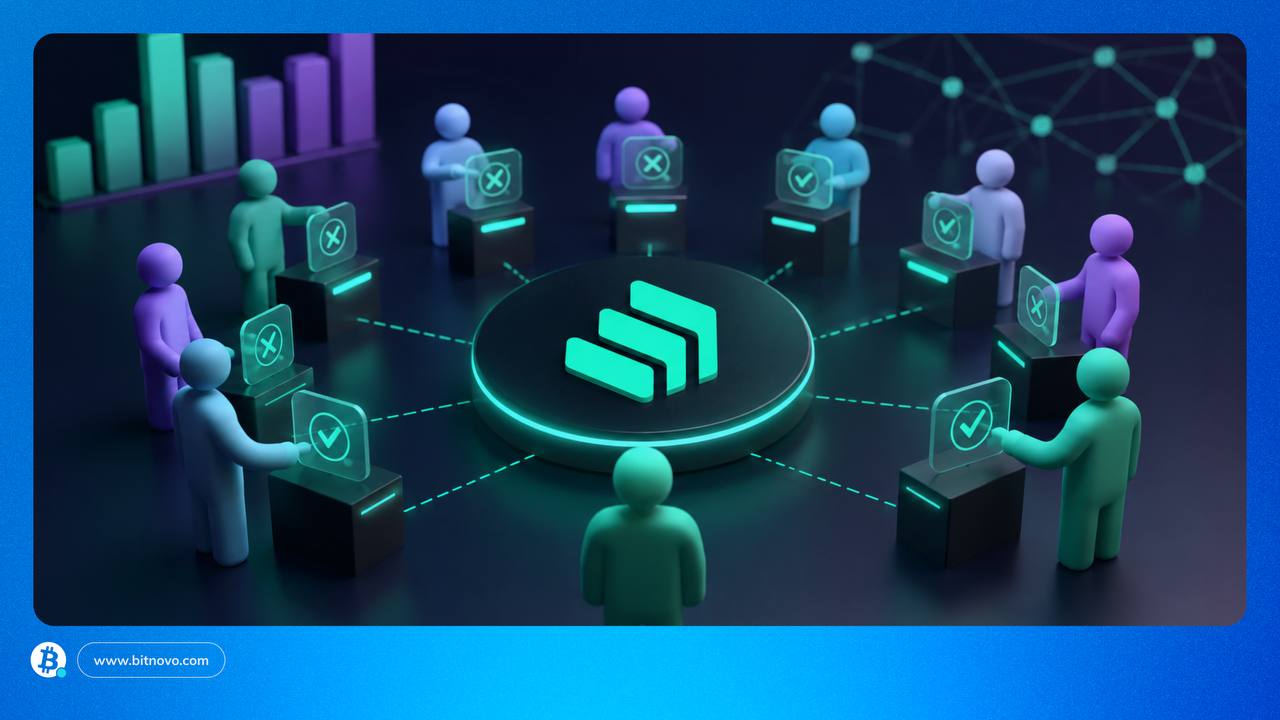
Imagine that a person’s crypto assets don’t just sit frozen in their wallet, but generate interest automatically every 15 seconds, just like a traditional savings account but at blockchain speed. This is not science fiction, it is the daily engine of Compound, a pioneering protocol that, since its birth on the Ethereum network, transformed passive holdings into dynamic performance tools.
Through smart contracts and without intermediaries or credit history checks, Compound efficiently connects those who want to put their funds to work with those who need financing.
However, what truly defines the present and future of this platform is not just its ability to automate algorithmic loans. The real magic lies in its governance: a fully decentralized model where not a board of directors behind closed doors decides, but its own users.
Through the COMP token, the community holds in its hands the absolute power to vote, propose, and shape the course of one of the strongest ecosystems in decentralized finance (DeFi).
What the COMP Token Is and What Power It Grants
The COMP token is much more than a simple reward cryptocurrency within the DeFi ecosystem; it is the master key that grants absolute control of the Compound protocol to its own community.
Being a governance token of the ERC-20 standard, it eliminates the need for a traditional board of directors, allowing anyone who holds COMP to participate directly in the platform’s strategic decisions. From modifying algorithmic interest rates to adding support for new assets, the future of the protocol is written with the votes of its users.
To guarantee that the system is both democratic and secure against hasty decisions, Compound governance operates under very clear and transparent rules. The platform uses a system of proposals and voting directly on the Ethereum blockchain, where each token equals one vote.
Additionally, to facilitate participation for everyone regardless of their budget, the protocol allows delegating voting power to experts or trusted users without needing to transfer or lose custody of the tokens at any time.
|
Key Aspect |
Detail and Requirements |
| Main Function | Governance token that grants proposal and voting power over the protocol. |
| Token Generation | Distributed continuously as an incentive to users who lend or borrow on the platform. |
| Voting Flexibility | Any holder can delegate their vote to another user without giving up ownership of their cryptocurrencies. |
| Nature of Proposals | They are not simple text suggestions; they are executable code that applies real and automatic changes to the protocol if approved. |
| Application Examples | Adding new cryptoassets as collateral, adjusting risk models, or modifying algorithmic interest rates. |
| Phase 1: Creation | A user or group of users must gather a minimum of 25,000 COMP delegated to be able to submit a formal proposal. |
| Phase 2: Review | After submission, a 2-day review period begins for the community to examine the code and debate the changes. |
| Phase 3: Voting | A 3-day voting window opens. For the change to be approved, the proposal must reach at least 400,000 votes in favor. |
| Phase 4: Execution | If approved, the proposal enters a 2-day waiting period (Timelock) before being executed automatically, giving users time to adjust their positions if they disagree. |
What Kind of Decisions Does the Community Make?
To understand how all this structure translates into the real world, just look at the strategic decisions that Compound users themselves make day by day. There is no executive committee here that unilaterally dictates the rules; each evolutionary step of the protocol is the direct result of the consensus and vote of COMP holders.
|
Type of Decision |
What does it consist of? |
Impact and Real Examples |
| Integration of new assets | Holders evaluate and vote on which cryptocurrencies are sufficiently secure and liquid to be incorporated into the protocol’s markets. | In 2025, the community approved and integrated USDe (from Ethena) and mETH (from Mantle) as new voting and collateral assets. |
| Risk management and parameters | Users decide when to adjust collateral factors, supply limits, or interest rate models. | Maintains the financial health of the ecosystem by adapting the protocol to changing crypto market conditions. |
| Proactive security measures | Governance responds to technical or market threats by activating financial and technical shields. | Users have voted and approved advanced security programs to shield smart contracts against potential exploits. |

Compound, the Protocol That Changed How DeFi Is Governed
When analyzing the history of decentralized finance, there is a before and after the arrival of Compound. Its true milestone was not only allowing algorithmic loans but becoming the first protocol to successfully demonstrate that a global-scale financial infrastructure could be governed efficiently without a centralized company, board, or team behind it. By ceding total control to COMP holders, Compound laid the foundations of true decentralization.
This innovative approach completely changed the rules of the game in the crypto ecosystem. Inspired by its success, dozens of top-tier projects and protocols adopted similar governance models, positioning Compound’s on-chain system as the absolute reference and the gold standard for decision-making in DeFi.
Looking to the future, the growth and evolution of Compound will remain closely linked to its community’s ability to innovate in key areas, maintain security against new technological threats, and navigate the changing international regulatory landscape.

At the end of the day, Compound stands as the living and ultimate proof that users are fully capable of managing complex, secure, and transparent financial infrastructures without needing to rely on traditional banks or corporations.