



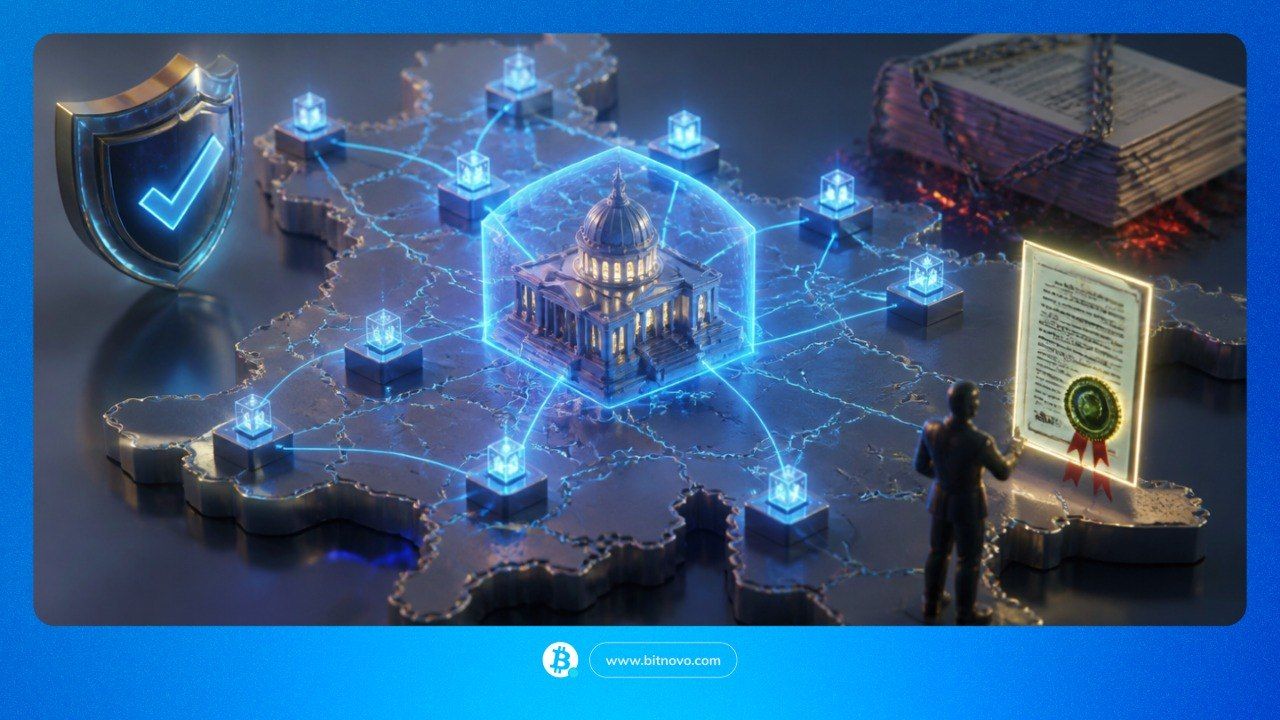
Can a university degree or an academic certificate be falsified? To this day, sadly, yes. But Kenya has decided to make a bold move by using the technology that best combats manipulation: blockchain.

The Kenya National Examinations Council (KNEC) has just moved over 30 million academic records to the Avalanche network. With this initiative, the African country puts an end to weeks of bureaucracy and directly combats the counterfeiting of degrees, a recurring fraud that severely affects employers, universities, and state institutions themselves. By registering credentials directly onchain, any entity can verify the authenticity of a document in seconds, in an immutable manner and without intermediaries.
«KNEC is implementing tamper-proof electronic certification in Kenya through Avalanche,» said Avalanche in a video announcing the initiative.
Below, we explore in detail exactly how credential verification on blockchain works, how it differs from traditional registration systems, and what this milestone opens up for the future of governmental and institutional applications in the crypto ecosystem.
What Kenya has done with its academic records
To understand the magnitude of Kenya’s move, the figures must be broken down: the National Examinations Council (KNEC) has migrated more than 30 million academic records to the Avalanche blockchain network.
It is key to make an important clarification: those 30 million are not 30 million individual degrees. In a country with a population close to 55 million inhabitants, this figure responds to the massive dumping of decades of the country’s educational history (with records dating back to 1989).

This gigantic onchain database includes:
- Primary education certificates (KCPE – eighth grade).
- Secondary education certificates (KCSE – twelfth grade).
- Advanced diplomas and certifications for teacher development.
- National examinations and accumulated academic histories.
Developed together with the local technology firm LegitDoc and with the technical support of Ava Labs, the platform transfers decades of educational milestones to a secure digital environment. In fact, for the nearly 1 million students taking the KCSE exam in 2025, their credentials are already issued exclusively in a digital format protected by blockchain.

With this massive migration, Kenya not only retroactively documents the academic history of an entire generation, but also realizes one of the largest public sector use cases within the crypto ecosystem, taking Avalanche technology beyond decentralized finance (DeFi) toward public management and data sovereignty.
A global problem that is difficult to detect: fake degrees
The counterfeiting of educational credentials has become a silent epidemic on a global scale, fueled by increasingly accessible editing technologies and high-precision printers that generate copies almost indistinguishable from the originals. This fraud gains particular strength in countries with high volumes of students and fragmented verification systems, where centralized university and school databases do not communicate with each other.
Currently, detecting an adulterated certificate is a slow and archaic process. It depends on manual checks, phone calls, emails, and the repetitive sending of physical documents with official stamps. A single verification can take a month, and if it involves mass hiring processes, the waiting time scales up to six months. This excessive dependence on intermediaries and bureaucratic institutions generates enormous administrative costs and leaves room for fraud at every link in the chain.
The challenge is not only local, but deeply global due to three key factors:
- International labor mobility:Millions of professionals emigrate each year and need to validate their academic achievements with employers on other continents, a procedure that often becomes more expensive and gets bogged down in embassies or ministries.
- Lack of portability across borders:A degree issued in one country does not have a standard or digital pathway to be instantly authenticated in another jurisdiction.
- Systemic reputational risk:The leakage of professionals with fake degrees degrades the reputation of universities in the corporate world and directly harms legitimate graduates, whose effort loses value in the labor market.
How degree verification on blockchain works
The mechanism for authenticating an academic certificate on the blockchain stands out for being straightforward and secure. When issuing a degree, the educational institution generates a cryptographic digital fingerprint with the record’s data and permanently anchors it to the network. This process converts the document into a verifiable digital credential, eliminating physical paperwork and traditional bureaucracy.
The verification process is summarized in the following points:
- Instant query:When a company or university needs to validate the degree, it only needs to enter the unique code or scan the link/QR code attached to the document on the official portal.
- Validation without intermediaries:The system instantly checks whether the presented metadata exactly matches the fingerprint anchored on the network, performing the verification in seconds and without needing to contact government offices or managers.
- Data privacy:The student’s sensitive data is not publicly exposed; only the mathematical seal proving that the certificate has not been altered is stored on the blockchain.
The key difference: Immutability and Auditability
Unlike traditional centralized databases, the blockchain record presents two fundamental characteristics:
- Immutability:Once recorded on the network, no one can retroactively modify or delete the record. Any attempt to adulterate a grade or a name would break the cryptographic code, immediately alerting to the forgery.
- Auditability:The network offers a permanent and unalterable history. Any official data or update is recorded with an exact date and time, offering a transparent trail with full validity for any entity in the world.

Why blockchain is useful for institutional cases like this
Public administration requires systems that are invulnerable to fraud, efficient, and accessible. Compared to traditional databases, blockchain technology offers an infrastructure that solves these problems from the ground up both in the educational sphere and in other state sectors.
| Pillar / Application | Functioning on Blockchain | Impact on Public Management |
| Decentralization | The public network acts as a neutral validator available 24/7. | Dependence on officials, calls, or manual file reviews is eliminated. |
| Immutability | The onchain record cannot be modified or deleted retroactively. | Impossibility of falsifying or altering grades, names, or data due to corruption or hacks. |
| Trazability | Mathematical and transparent audit of the exact date and manner of issuance. | Immediate detection of duplicates, discrepancies, or unauthorized credential issuance. |
| Portability | Digital verification valid anywhere in the world. | Fluid international mobility without geographical barriers or notarized paperwork. |
| Property registration | Inalterable digital chain of custody for land and vehicles. | Prevention of illegal dispossession, duplication of deeds, and real estate fraud. |
| Medical records | Clinical storage where the patient manages access to their data. | Interoperability between health centers without risk of data leakage or loss. |
| Supply chains | Real-time tracking of imported inputs or public goods. | Guarantee of the legitimate origin of products and prevention of state smuggling. |
The precedent this case sets for other governments
Kenya’s migration of 30 million academic records marks a true turning point. For years, the application of blockchain in public management was viewed with skepticism. The KNEC project on Avalanche demonstrates in practice three undeniable realities: it is entirely viable to upload millions of records to a public chain, verification works in real time, and government institutions have the technical capacity to operate this infrastructure.
By demonstrating that a country can back the academic history of an entire generation without collapsing the network or blowing up budgets, Kenya clears the path for other administrations to adopt the model with confidence.
This milestone confirms that the utility of blockchain technology goes far beyond the financial sector and cryptocurrencies. We are talking about a tool with direct social impact that restores trust in institutions, protects the effort of millions of students, and eliminates bureaucracy. Instant, immutable, and decentralized verification laid its foundations in education, but the door is officially open to transform public management on a global scale.
FAQ
- Can a university degree be falsified on blockchain?No. By being stored on the Avalanche network, the document generates an unalterable cryptographic fingerprint. Any modification breaks the code and alerts to fraud instantly.
- How does an employer verify a degree with this technology?By entering the unique code or scanning the QR code on the certificate through the official portal. Validation is immediate, free, and without bureaucratic procedures.
- Is the student’s personal information published on the network?No. Only the mathematical authenticity fingerprint is recorded on the blockchain, protecting the student’s private data.
- What exactly did Kenya do with its academic degrees?It migrated more than 30 million historical records to Avalanche, issuing digital certificates impossible to falsify in order to combat fraud and speed up hiring processes.