




Satoshi Nakamoto is the pseudonym of the person (or group of people) who created Bitcoin and designed its original software. His identity remains the greatest mystery of the digital age, as he disappeared from public life shortly after changing the financial system forever.
Although today we associate the name Satoshi Nakamoto with one of the most disruptive technological innovations of the 21st century, the truth is that no one knows who is hiding behind it. What we do know is that on October 31, 2008, Satoshi published the famous Bitcoin Whitepaper, proposing a peer-to-peer electronic cash system that did not depend on banks or governments.
How Bitcoin was born
On October 31, 2008, in the midst of the global financial crisis, Nakamoto published a nine-page document on a cryptography mailing list that would change the world: the whitepaper titled «Bitcoin: A Peer-to-Peer Electronic Cash System».
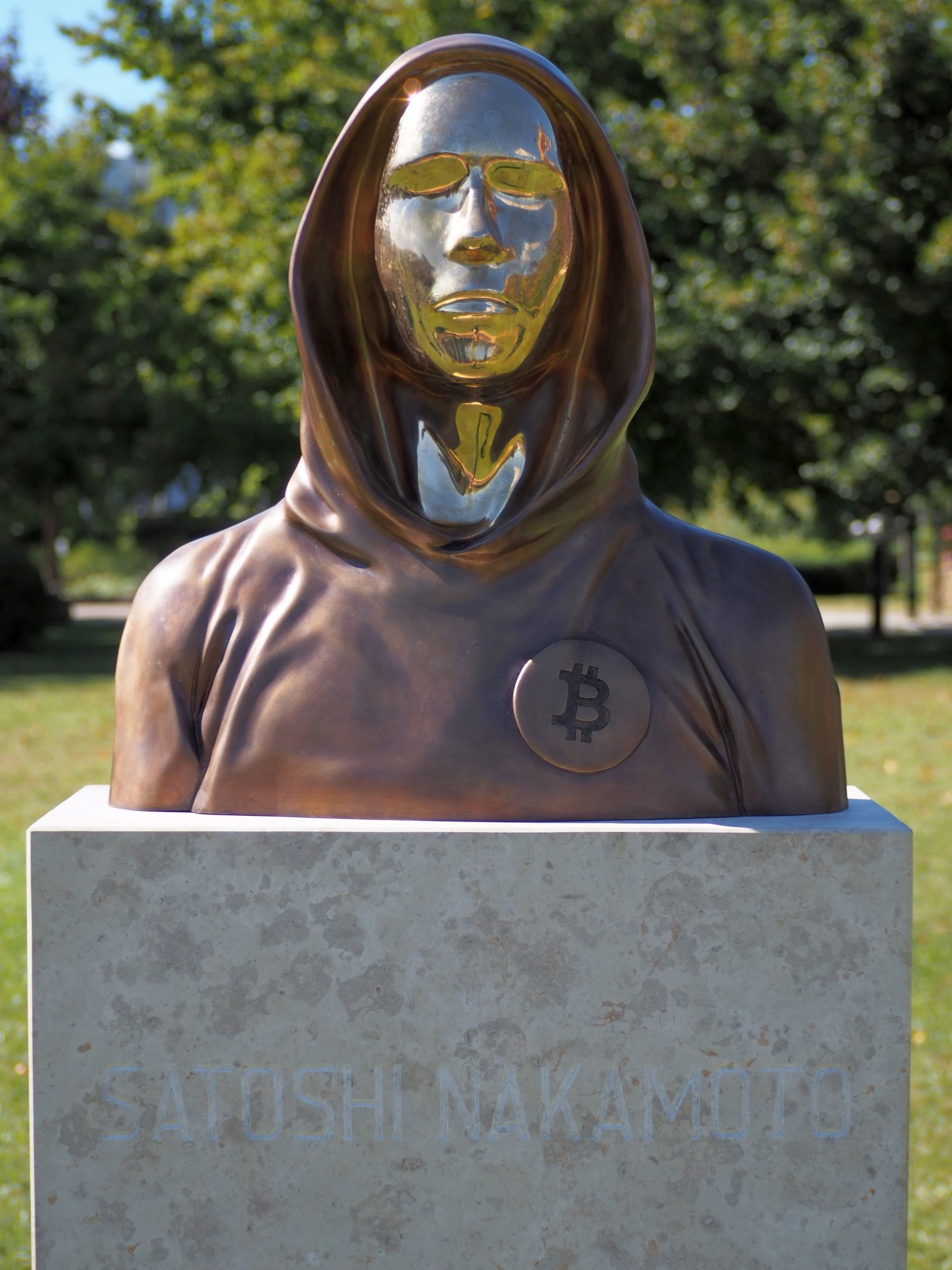
In essence, this protocol promised a borderless digital currency, protected by cryptography and beyond the control of banks. Just a few months later, on January 3, 2009, Satoshi launched the network by mining the Genesis Block, the first block of the Bitcoin blockchain, which included a hidden message about the bank bailouts of the time.
The architecture of the system
Nakamoto revolutionized the financial sector by merging cryptography with blockchain technology to eliminate the need for intermediaries. Through a decentralized network of volunteers and the use of digital signatures, users can prove ownership of their funds and validate their transactions securely. This ecosystem guarantees privacy and autonomy, allowing the network to operate under mathematical rules rather than relying on trust in a central institution.
To prevent fraud and double spending, the Proof of Work (PoW) consensus mechanism was implemented, where miners contribute computing power to validate data honestly. Security lies in the fact that the network only recognizes the longest blockchain as valid.

Although theoretically an attacker could attempt a «51% attack», the probability of success decreases dramatically over time, and the code prevents anyone from creating coins at will or altering the issuance rules.
Satoshi’s farewell?
In April 2011, Nakamoto sent his last known message, delegating management of the Bitcoin.org domain to Martti Malmi, one of the first developers. Since then, the creator has remained silent, allowing Bitcoin to grow as a truly decentralized protocol.
Although the original site hosted the whitepaper for over a decade, its legal history has been complex, including copyright disputes in 2021. However, the base reference remains that original 2008 document, which today is considered the «Manifesto of Financial Freedom».

What Satoshi Nakamoto did in the early years of Bitcoin
Satoshi Nakamoto’s role was essential in establishing the foundations of modern financial sovereignty. Beyond being a mere programmer, Nakamoto acted as the architect of an entire ecosystem, personally handling the protocol design, publication of the original whitepaper, and development of the initial software.
|
Milestone |
Year |
Description |
| Whitepaper Publication | 2008 | On October 31 he presents the technical document describing a bank-free peer-to-peer electronic cash system. |
| Genesis Block | 2009 | On January 3 he mines the first block (Block 0), officially launching the Bitcoin network to the world. |
| Protest message | 2009 | Includes in Block 0 the The Times headline about the bank bailout, marking Bitcoin’s ethical purpose. |
| First transaction | 2009 | On January 12 he makes the first send of 10 BTC to Hal Finney, demonstrating that the system worked. |
| Leadership and development | 2009-2010 | Acts as lead developer, fixing bugs and collaborating with the nascent community on forums. |
| Control handover | 2010 | Hands over control of the code repository and key domains (such as Bitcoin.org) to developers like Gavin Andresen. |
| Final disappearance | 2011 | In April he bids farewell with a message stating he has «moved on to other things», leaving the project in the hands of the community. |
Why Satoshi Nakamoto disappeared
Satoshi Nakamoto’s disappearance in April 2011 is one of the most momentous acts in the history of technology. Although he never gave a definitive reason, the community and Bitcoin historians agree on several hypotheses that explain why he decided to step aside.
| Motive |
Benefit for Bitcoin |
| Total decentralization | Avoided becoming a «single point of failure». Without a leader or CEO, the protocol became neutral and the community took the reins of development, ensuring that no one had unilateral control. |
| Security and privacy | Maintaining anonymity protects his physical integrity given his enormous fortune (1M BTC). It also prevents his personal life or ideology from distracting from the software’s technical progress. |
| Legal resistance | With no central figure, the risk of governments or agencies exerting pressure, censoring the project, or forcing code changes through legal action was eliminated. |
Who could be Satoshi Nakamoto
Journalists and online amateur investigators have spent over 17 years trying to unmask the genius cryptocurrency inventor hiding behind the pseudonym Satoshi Nakamoto. Who is the face behind the enigmatic character? Meet these 8 candidates.
Hal Finney
Hal Finney is considered one of the strongest candidates due to his background as a cypherpunk developer and pioneer in digital cash. He was the first person, besides Satoshi, to run the Bitcoin software, immortalized in his famous tweet «Running bitcoin» in January 2009, and the recipient of the first transaction in history.
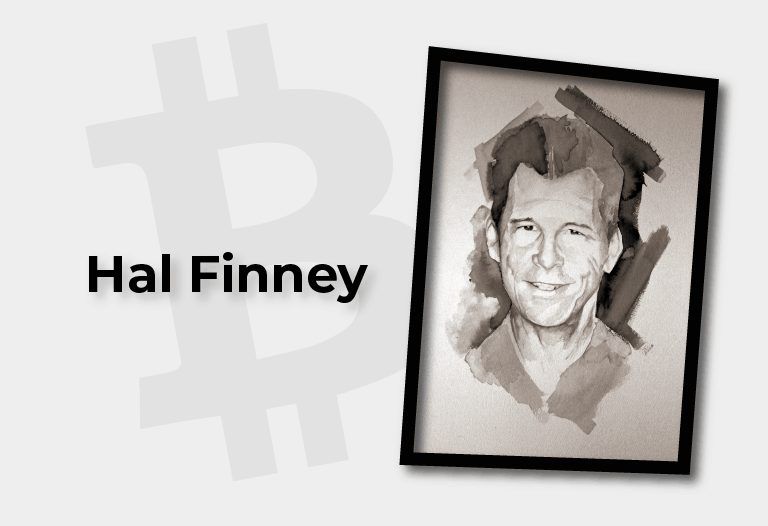
Many argue that his death in 2014 would explain why Nakamoto’s million BTC remains unmoved. However, recent evidence seems to rule him out: while Finney was a declared Mac fanatic, analysis of the original code has verified that the real Satoshi did not master programming in the Apple environment.
Nick Szabo
Nick Szabo is a Hungarian-American computer scientist whose discretion and deep knowledge of cryptography have made him one of the most recurring suspects. His greatest contribution was the creation in 1998 of «Bit Gold», a theoretical precursor to Bitcoin that laid the foundations for decentralized digital money, although it was never implemented.
Furthermore, Szabo is the author of the concept of «Smart Contracts», a key innovation for secure e-commerce between strangers. Although various linguistic and technical analyses point to him as the most likely candidate, Szabo has systematically denied being Satoshi.
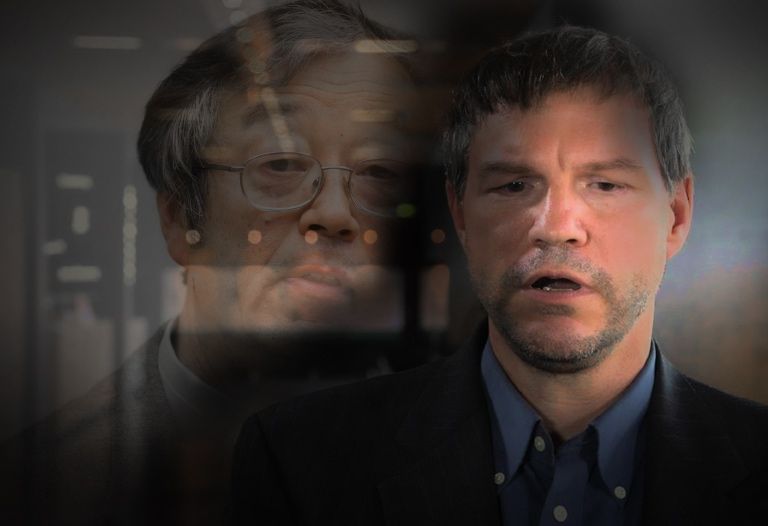
Nevertheless, his commitment to the ecosystem is undeniable, having publicly collaborated on the development of scalability solutions such as the Lightning Network.
Craig Steven Wright
Another hypothesis attributed the creation of the Nakamoto pseudonym to Craig Steven Wright, an Australian computer scientist. This hypothesis stems simply from the fact that he himself published that he was the creator; however, shortly afterwards he issued a statement claiming he was not ready to assume responsibility. Even so, his attempts to proclaim himself the real Satoshi have led him to be nicknamed «Faketoshi» by a large part of the community.
Adam Back
Adam Back, CEO of Blockstream, according to the New York Times, is the person likely hiding behind the pseudonym. However, Back strenuously denied it in several meetings and email exchanges with Carreyrou and posted on X after the journalist dropped his investigation to continue denying it.
«I also don’t know who Satoshi Nakamoto is, and I think it’s good for Bitcoin that this is the case, as it helps Bitcoin be seen as a new asset class, the mathematically scarce digital commodity,» he wrote.
«I am clearly not Satoshi, that is my position,» he declared, adding: «And for what it’s worth, it’s true.» According to him, the rest of the New York Times evidence is «a combination of coincidences and similar phrases from people with similar experiences and interests».
i'm not satoshi, but I was early in laser focus on the positive societal implications of cryptography, online privacy and electronic cash, hence my ~1992 onwards active interest in applied research on ecash, privacy tech on cypherpunks list which led to hashcash and other ideas.
— Adam Back (@adam3us) April 8, 2026
Dorian Nakamoto and other names that made headlines
Beyond the technical candidates, the mystery of Satoshi has left names ranging from real influence to media spectacle:
- Wei Dai:Computer engineer and creator of b-money in 1998. His work was so influential that it is cited in the Bitcoin whitepaper and Ethereum’s smallest unit (the wei) is named in his honor. Despite the theoretical connection, Dai doubts he directly influenced Nakamoto.
- Dorian Nakamoto: A Japanese-American physicist who shot to fame in 2014 after a Newsweek article. Despite the physical resemblance and surname, Dorian flatly denied any connection, and Satoshi himself briefly reappeared on a forum to post: «I am not Dorian Nakamoto.»
- Stephen Mollah: In October 2024, this British macroeconomist called a press conference in London charging admission to «reveal his identity.» But he could not show live technical proof due to «computer problems» and presented easily faked screenshots. The community quickly labeled him an attempted fraud.
In the crypto world, the maxim holds: «Don’t trust, verify.» For someone to be accepted as the real Satoshi, the community demands one of these two actions:
- Use the private key of one of Satoshi’s known addresses to sign a message.
- Transfer a fraction of a bitcoin from one of the blocks mined in 2009.
Until that happens, any self-proclamation is considered mere noise or attempts to gain personal notoriety.
How many Bitcoins does Satoshi Nakamoto have
One of the most frequently asked questions about the largest cryptocurrency is «Who owns the largest amount of Bitcoins (BTC)?»
Although there is no definitive confirmation from the creator, according to data from Arkham Intelligence, it is estimated that the creator of Bitcoin owns around 1.1 million BTC, accumulated through mining in the early stages of this cryptocurrency.
UPDATE: $100 BILLION IN SATOSHI NAKAMOTO’S HOLDINGS NOW ON ARKHAM
We’ve added an additional 22,000 Satoshi addresses with a total BTC balance of 1,096,354 to the Satoshi Nakamoto entity on Arkham.
These are derived from a known mining pattern referred to as the Patoshi Pattern,… pic.twitter.com/Fe6nlJ07au
— Arkham (@arkham) February 4, 2025
This impressive accumulation of wealth arose from Satoshi Nakamoto’s mining activities during Bitcoin’s early days. Some claim that Nakamoto mined up to 54,316 Bitcoin blocks, receiving a block reward of 50 BTC per block before the first halving event.
Satoshi’s last known messages
In just a few months, Bitcoin’s creator went from leading the world’s most important forum to vanishing forever. These were his final steps:
- December 12, 2010:The last public post. His final message on Bitcointalk was a technical update on message size limits. There was no «goodbye», just code.
- April 2011: The real closure came through private emails to his closest collaborators. The phrases that went down in history were: «I’ve moved on to other things. Bitcoin is in good hands with Gavin and the rest of the team.» Message to Mike Hearn.
- The final act: Satoshi did something essential: he handed over control of the Bitcoin.org domain and network alerts to the community. By erasing his name from the contacts, Satoshi killed the «Leader» so that the Protocol could be born.
The legacy of Satoshi Nakamoto
Truly, Satoshi not only designed the money of the future; he had the ethical discipline not to become its owner. By disappearing from the public scene, he transformed Bitcoin into the only network in the world that lacks a human «single point of failure».
If Satoshi had remained present, Bitcoin would always have risked being seen as a company or a personal project; by leaving, he turned it into a force of digital nature.
Frequently asked questions about Satoshi Nakamoto
|
Question |
Short answer |
| Who is Satoshi Nakamoto? | He is the pseudonym of Bitcoin’s creator and author of its whitepaper. His real identity remains a mystery. |
| Is he a person or a group? | It is not known for sure. The use of impeccable technical language suggests it could be a group of experts, although he always communicated in the first person. |
| How much Bitcoin does Satoshi have? | He is estimated to own approximately 1.1 million BTC, distributed across thousands of wallets that have never moved their funds. |
| Is his real identity known? | No. There are candidates like Hal Finney or Nick Szabo, but no one has been able to present definitive proof. |
| Why did Satoshi disappear? | It is believed he did so to protect his privacy and ensure Bitcoin’s decentralization, preventing the network from depending on a single leader. |
To conclude, today, Bitcoin belongs to no one because it belongs to everyone: it is a neutral, global, and sovereign protocol that has forever changed our definition of financial freedom.
At Bitnovo, we share that original vision from 2008: we work every day to make access to this new paradigm simple, secure, and fair, allowing anyone, anywhere, to be the owner of their own financial future. «Satoshi’s revolution continues, and you are part of it.»