




In the oscillating universe of cryptocurrencies, it is easy to feel overwhelmed by the jargon and English terms. But don’t worry, we are here to demystify one of the most important and simple concepts to understand: HODL or “hodling”.
If you have ever heard of this term and wondered if it is a “risky bet” or a serious financial strategy, you are in the right place. Get ready to discover that hodling is, in essence, a long-term investment philosophy based on conviction and patience.
Our goal is for you to understand this concept under a fundamental premise: your crypto, your rules. We are going to explain to you how this strategy works so that you make informed and safe decisions.
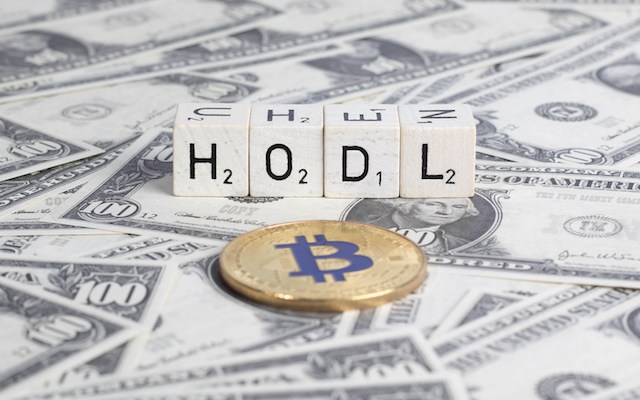
Definition and origin of hodling / HODL
Holdear means keeping your cryptocurrencies for a long time, ignoring daily or weekly market oscillations. In other words, the term “HODL” refers to a long-term investment strategy: buying and holding cryptocurrencies regardless of market volatility.
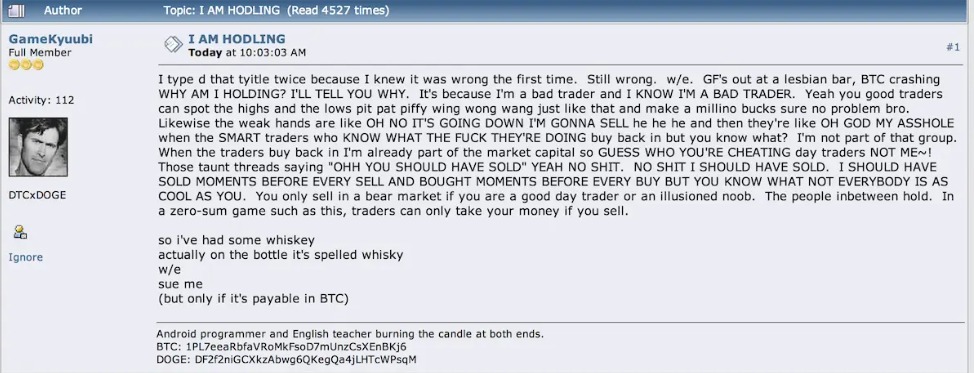
The history of HODL is a legendary anecdote born from the frustration and humor of the crypto community. It all began in 2013 following a famous post on BitcoinTalk forums where the user “GameKyuubi” mistakenly wrote “I am HODLING” (instead of “I am Holding”). Since then, hodl became a motto of the crypto community.
Specifically, the message, written in a tone of drunkenness and desperation, explained that, despite the drop, he would not sell his Bitcoins. This typo went viral instantly. Instead of correcting it, the crypto community, famous for adopting meme culture, elevated it to an investment philosophy. It showed that, even in moments of panic, the best long-term strategy for many is simply to hold on.
Thanks to the rapid adoption of the typo as a cultural meme, it became a popular philosophy that encourages investors to ignore short-term fluctuations and avoid panic selling. It is often interpreted as an acronym for “Hold On for Dear Life”.
In fact, this acronym has become a battle cry and a reminder that, although holding is a solid philosophy backed by conviction in the underlying technology, it is not a guarantee of success and requires nerves of steel to remain firm. To this day, the term HODL persists in the memory of bitconers, even having an exclusive day for its commemoration every December 18.
As a curious fact, Elon Musk helped popularize the word “hodl” with his tweets, contributing to it now being part of the essential vocabulary of the crypto investor.

What does hodling consist of as an investment strategy?
HODL is an ideal strategy for those who believe in the future potential of cryptocurrencies. It consists of buying an asset and keeping it long-term, ignoring short-term price fluctuations, trusting in its future growth and appreciation potential.
Indeed, HODLing has become particularly popular among Bitcoin holders, who believe in the long-term potential of their investments. By resisting the temptation to sell during downturns, these investors seek to benefit from the eventual market recoveries that often follow periods of decline.
However, it requires patience, discipline and a clear understanding of its risks. And, most importantly, a prior plan. A disciplined hodler does not improvise or react emotionally to sharp market drops. They know in advance why they invested, have their goal clear, and therefore can resist the temptation to sell. It is a strategy for those who firmly believe that the inherent value of the cryptocurrency will prevail over short-term volatility.

Advantages and disadvantages of hodling
While HODLing offers several advantages for long-term investors, it also entails risks that require careful consideration and planning. Balancing the advantages and disadvantages of this strategy is essential for effective cryptocurrency investment.
| Advantages | Disadvantages |
| Operational simplicity. | Long bear markets. |
| Allows investors to benefit from the appreciation of digital assets over time. | Passive investment can cause you to miss short-term trading opportunities that could generate profits. |
| Less time glued to charts. | Opportunity cost. Funds tied to HODLing could be invested elsewhere for potentially higher returns. |
| A long-term strategy can provide a sense of stability amid market volatility. | Standing firm during recessions can be emotionally draining and can lead to panic selling. |
| Caution, these are potential advantages, not promises, as investing in cryptocurrencies does not bring guaranteed benefits. | Caution, hodling is not for everyone. |
Hodling vs. other strategies in crypto
While the crypto world offers a wide spectrum of approaches to obtain profits, hodling is fundamentally distinguished from other more active and short-term strategies. Hodling is based on deep conviction and patience. It is a philosophy that prioritizes sustained accumulation over rapid speculation, allowing the investor to ignore the “noise” of the market and trust in the long-term growth of assets and blockchain technology.
Hodling vs. active trading
| Aspect | Hodling | Trading |
| Investment style | Passive investment | Active trading |
| Time horizon | Long-term | Short-term |
| Market analysis | Requires minimal analysis | Requires constant market analysis |
| Risk level | Lower risk due to long-term focus | Higher risk due to market volatility |
| Emotional stress | Less emotional tension | Greater emotional tension |
| Potential gains | Gradual appreciation | Potential for quick gains |
| Transaction fees | Fewer transactions | Frequent trading generates commissions |
While both currents have the same goal of generating profits, we can see that each has its own characteristics.

To be a holder you don’t need much knowledge, simply buy cryptocurrencies at the best possible price and store them in a safe place. On the other hand, to be a trader you have to train, study the market and develop strategies based on data and future estimates, since when buying and selling cryptocurrencies there is also the risk of ending up losing.
This does not mean that hodling requires no knowledge at all, as the holder will have to research in which projects to invest long-term, taking into account what the work teams are and what solution is proposed for the future.
Hodling vs. Dollar Cost Averaging (DCA)
HODL and DCA are among the most popular conservative strategies among cryptocurrency investors. Their simplicity and their supposed robustness to face market volatility have attracted millions of investors.

While HODL is extremely simple, DCA requires a bit more preliminary work from the investor, both in terms of management and ROI evaluation.
Particularly, DCA also has a long-term focus, but uses a different approach. With the DCA strategy, you would buy Bitcoin at regular intervals, for example, quarterly, monthly, weekly or even daily, for the same fixed investment amount. Instead of investing all your money in the asset at once and holding it, you would divide your investment into regular intervals.
For example, while a Hodler might invest $36,000 in one go and hold it for three years, a DCA investor divides the same amount into 36 monthly intervals over the same three-year period and buys $1,000 in Bitcoin once a month.

During the total three-year investment period, the amount invested is the same: $36,000. However, a DCA investor divides it equally throughout the period to smooth out any fluctuations and protect themselves from extreme or prolonged bear markets. DCA also seeks to minimize the risk of investing a large lump sum during a market peak. This risk is always present in HODL investing.
Hodling vs. “buy the dip” strategies
Another common tactic is to take advantage of sharp market drops to buy cheaper. Although it is more emotional and less systematic than DCA, many holders use it to strengthen their position in moments of panic.
So, “Buy the Dip” is a simple investment strategy: buy when the price falls hoping it will rise again. The theory sounds good, but in practice not all dips are opportunities. If you buy without analyzing, you can end up trapped in a market that continues to plummet.

Here is a real example: Bitcoin fell from $69,000 to $16,000 in 2022. Some bought expecting a rebound, others saw their investment continue to fall. The key was to differentiate a simple dip from a bear trap.
Hodling vs. staking, lending and other alternatives
There are other alternatives for those hodlers who seek to generate additional returns on their cryptocurrencies, although this involves assuming additional risks:
- It consists of “locking” your coins in a network that uses the Proof of Stake (PoS) mechanism, like Ethereum. In exchange for helping to secure and validate the network, you receive rewards (new coins).
- Lending (Loans) and yield products. It involves lending your cryptocurrencies to third parties through centralized platforms or decentralized protocols (DeFi) to generate interest.
It is crucial to understand that these alternatives add layers of risk that do not exist in simple hodling. When staking, your funds may be immobilized for a time; when lending, you are exposed to counterparty risk (if the centralized platform fails) or Smart Contract risk (if there is a flaw in the DeFi code). Therefore, if your only goal is to keep your assets long-term and sleep peacefully, none of these strategies is mandatory. You can simply hodl your cryptocurrencies in a personal wallet and avoid these active yield risks.

Now that you are clear about what “hodling” is you can say that you already know the simplest and least risky strategy but that has still granted many benefits to those who have chosen to follow it. Sometimes, even more than those who have dedicated years to analyzing markets to try to determine the right time to buy and sell cryptocurrencies in the rest of the planet.
Selection of cryptocurrencies and platforms for hodling
The first step to hodling is to acquire cryptocurrencies with a clear purpose of retaining them for years. In this sense, investors are recommended to first do a study on the market, such as a fundamental analysis, to evaluate the growth capabilities of the assets and their potential to grow over time.
It is best to focus on cryptocurrencies with solid fundamentals, such as Bitcoin, with a clear philosophy, limited supply and mass adoption. Other assets with large market capitalization, such as the case of Ethereum, have great opportunities to grow with its constantly growing decentralized finance ecosystem.
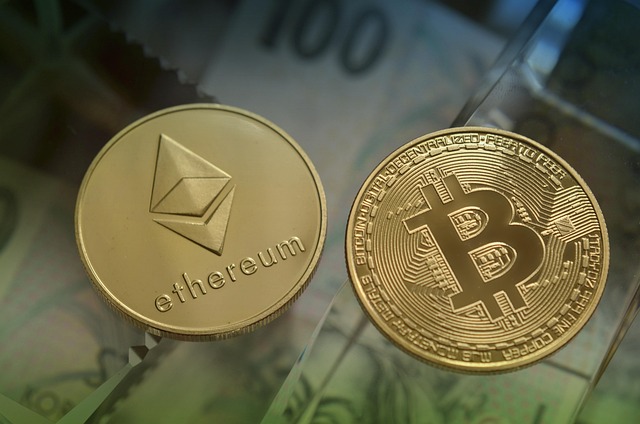
Very important, avoid speculative altcoins or memecoins without clear use cases, as these have a higher risk of collapse and usually appreciate due to trends.
Bitcoin, Ethereum and altcoins: differences when hodling
Although it is possible to hold almost any digital asset, some cryptocurrencies are more popular for this strategy due to their track record and long-term growth potential.
Bitcoin and its role as a store of value
Bitcoin is the most popular cryptocurrency to own due to its programmed scarcity (only 21 million BTC in total) and its global acceptance as a store of value. Over the years, Bitcoin has proven to be an asset that tends to appreciate over time, overcoming multiple crises and consolidating itself as “digital gold”.
Ethereum and other popular altcoins to hold
Ethereum (ETH) is another widely chosen cryptocurrency for holding, due to its Smart Contracts ecosystem and its fundamental role in the development of decentralized applications (dApps).
In addition to ETH, there are other popular altcoins to hold, such as Cardano (ADA), Solana (SOL) and Polkadot (DOT), which offer innovative projects with long-term growth potential.
Security and custody: where you keep what you hodl matters
Security is a fundamental pillar of HODL, as keeping your cryptocurrencies for years requires protecting them against hacks or errors. This is where the choice of custody becomes critical.
The main risk is leaving all your capital on exchanges: if the platform is hacked or suffers solvency problems, you can lose your funds, as you do not have direct control over the private keys. In the crypto world, the golden rule is: “Not your keys, not your coins”. That is why it is vital to understand the function of your private keys and the seed phrase, which are the true proof of ownership of your assets.
The focus is on teaching how to protect oneself: the best practice is to transfer your assets from the exchange to a secure wallet, preferably a hardware wallet (or cold wallet), which stores your private keys completely offline. This minimizes the risk of hackers being able to access them remotely. Understanding and mastering these concepts is empowering, it is about protecting your assets and exercising your financial sovereignty with knowledge, without depending on the “magic” of a third party.
How Bitnovo can help you on your hodling path
The hodler’s path is a journey of independence that requires two key elements: easy access to cryptocurrencies and the security of self-custody. Bitnovo adapts to this process by offering the essential tools so you can implement the hodling strategy under the philosophy of “your crypto, your rules”:
- Simplified purchase.Acquiring your first cryptocurrencies is the simplest part with Bitnovo. You can do it by eliminating technical complications and get assets easily, either directly through their App or by buying Bitnovo coupons in physical stores to exchange them for Bitcoin, Ethereum or other cryptocurrencies.
- Facilitating self-custody.Once you have them, the crucial part of hodling is to take them off the platform. The Bitnovo App is designed to give you total control of your private keys.
- Education and empowerment.Bitnovo’s focus is that you understand each step. They provide you with the tools so you can make your decisions with information, manage your own wallet and maintain discipline in the face of volatility.

The final message is simple: if you dare to be the owner of your decisions and not a slave to market emotions, the potential for long-term growth can be immense. The story of the past is only a guide, not an instruction manual. Your future is written by you.
Risks of hodling and risk management
Although hodling is a simple and effective strategy, it is not without risks. Remember: the goal of hold is not just to wait… but to do it safely and with a long-term vision.
Extreme volatility
Bitcoin can fall more than 70% in months, even in bull cycles. Many novice holders sell in panic… and then regret it.
Therefore, define your time horizon (3–5 years minimum) and avoid checking the price every day. Automate your purchases with DCA and store your BTC in an offline wallet that does not tempt you to sell.
Psychological risk (FOMO / FUD)
Alarmist or euphoric headlines can lead you to bad decisions. The holder’s worst mistake: selling cheap after a sharp drop. As a solution: avoid making impulsive decisions. Review data, not emotions.
The psychological risk when hodling manifests as FOMO (Fear Of Missing Out) and FUD (Fear, Uncertainty and Doubt), driving irrational decisions: FOMO leads you to buy late out of euphoria, while FUD provokes panic selling, damaging your strategy. Both are emotional and can lead to losses, but you can manage them with a clear investment plan, self-awareness, setting limits on social media use, and focusing on analysis and patience to break the cycle of impulsive decisions and maintain a rational long-term perspective.
According to cryptocurrency analyst Alex Krüger, “The key to successful investment lies not only in predicting the market, but also in having the emotional strength to withstand its fluctuations.”
Custody risks
Storing your cryptocurrencies on centralized exchanges is convenient… but insecure. Hacks, account blocks or platform crashes still happen.
Therefore, use a cold wallet. A simple and resistant option: 100% offline, made of steel, and without the need for technical knowledge.
Not planning an exit strategy
Many holders do not know when to take profits or move BTC to fiat. That can lead them to “hodl eternally” without clear goals.
Therefore, establish a plan with milestones: percentages to sell if BTC exceeds certain levels. And write it down so you don’t improvise. Store the rest safely offline.
Tips and good practices for hodling
Let’s now go with a series of recommendations that can be very useful to you. In the end, the master is made with time and we all make mistakes at the beginning.
Do not invest before researching
Investing in Bitcoin or Ethereum is simple, but if you are looking for a little more risk, you must be cautious. Search, read, see who is behind it and above all, research in forums.

You should also keep in mind that those who assure you that in months, weeks or days you will double or more your investment, are trying to scam you.
Invest only what you can maintain long-term
If you want to get rich in two days, we are already off to a bad start. This is not a game and you can gain a lot or lose everything. For this very reason we recommend that you be very prudent.
You must keep in mind that hodling involves leaving the funds there “forgotten” the longer, the better. So investing all your savings can be a monumental mistake.

It is also not a logical idea to sell everything to buy cryptocurrencies or take out a loan. Doing this is a huge risk and if we have family and obligations, it can be a disaster. For this very reason, you must be coherent.
No one can guarantee you profits
You may read that hodling implies a guaranteed profit in the long term. Not even investing in Bitcoin and/or Ethereum is there a guarantee of profits. Any cryptocurrency can go to zero at any moment. You must always keep in mind that you can lose everything or almost everything.
Beware of FUD
If you are new, certain information may make you uneasy. The positive thing is to follow several sources, inform yourself well and look at X to see what influential people think. Above all, FUD focuses on Bitcoin and Ethereum, the two most important cryptocurrencies.

When you see that all cryptocurrencies are in the red, don’t go crazy and sell either. You should know that after each all-time high (ATH) a significant correction usually occurs.
Hodl and forget
One of the best pieces of advice you can be given is to buy and forget. When you are hodling and are constantly looking at that cryptocurrency, you are most likely to sell too soon.
It is also not healthy to be obsessed with a project, constantly reading about it. It is also not healthy to be looking at the price every five minutes.
It is advisable to write down the purchase date, the amount invested and the purchase price. Each month we can review how our investment is going, but without going crazy.

Frequently asked questions about hodling
How long do I have to hodl?
The time for holding is a long-term strategy, from months to years, seeking the revaluation of the asset. The main thing is to establish clear objectives. Likewise, it is advisable to evaluate risk tolerance and diversify investments. The key is to resist the temptation to sell during drastic drops or FUD.
Is it a good idea to go into debt to hodl?
Normally, it is not a prudent practice. The hodling strategy requires long-term conviction, but financial stability is the number one priority. By combining debt with the extreme volatility inherent to the cryptocurrency market, a significantly amplified financial risk is created.
The hodler’s discipline is based on not having external pressures, debt, on the contrary, imposes a temporal and financial pressure that can ruin any long-term investment plan.

Look, at the end of the day, this is not about getting rich overnight. It’s about once and for all declaring your financial independence.
To conclude, investment in cryptoassets may not be suitable for retail investors and there is a risk of total loss of the amount invested. It is important to read and understand the risks of this investment. Or as Charlie Lee indicates: “Time is more important than timing. In the world of cryptocurrencies, patience is the greatest virtue.”