



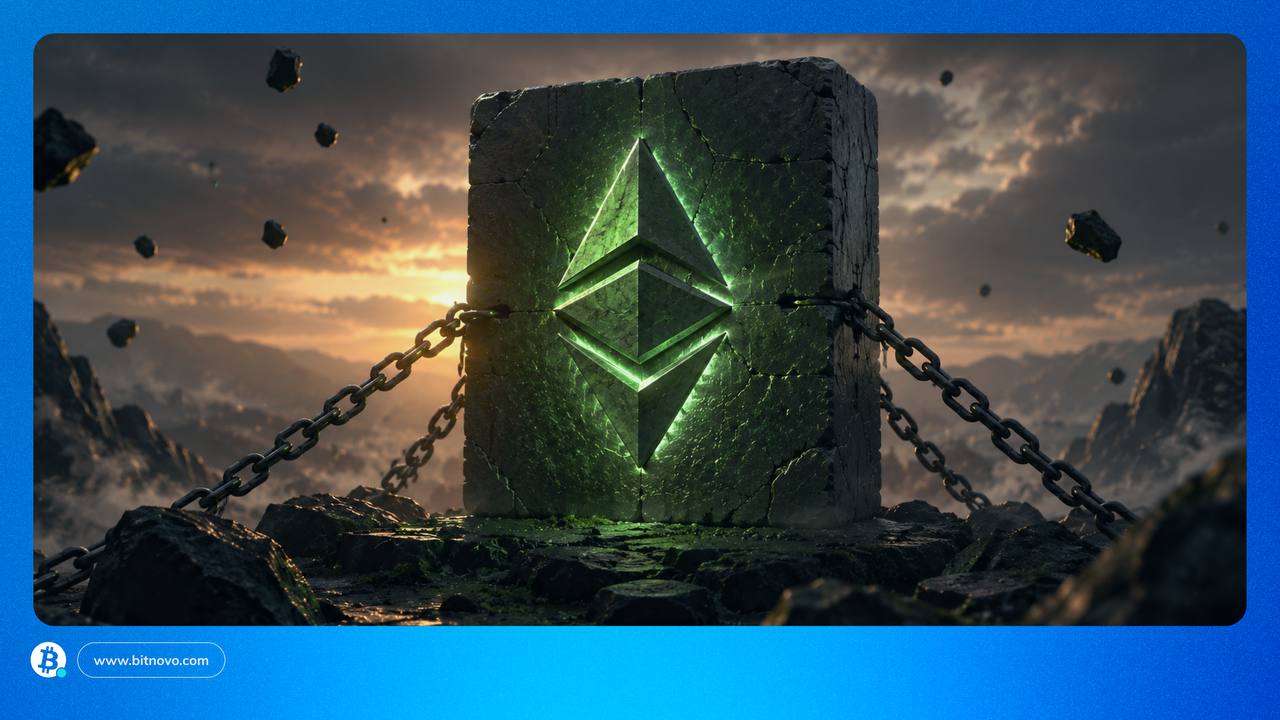
You surely know Ethereum (ETH), the queen of smart contracts. But did you know that the network that today competes with Bitcoin is not, technically, the original version? That place belongs to Ethereum Classic (ETC), a blockchain with a story worthy of a Hollywood movie.
To understand what ETC is, we have to travel back to 2016. After a massive hack on an investment fund called The DAO, the Ethereum community faced a moral and technical dilemma: Should they hack their own network to reverse the theft and return the funds to users?
The majority voted yes, giving birth to the Ethereum you use today. However, a group of romantics and purists of decentralization stood their ground and said: “The blockchain is immutable; what is written.” That group rejected the upgrade, kept the history intact with the record of the theft, and decided to move forward with the original chain. Thus, Ethereum Classic was born.

How Ethereum Classic Differs from Ethereum
Although they share the same DNA and were born from the same mind, Ethereum and Ethereum Classic today represent two totally opposite visions of the crypto world.
At the end of the day, it’s about two different philosophies on what a blockchain should be: one that prioritizes evolution and adaptability versus another that defends absolute immutability at any price.
|
Characteristic |
Ethereum (ETH) |
Ethereum Classic (ETC) |
| Base Philosophy | Evolution and adaptability: Code can be modified by social consensus if it benefits the community. | Immutability set in stone: The original chain is not touched. Code is law, no matter what, accepting the consequences. |
| Consensus Mechanism | Proof of Stake (PoS): Completely migrated to Proof of Stake, eliminating traditional mining. | Proof of Work (PoW): Maintains traditional mining with graphics cards. Its hashrate has grown enormously, improving its security massively. |
| Monetary Policy | Dynamic supply: Does not have a fixed maximum supply of coins established in its code. | Sound money (Bitcoin style): Has a fixed maximum supply of 210,700,000 coins, established in the Gotham hard fork of December 2017. |
| Ecosystem and adoption | Massive ecosystem constantly evolving. Concentrates the vast majority of dApps, NFTs, and market liquidity. | More conservative ecosystem, ideal for developers seeking long-term stability and absolute decentralization. |

How Ethereum Classic Works
The answer is simple: it works in a way very similar to Bitcoin in its economy, but with the superpowers of Ethereum to create applications.
For you to understand it at first glance without breaking your head over technicalities, we have summarized everything in this table: straight to the point.
|
Component |
How does it work? |
Key benefit |
| Mining (Proof of Work) | Works with traditional miners and graphics cards, rejecting Ethereum’s model. | More security: Its hashrate has grown enormously, making the network highly resistant. |
| “5M20” Policy | Mining rewards are reduced by 20% every 5 million blocks. | Anti-inflation: It is a scarce asset with fixed and predictable issuance, Bitcoin style. |
| Contracts and dApps | Allows creating decentralized applications by sharing Ethereum’s technical base. | Programmable network: Used to automate digital agreements without intermediaries. |
| EVM Compatibility | It is 100% compatible with the Ethereum Virtual Machine. | Easy for developers: They can use the same tools and code from Ethereum on ETC. |
In summary, Ethereum Classic works by combining the best of both worlds: the predictable monetary policy and mining security of Bitcoin, along with the technological flexibility and smart contracts of Ethereum.

The Olympia Upgrade: The Future of ETC
Olympia is, without a doubt, the most important upgrade in the history of Ethereum Classic. Its great mission is to solve the network’s main historical problem: the lack of sustainable funding to pay developers and keep the ecosystem growing long-term.
To understand how it achieves this simply, here are the keys:
- Funding at the heart of the protocol:Olympia introduces a decentralized treasury system directly into the blockchain’s consensus. Instead of burning the base transaction fees (as Ethereum does), ETC transparently redirects them to this secure and immutable development fund.
- Voluntary (Opt-in) and non-inflationary system:True to the network’s philosophy, no new coins are created out of thin air to finance this fund. Miners themselves can voluntarily contribute to the network’s treasury, protecting the value of your ETC.
- More developers on the way:To accelerate this growth, the ETC Grants DAO has already optimized its funding processes, making it easier for money to reach the programmers building the network’s future efficiently.
Why Ethereum Classic Remains Relevant
Despite the years and trends in the crypto world, Ethereum Classic stays firm in the Top for four key reasons:
|
Key Factor |
Why does it matter? |
Its great advantage |
| Absolute immutability | The network’s rules and history are not modified under any circumstance or social pressure. | It is the gold standard for those seeking pure, uncensored decentralization. |
| Proof of Work sanctuary | Maintains traditional mining based on computational power. | Offers robust security, attracting miners who migrated from Ethereum. |
| Compatibility with Ethereum | Uses the same technical engine (EVM) and Ethereum’s programming language. | Any developer can switch their dApps to ETC instantly. |
| The momentum of Olympia | Introduces a decentralized treasury to directly fund network development. | It is the key catalyst to attract new projects and talent to the ecosystem with real capital. |

How to Buy Ethereum Classic
Buying Ethereum Classic (ETC) on Bitnovo is a fast, secure, and hassle-free process, as you receive your cryptocurrencies directly in your own wallet.
|
Step |
What you need to do |
Available options |
| 1. Choose the method | Select the payment method that is most comfortable and fast for you. | Card, Apple Pay, Google Pay, SEPA Transfer, or Cash Vouchers. |
| 2. Enter the amount | Enter the amount of money you wish to invest or the ETC you want to receive. | Local currencies (Euros) – No mandatory registration for basic amounts! |
| 3. Provide your wallet | Enter the address of your private Ethereum Classic wallet. | Remember to verify the address carefully: with Bitnovo, you are the total owner of your funds. |
| 4. Receive your ETC | Confirm the payment and the network processes your sending automatically. | Done! Your cryptocurrencies will arrive directly in your wallet in minutes. |
At the end of the day, Ethereum Classic is much more than the chain that split in 2016; it is a unique philosophical and technical proposal that demonstrates that a blockchain’s original rules are not to be touched. Want to add this piece of crypto history to your portfolio? Do it the easiest, fastest, and safest way with Bitnovo.