




Monero is a decentralized cryptocurrency focused completely on privacy and anonymity. It was born in 2014 as an alternative to Bitcoin, with the intention of solving one of its main challenges: the lack of total privacy in transactions.
Well yes, while Bitcoin allows anyone to check the transaction history on its blockchain, Monero uses advanced technologies to hide this information and protect user data. In a few words, Monero seeks to guarantee that transactions are truly private.
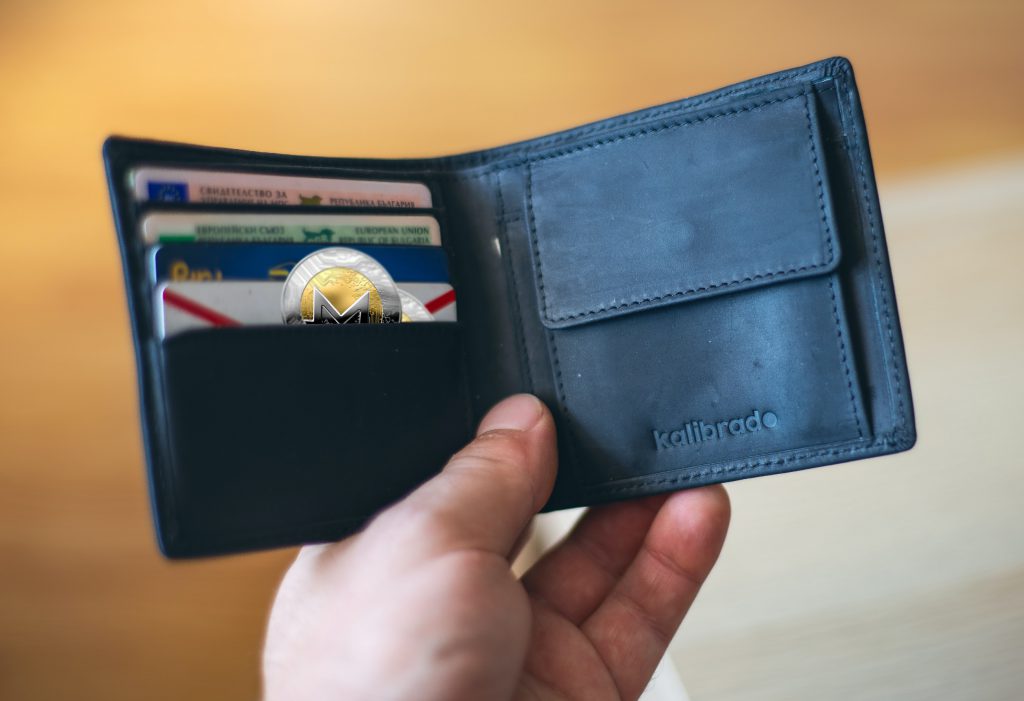
Why mine Monero? Freedom and privacy that pay off
Mining Monero can be profitable with the right hardware and software. The RandomX algorithm is optimized for CPU mining, which makes it more accessible and consumes fewer resources than other cryptocurrencies, since it can be performed using a CPU or GPU instead of an ASIC, which requires a large investment and energy.
To mine Monero, users need a computer with a CPU or GPU, Monero mining software, and a Monero wallet to store the earned XMR. They can mine solo, join a mining pool, or use cloud mining services to get more efficient results.
Really, these are some good reasons to mine Monero:
- Mining can be an excellent way to subsidize the purchase of a high-end GPU.
- Monero can be easily exchanged for BTC. It is an economical way to slowly accumulate a position in Bitcoin.
- XMR can also be exchanged directly for fiat currencyon some major exchanges.
- Mining XMR uses less electricity than some cryptocurrencies.

Differences between CPU and GPU mining
Mining Monero is more efficient using the CPU (processor) of your computer than the GPU (graphics card), due to its mining algorithm called RandomX.
This algorithm is designed for CPUs to perform much better, so, unlike other cryptocurrencies, GPUs do not offer good performance. For this reason, it makes more sense to focus on choosing a powerful CPU for Monero mining.
Hardware for mining Monero with GPU in 2025: power and efficiency
Now, although the RandomX algorithm was designed to reduce the GPU’s advantage, historically AMD cards have shown somewhat better performance than NVIDIA ones.
|
Category |
GPU Recommendation | Performance (RandomX) |
Comment |
| Recommended Option (AMD) | AMD Radeon RX 6800 XT | Moderate | Offers a good balance between consumption and hash rate if you already own it. |
| Affordable Option (AMD) | AMD Radeon RX 5700 XT | Moderate | Still maintains a decent hash rate for a lower cost on the second-hand market. |
| NVIDIA Option (If you already have it) | NVIDIA RTX 3080 | Low | The performance is not as competitive as AMD for RandomX, but can be used if you already have the equipment. |
Very importantly, for Monero, the CPU is the central piece. The GPU is only recommended if you already have it and want to add a bit of extra hash power, but it is not worth buying a new GPU just to mine XMR.
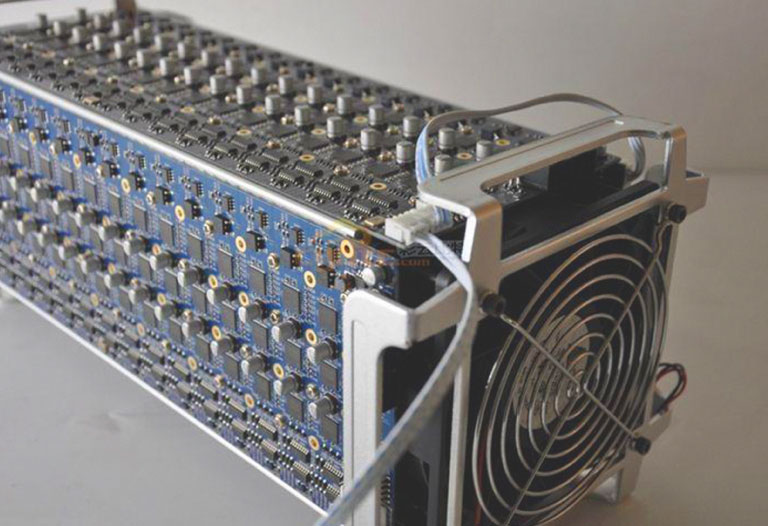
Preparing your PC to mine Monero step by step
Mining XMR on a PC is one of the most common methods due to the accessibility of the necessary hardware and software. Here we tell you how to do it:
- Verify the hardware requirements. Make sure your PC meets the minimum requirements for mining.
- Get a Monero wallet. Set up a wallet to store your mined XMR.
- Install the mining software. Choose reliable Monero mining software compatible with your operating system.
- Join a mining pool. Although you can mine solo, joining a mining pool can increase your chances of earning consistent rewards.
- Optimize the configuration. Configure your mining software settings for optimal performance.
- Start mining. Begin the mining process and monitor your PC’s performance. Monitor temperatures to avoid overheating and ensure your system runs smoothly.
The best programs to mine Monero on GPU
Even though Monero’s RandomX algorithm is optimized for the CPU, mining software still allows the use of the GPU to make the most of the available hardware. Here are the most popular programs, suitable for both beginners and advanced miners:
|
Software |
User Type | Brief Description |
GPU Compatibility |
| XMRig | Advanced/Standard | It is the most popular, high-performance, cross-platform open-source miner for the RandomX algorithm. Requires configuration via a text file or command line, offering total control over every aspect of mining (CPU tuning, GPU threads, overclocking, etc.). | AMD (OpenCL) and NVIDIA (CUDA). Ideal for optimizing GPU configuration. |
| Cudo Miner | Beginner | An “all-in-one” solution that includes a graphical user interface (GUI). It is extremely easy to set up and start mining. Automatically detects hardware and switches to the most profitable coin for your equipment (although it can be forced to Monero). | AMD and NVIDIA. Perfect for starting without handling code. |
| MinerGate | Beginner/Standard | Known for its friendly interface and ease of use, it has been a traditional option for novices. Offers unified mining (CPU and GPU) with a “point and click” interface. However, its current reputation regarding pools and fees should be researched. | AMD and NVIDIA. Simple to set up. |
| SRBMiner-Multi | Advanced | A more specialized miner that supports a wide variety of algorithms. Known for its superior optimization for AMD graphics cards. Offers advanced control tools and GPU health monitoring. | Mainly AMD. |
How to connect to a mining pool and start earning NOW
Miners can decide whether they prefer to mine solo or in a pool. Each method has its advantages and disadvantages, but the Monero Project encourages individuals to mine solo using the Monero software (GUI and CLI), as this type of independent mining is the most effective way to increase the robustness of the Monero network. Mining via P2Pool is also encouraged.

P2Pool is a new and smart way to mine Monero, which allows miners to receive the frequent payments offered by pools without having to trust a centralized pool. P2Pool is a peer-to-peer mining pool that gives miners full control over their Monero node and what it mines. More details in the announcement post.
In reality, joining a mining pool means combining your computing power with other miners. This increases the chances of mining blocks and earning rewards more consistently, although the rewards are shared among all pool members. On the other hand, pool mining is only possible with external software, which may generate a small percentage of the software developer’s fees.
Keep your mining under control: monitoring and security
Like any complex process, Monero mining can present specific problems. Some common problems can be solved:
- Ensure the mining software is configured correctlyby double-checking the pool addresses and wallet details.
- Update mining software and driversto the latest versions for optimal performance.
- Monitor CPU temperaturesto avoid overheating and maintain performance stability.
- Adjust or reduce the CPU intensity setting if mining slows down or the system crashes frequently.
- Check for network connection issuesif the mining software cannot connect to the pool.
- Verify that antivirus software is not blocking the mining software, as it can sometimes be flagged as malicious.
- Restart the system if it becomes unresponsive or slow during mining.

The profitability of mining Monero with GPU in 2025: Is it worth it?
Mining Monero can be a lucrative activity, but potential earnings depend on many factors. To understand how much you can earn, it is necessary to consider several aspects:
- Hardware costs. The initial investment in mining hardware can be significant. Ensure your equipment is efficient and profitable.
- Electricity costs. Mining consumes a lot of electricity. Check local electricity rates and calculate the running cost of your mining setup.
- Mining difficulty. The network adjusts its mining difficulty based on the total computational power of the network. Higher difficulty means lower chances of getting rewards.
- Price. The value of XMR fluctuates. Higher prices can make mining more profitable, while lower prices can reduce profitability.
- Pool and maintenance fees. If you are using a mining pool or cloud mining service, consider the fees and maintenance costs involved.
Your crypto, your rules: protection and wallet for your mined XMR
Congratulations on starting to mine Monero! Now that you are contributing to the network, it is essential that you take full control of your earnings. In the world of cryptocurrencies, the motto is clear: “Not your keys, not your coins.” Self-custody is not just an option, it is the most important step to empower yourself as a miner.

When you mine XMR, the rewards should go to a wallet that only you control. If you leave your coins on an exchange or in a mining pool’s wallet, you are trusting a third party that could be hacked, regulated, or go bankrupt. Assume your financial sovereignty: your Monero, your rules.
Protect your keys and stand out
To secure your mined XMR, you must adopt solid security practices for your wallet:
- Prioritize the official Monero wallet (Monero GUI Wallet). The best option for most miners.
- Key advantage. It allows you to run your own full node (or a lightweight node), giving you maximum privacy by validating your transactions directly without depending on third-party servers.
- Secure your recovery seed (Seed Phrase). This is the master key to your Monero; whoever possesses it, controls your coins.
- Always download mining software and the wallet only from official sources.
- Antivirus. Your mining software will often be flagged as malware by antivirus; if you downloaded it from an official source, you can ignore the warning, but always keep your operating system updated to avoid vulnerabilities.

Once you have mined and secured your XMR, you might want to convert it to other coins or to fiat. Bitnovo is a reference exchange in the market that allows you to operate in a simple and secure way. Bitnovo offers you a reliable path to exchange or sell your Monero without the complexities of large global exchanges, providing you with a secure and well-established option in the Spanish-speaking market.