



If you look at XRP chart expecting it to react exactly the same as Bitcoin or Ethereum to every global headline, you will most likely end up misreading the signal. While most of the crypto market moves to the rhythm set by Bitcoin or by general risk appetite, Ripple’s token responds to a very particular internal mechanics.

Factors such as the scheduled custody release, advances in its cross-border payments infrastructure, and its regulatory position after years of legal scrutiny make XRP behave autonomously. That is why, before reading a red or green candle as a buy or sell signal in advance, it is worth understanding which threads really move its price in 2026.
What XRP is and what role it plays in the Ripple network
XRP is the native digital asset of the XRP Ledger (XRPL), a decentralized, public, and open-source blockchain network. It was designed with a clear purpose: to serve as a neutral bridge asset to facilitate international value transfers almost instantly and with minimal fees.
To understand its current structure, it is essential to separate the technology from the asset and to differentiate the company from the network.
|
ENTITY / ASSET |
ROLE AND NATURE |
| Ripple | Private financial technology company based in the United States. |
| XRP Ledger (XRPL) | Public, decentralized blockchain, open for developers. |
| XRP | Native utility token used for liquidity settlement on the XRPL network. |
Ripple vs. XRP: Understanding the difference
The confusion between the company and the cryptocurrency is common, but they operate under completely different concepts.
Ripple is a technology company dedicated to creating payment software and financial solutions for banks and global institutions. XRP, on the other hand, is the digital asset that operates independently on the XRPL network, acting as a bridge between currencies, settling transactions, and enabling liquidity in financial networks.
The factors that carry the most weight in the price
Determining XRP’s price does not depend on a single trigger; it is the result of several factors acting simultaneously. Beyond projecting numerical targets, the key question for any professional analysis is whether the asset has real utility that supports its valuation and what risks could alter its trajectory.

XRP has established itself as a reference point for investors and financial institutions, not only for its role as a cryptocurrency, but as key infrastructure in the cross-border payments ecosystem. Trading at levels of €1.23, it reflects notable progress compared to the averages of previous years and shows sustained confidence in the network’s technology.
|
KEY FACTOR |
IMPACT ON PRICE |
MAIN MECHANISM |
| Judicial Decisions (SEC) | High / Legal Clarity | Unlocks institutional liquidity and facilitates listing on global platforms. |
| Ripple’s Management | Moderate / Supply | Corporate agreements and supply control through monthly escrow releases. |
| Institutional Adoption | High / Real Demand | Use in RippleNet (ODL) and the RLUSD stablecoin for cross-border settlements. |
| Crypto Macro Environment | Ongoing / Trend | Correlation with Bitcoin and Ethereum amid overall market sentiment. |
The relationship with the SEC and judicial decisions
The litigation between Ripple and the Securities and Exchange Commission (SEC) marked XRP’s recent history. Following the partial ruling in 2023, which determined that XRP sales on secondary markets do not constitute investment contracts, every judicial update has functioned as an immediate price catalyst.
Regulatory clarity not only brings legitimacy, but also removes the institutional brake, facilitating its relisting on global trading platforms and unlocking liquidity in the markets.
Ripple’s behavior as a company
Ripple’s operational management directly influences supply and demand expectations. Among the highest-impact events are corporate announcements, strategic acquisitions, and the integration of new partners.
Likewise, the scheduled release of tokens from its escrow accounts is a controlled mechanism that the market monitors to assess the absorption of available liquidity.
Banking and institutional adoption
Unlike purely speculative assets, XRP is actively used on the RippleNet network through On-Demand Liquidity (ODL) for international settlements in seconds. Furthermore, the deployment of tools such as the RLUSD stablecoin strengthens its financial ecosystem.
With more than 3.8 billion transactions processed and a transferred value exceeding €1,294,500 since 2012, this real utility constitutes the fundamental pillar on which analysts base its long-term value.
The crypto macro context
Despite its own catalysts, XRP does not trade in isolation from the industry. Its price maintains a marked correlation with the behavior of Bitcoin and Ethereum. During bullish phases in major cryptocurrencies, general market sentiment acts as a tailwind that boosts XRP’s price, while correction cycles tend to temporarily drag its value down.
Why XRP does not move like Bitcoin or Ethereum
To understand price evolution in the crypto market, it is essential to recognize that not all digital assets share the same structure. Although XRP is often compared to Bitcoin and Ethereum, its technical and trading behavior responds to completely different dynamics.
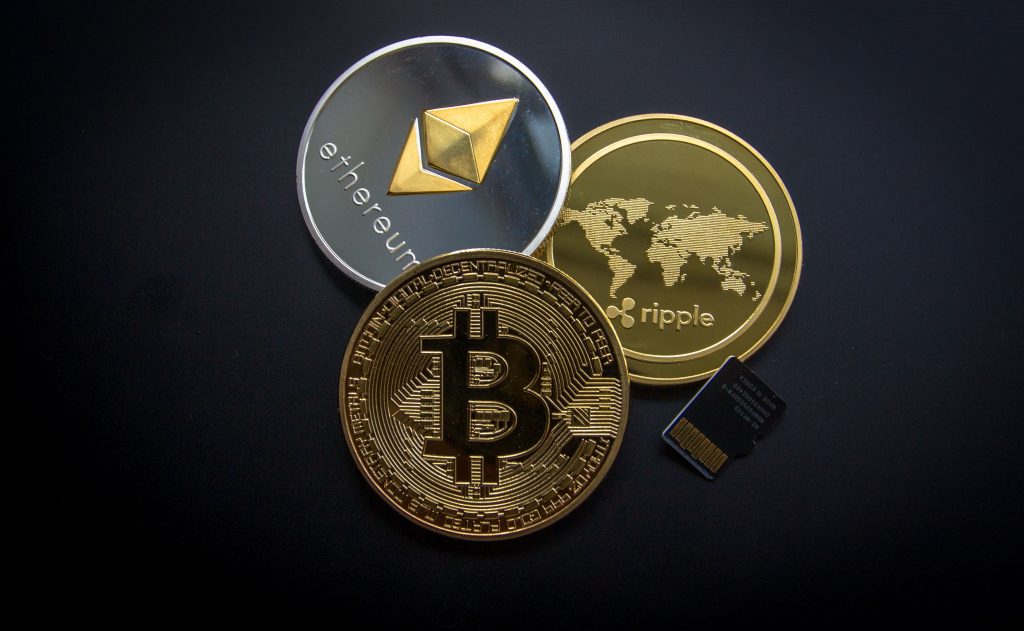
Unlike its competitors, XRP’s price fluctuation is explained by four key structural factors:
1. Circulating supply and pre-mined tokens
- Bitcoin and Ethereum:They have progressive issuance schedules. Bitcoin has a maximum limit set by code of 21 million units, gradually issued through mining.
- XRP:It was born with a fixed total supply of 100 billion pre-mined tokens since its creation in 2012. With a substantially larger volume of coins in circulation, each unit requires a significantly higher capital injection to experience sharp percentage jumps in its price.
2. Consensus model vs. traditional mining
- Bitcoin (Proof of Work / PoW):Requires miners to solve complex mathematical problems to validate blocks every 10 minutes, consuming high energy but ensuring strict decentralization.
- Ethereum (Proof of Stake / PoS):Validates blocks through nodes that lock up their coins (staking).
- XRP (XRPL Consensus Algorithm):Completely eliminates mining and staking. It operates through a network of trusted validator nodes that agree on transactions by voting. This allows it to process transactions in 3 to 5 seconds at minimal costs, prioritizing speed and operational efficiency over traditional decentralized architecture.
3. Holder concentration and scheduled liquidity
- Bitcoin and Ethereum:Their supply is distributed among millions of users, miners, and institutions around the world.
- XRP:A representative portion of the total supply is held under scheduled custody controlled by Ripple Labs. The monthly scheduled release of part of these reserve holdings directly influences market perception of available supply and potential selling pressure.
4. Dominant narrative and use case
- Bitcoin:It is conceptually positioned as a store of value and a hedge against inflation.
- Ethereum:It functions as the global infrastructure for smart contracts, decentralized applications (dApps), and decentralized finance (DeFi).
- XRP:Its primary purpose is to serve as a bridge asset for cross-border payments and settlements between banks and remittance providers. By being focused on settlement efficiency for the institutional financial sector, its demand is subject to the pace of corporate adoption and banking integration.
|
Characteristic |
Bitcoin (BTC) | Ethereum (ETH) |
XRP (XRPL) |
| Maximum Supply | 21 Million (Progressive) | Dynamic (No fixed limit) | 100 Billion (Pre-mined) |
| Consensus Mechanism | Proof of Work (PoW) | Proof of Stake (PoS) | XRPL Consensus Protocol |
| Confirmation Time | ~10 minutes | ~12 seconds | 3 to 5 seconds |
| Main Narrative | Store of value / Digital gold | Smart Contract Platform | Payments and banking settlement |
How to read the price without getting carried away by the noise
In the cryptocurrency market, constant volatility and information overload often generate false signals that lead to hasty decisions. To analyze the real market evolution and avoid falling into emotional bias, it is essential to know which data to consult and which to ignore.
1. Reliable sources of information
- Data aggregation platforms:Established sites like CoinMarketCap offer verifiable metrics on prices, global volume, and total value locked (TVL).
- On-chain analytics firms:Specialized providers that extract metrics directly from network blocks.
- Official announcements:Code updates in public repositories and official development announcements.
2. Metrics that do matter
- Trading volume:A price move (up or down) sustained by high volume confirms real market interest and participation; a move on low volume is usually a liquidity trap.
- On-Chain Metrics:
- Daily active addresses:Indicate the real level of adoption and user interaction with the network.
- Exchange Flow:Monitors whether cryptocurrencies are entering platforms (possible selling intent) or moving to custody wallets (long-term accumulation).
- Market dominance:Measuring the percentage that Bitcoin represents relative to the total market value helps identify the cycle phase (whether capital flows toward the main reserve or shifts toward higher-risk assets).
3. Common noise worth ignoring
- Social media rumors:Posts by influencers or speculative narratives designed to generate FOMO (fear of missing out) or FUD (fear, uncertainty, and doubt).
- Extremely short timeframes:1- to 15-minute candles reflect micro-frictions in the market and local liquidity manipulation, not structural trends.
- Unverified sensationalist news:Alarmist headlines or speculation about regulatory decisions that lack official documents.

Frequently asked questions about XRP’s price
- Who controls XRP’s price?It is set by the free market through supply and demand. Ripple Labs influences indirectly through the reserves it manages.
- Why does XRP have such a large circulating supply?100 billion tokens were pre-mined in 2012 to process massive bank payments at minimal cost.
- What are Ripple’s monthly “escrow releases”?They are the scheduled release of 1 billion XRP each month. What Ripple does not use is re-locked.
- Can XRP be mined? All units have existed since its origin, and its nodes validate transactions by consensus in 3 to 5 seconds.
- What is the difference between XRP and Ripple?Ripple is a technology company; XRP is the cryptocurrency that operates on the decentralized XRP Ledger network.
XRP behavior demonstrates that no single indicator tells the whole story. Since it is an asset with such a particular technical and commercial structure, evaluating its financial health and real potential requires cross-referencing multiple variables at once.
Anyone who analyzes XRP based only on the headline of the day risks reacting to noise and losing sight of the underlying trend. As Brad Garlinghouse, CEO of Ripple, often points out: “This has always been a marathon, not a sprint. Long-term value is built on real utility, clear regulation, and institutional adoption, not on short-term speculation.”