



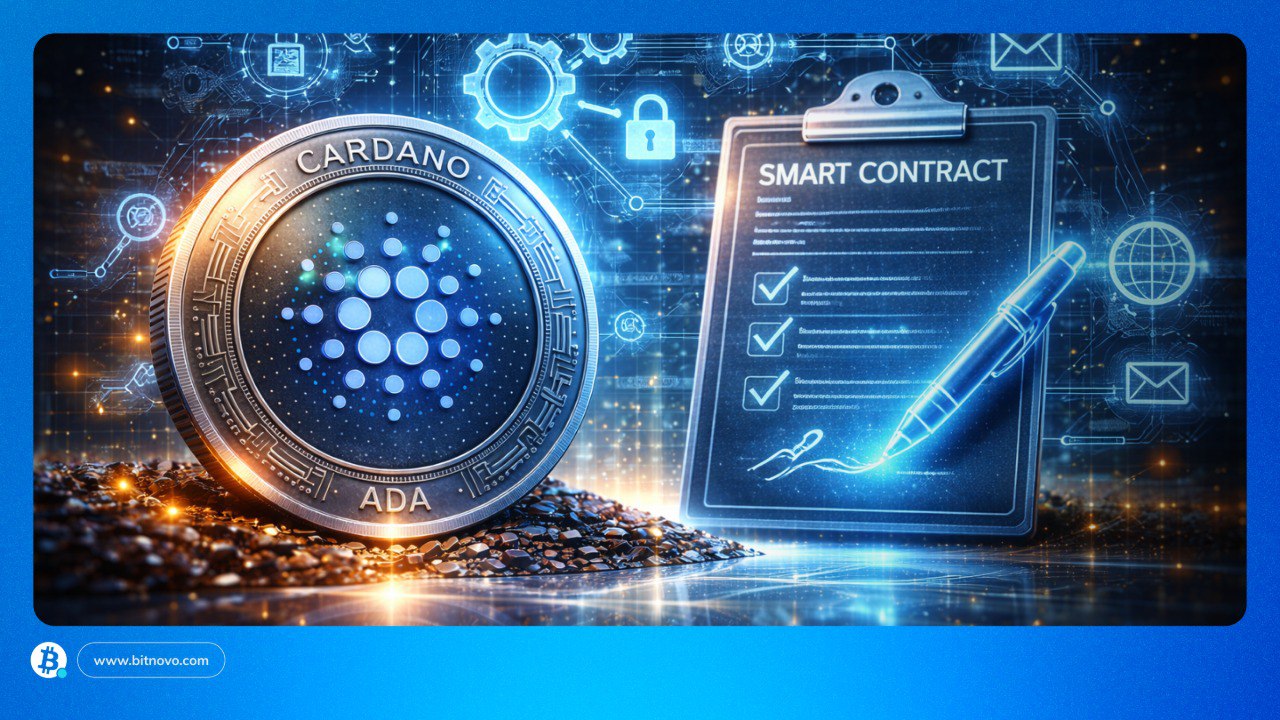
Cardano takes a decisive step towards its institutional maturity with the latest evolution of Plutus. More than a simple technical update, this advancement, coordinated with total transparency by Intersect, ensures a faster and more efficient execution of smart contracts without compromising the integrity of the network.
By implementing stricter ledger rules and new crypto tools, Cardano not only seeks to optimize its performance but also to send a clear signal to the market: the network is ready to host highly complex dApps under the trust and stability standards demanded by large institutions.

What has been proposed, and why now?
The Charles Hoskinson blockchain is heading towards a precision technical upgrade. This is the implementation of Protocol 11, a move that, unlike previous major milestones, is defined by its «intra-era» nature, seeking to optimize the heart of the system without forcing users to make structural changes in their way of transacting.
According to data shared on social media, the main focus lies in enhancing the capabilities of Plutus, the network’s smart contract language, and in the introduction of new crypto functions.
The management of this upgrade stands out for its technical meticulousness, prioritizing the stability of the ecosystem above all else. Under the premise of improving the system without stopping its operability, Cardano ensures an invisible transition for existing contracts, safeguarding their integrity while raising its technical capabilities to a new standard.

As a curious fact, named the van Rossem Hard Fork, in honor of the contributions of Max van Rossem, this upgrade underscores Cardano’s commitment to community-driven development and positions the network to handle the growing demand for decentralized applications.
Expected changes in smart contracts
According to the planning detailed by the Intersect working groups and the Input Output Engineering (IOE) teams, the path to Protocol 11 is divided into two critical software releases:
- Node 10.6.2 (Pre-release). This component has an educational and testing mission, allowing developers to validate the reduction of the contract “footprint”. By generating lighter and more efficient scripts, Cardano optimizes the use of network resources, allowing dApps to operate with a lower technical load.
- Node 10.7.0 (Hard Fork Candidate). This software, scheduled for the end of February 2026, is the definitive piece for the upgrade. Its great value lies in operational predictability: the system is designed so that the developer knows exactly the cost and execution behavior before launching it, eliminating surprises or variations in fees.

After passing rigorous performance and benchmarking tests, this software version will finally be deployed on the Preview and PreProd networks, before reaching the mainnet. This technical rigor not only guarantees Cardano’s historical stability, but ensures that efficiency and cost transparency are the pillars of this new stage.
What the user will notice in dApps
The absolute priority of this Hard Fork is performance, translating into a much more fluid user experience. Thanks to the optimization of Plutus scripts and more streamlined ledger rules, decentralized applications (dApps) will operate with superior agility. This means cleaner interactions when using DeFi protocols or NFT Marketplaces, reducing common errors such as «out of bounds» and speeding up response time when signing transactions.
One of the most notable innovations is the inclusion of new crypto capabilities through builtins. These will allow complex operations to be executed more cheaply and quickly, which reduces the load on the network and, for the user, translates into immediate execution of their orders.
Likewise, the most relevant aspect for the ecosystem is that the structure of transactions will remain unchanged. By not requiring wallets or exchanges to rewrite their base code, a frictionless transition in the market is guaranteed, allowing the community to enjoy the speed improvements from day one without interruptions to their regular services.
Scalability and transaction processing efficiency
Plutus is an integral part of Cardano’s infrastructure, focusing on raising the security and efficiency of smart contracts to an enterprise level. By employing Haskell, a functional programming language, Cardano ensures that applications are not only precise but also capable of offering constant network fluidity.
This architecture allows the blockchain to absorb traffic spikes organically, ensuring that, even in moments of high demand, fees remain stable and waiting times do not become unacceptable for the user.

In today’s competitive market, Plutus stands out for its advanced data optimization capability. Its design allows processing a greater amount of logic and complex operations within the same block space, avoiding congestion and maximizing performance per transaction.
By addressing critical challenges such as code inefficiencies, Plutus places Cardano in a leadership position. It is not just about writing smart contracts, but about providing an environment where scalability does not compromise the user’s economy, allowing the network to grow without the barriers of cost or slowness that affect other platforms.
Ultimately, these improvements transform transaction management into a predictable process. For the end user, this means consistency: the certainty that every operation sent has a very high probability of success thanks to a more intelligent and robust allocation of resources.

Transparent governance and voting on updates
|
Fase del proceso |
Acción clave | Valor diferencial (Transparencia) |
Impacto y seguridad del usuario |
| Propuesta | Presentación del CIP con mejoras para Plutus. | Acceso total: El código y la intención son públicos desde el inicio. | Conocimiento: Permite auditar hoy lo que cambiará en la red en el futuro. |
| Discusión | Debate abierto en foros y grupos de trabajo (Intersect). | Auditoría social: Se filtran errores y se escuchan las necesidades de la comunidad. | Voz: Los desarrolladores pueden proponer ajustes antes de la versión final. |
| Votación | Votación en cadena de DReps y SPOs (CIP-1694). | Soberanía: El consenso de la comunidad manda sobre cualquier entidad central. | Confianza: El sistema solo evoluciona si la mayoría valida que la mejora es segura. |
| Hoja de Ruta | Periodo de preparación para Exchanges y Wallets. | Comunicación clara: Tiempos de espera definidos para que toda la infraestructura actualice los nodos. | Continuidad: Garantiza que nunca pierdas acceso a tus fondos ni sufras interrupciones. |
| Activación | Ejecución del Hard Fork y despliegue definitivo. | Previsibilidad: Cero «actualizaciones sorpresa», todo ocurre según el calendario público. | Estabilidad: Las instituciones operan con la tranquilidad de una transición planificada. |
Finally, Protocol 11 is not just a technical upgrade, it is the consolidation of the three pillars that define the future of the network. By uniting the power of smart contracts, real scalability that absorbs demand without friction, and transparent governance that guarantees user security, Cardano presents a unique competitiveness formula in the market.
This evolution translates code complexity into a banking-grade user experience: predictable, efficient, and above all, reliable. With this milestone, the network leaves behind the experimentation phase to position itself as a robust infrastructure, ready to host the next generation of global financial applications and attract institutional capital under a solid, long-term investment thesis.