



You’ve surely heard about Ethereum, one of the most important blockchains in the crypto world. Ethereum presents one of the most innovative technologies with the goal of improving the world.
When we talk about Ethereum we refer to a decentralized digital platform based on blockchain technology. The Ethereum blockchain pursues the goal of becoming the largest platform capable of running Decentralized Applications (DApps).
To achieve its goal, the Ethereum project has a cryptocurrency called ETH and a blockchain, which present unique qualities. Among its qualities we find the development of DApps, Smart Contracts and new tokens. Thanks to these qualities, it is considered the most complete blockchain in the world.
- Name: Ethereum
- Acronym: ETH
- Launch year: 2015
- Creator: Vitalik Buterin
- Current supply: 120.69M
How does Ethereum work?
As mentioned, Ethereum is a platform oriented towards a wide variety of applications and functions, among which are DApps and Smart Contract development. To do this, Ethereum works through numerous nodes and programming languages.
Ethereum as a network… and ETH as “fuel”
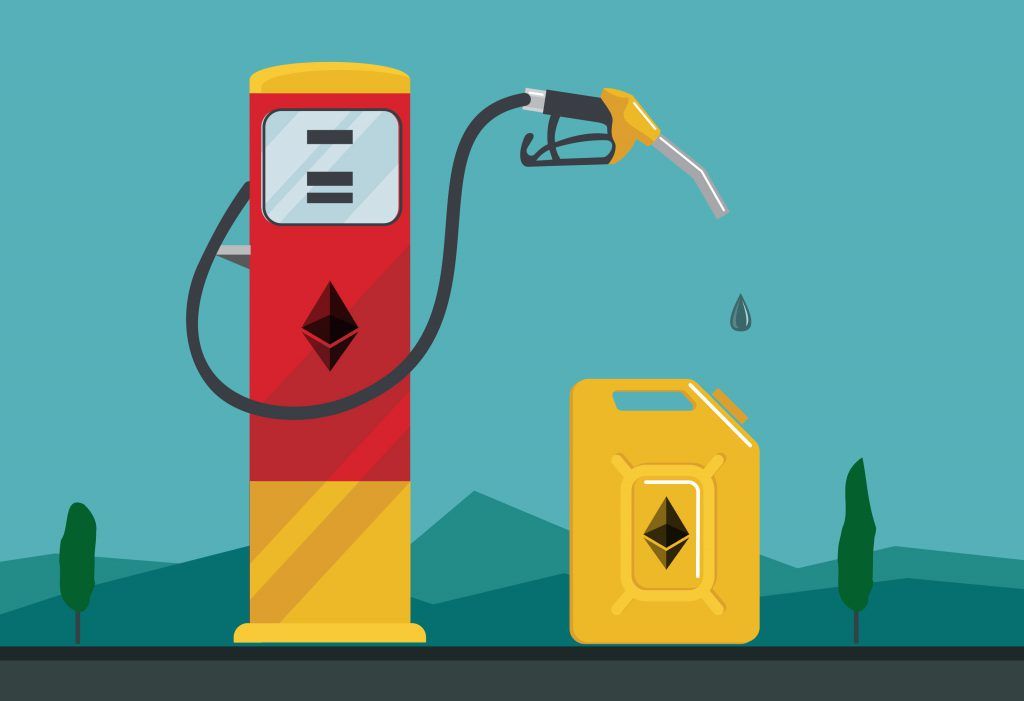
Ethereum functions as a great decentralized global computer. For this machine to process any action, it needs energy, which is why ETH is used to pay for the “fuel” (called Gas) required for transactions and Smart Contracts to execute.
On the Ethereum blockchain, every movement is measured in units of Gas. Whether executing a complex Smart Contract or developing decentralized applications, even the smallest action has a specific cost.
This Gas not only serves to measure computational effort and assign a fair price to tasks, but it is also a fundamental piece of the system’s security. Furthermore, it functions as the reward validators receive for processing transactions and keeping the network operational and secure.
Smart Contracts: the heart of Ethereum
Ethereum functions as a decentralized world computer. Among its services, Smart Contracts stand out, a virtual contract between two or more parties. This contract can be signed by people, companies, and even computers.
Smart Contracts have made their way into the world of cryptocurrencies and the real world. Their operation is based on the obligation of the linked parties to comply with what is established in said contract. This agreement is guaranteed by digital signatures. The contract conditions will only be executed if both parties fulfill what was agreed upon in the Smart Contract.
Examples in the real world
- Supply chain:They facilitate product tracking and detect their location in case there is a problem. They also simplify payments and prevent fraud.
- Digital ticket:A ticket for a concert that activates on your phone only when you arrive at the event location or on a specific date.
- Token exchange:The software delivers your coins to another person only at the exact moment you receive theirs in exchange.
- DeFi loan:The contract gives you money instantly if you deposit collateral; if you don’t pay, the code automatically recovers the funds.
- Real estate sector:They are very useful for registering property ownership. And they make mortgage transactions more secure.

From mining to staking: Proof of Stake
Ethereum Proof-of-Stake (PoS) is the consensus mechanism that powers the Ethereum network, which has been consolidated since 2025. This system allows validating transactions efficiently, securely, and ecologically, eliminating the need for intensive mining and its high energy consumption. With this radical change, Ethereum has improved its scalability, decentralization, and accessibility, opening new opportunities for users and investors worldwide.
In the Proof-of-Stake model, participants, known as validators, are selected to create blocks and verify transactions based on the amount of ETH they lock as collateral (staking), instead of competing by solving complex calculations as in the Proof-of-Work (PoW) model, used by Bitcoin. This system not only secures the network but also rewards those who act honestly.
|
Concept |
Definition |
Main Function |
| Ethereum (Network) | Decentralized and open global computer. | Execute applications and contracts without intermediaries. |
| ETH (Fuel) | Native currency of the network (Gas). | Pay for the computational effort of each transaction. |
| Smart Contracts | Code that executes only if pre-set conditions are met. | Automate agreements and services securely and immutably. |
| Staking (PoS) | Mechanism where ETH is locked as collateral. | Validate transactions and secure the network ecologically. |
| Validators | Participants who keep the network active (replace miners). | Create new blocks and receive rewards for their honesty. |
What is Ethereum used for today
Ethereum is not just a cryptocurrency, but an entire ecosystem full of possibilities. From games, NFTs and bankless loans, to Smart Contracts that change the way we interact. This radiant project is like a giant laboratory where anything can be built, and that makes it fascinating!
As its creator, Vitalik Buterin, rightly states: “The goal is not just to win, but to build something worthwhile and that is part of a better future for everyone.”
Decentralized Finance (DeFi)
Decentralized Finance (DeFi) is a system of financial products and services based on blockchain networks, like Ethereum, that operate without the need for traditional banks.

By using Smart Contracts, this system allows users to manage loans, perform asset exchanges, and generate interest directly from their digital wallet. By eliminating intermediaries, DeFi offers transparency and direct peer-to-peer transactions. However, it also implies significant challenges, such as the user’s total responsibility for their funds and exposure to security vulnerabilities in protocol code.
NFT, games and other types of tokens
NFTs are unique digital collectibles registered on a blockchain, with Ethereum being the pioneering network where most of these projects were born. This characteristic makes them ideal for representing everything from digital art and exclusive memberships, to characters, consumables and other items within video games.
NFT games have become popular in the Game-Fi world as a way to generate income. Thanks to the real ownership they grant, you can sell your in-game NFTs to other collectors or players, and even earn tokens through play-to-earn models.
|
Category |
What are they? | Key characteristics |
Common examples |
| NFT | Unique digital assets with a certificate of authenticity. | Not duplicable, indivisible, and real user ownership. | Digital art, virtual lands, game items |
| Fungible Tokens | Identical and interchangeable assets with each other. | Divisible, function as currency or for staking. | ETH, Tether (USDT) |
| P2E Games (NFT) | Video games with their own economies based on blockchain. | Players own their characters and earn tokens. | Axie Infinity, The Sandbox |
Stablecoins and payments on Ethereum
Ethereum leads the way in global stablecoin transfers. This growth not only marks Ethereum as a pioneer in the financial sphere but also opens the door to regulatory discussions and competitive changes in the crypto sector.
This infrastructure becomes even more robust thanks to its compatibility with second-layer networks, which allow everyday payments to be fast and economical without losing the security of the main network. In essence, stablecoins are becoming a crucial part of how we handle money, providing a direct bridge between the world of traditional finance and the realm of digital assets.
Key differences between Ethereum and Bitcoin
Despite their differences, Bitcoin and Ethereum are not necessarily competitors. They seek to serve different purposes and could complement each other. For example, Bitcoin could be used as a store of value and a stable asset, while Ethereum could be used to interact with applications built on the Ethereum blockchain.
| Characteristic | Bitcoin (BTC) |
Ethereum (ETH) |
| Main purpose | Digital money and store of value (digital gold), medium of exchange. | Programmable platform for contracts and DApps. |
| Supply | 21 million coins. | Does not have a maximum supply limit. |
| Design focus | Prioritizes maximum security and simplicity. | Prioritizes versatility and programmable finance. |
| Consensus Mechanism | Proof of Work (Intensive mining). | Proof of Stake (Validation by Staking). |
| Speed and time | Slower block times (~10 min). | Faster and dynamic block times. |
| Most common use | Storing value and making global payments. | Executing DeFi, NFT and autonomous applications. |
Advantages and limits of Ethereum
Strengths
- Anyone with internet access can use Ethereum, making it accessible for people in countries with limited banking systems.
- Ethereum allows the creation of a wide variety of decentralized applications, making it versatile.
- It has an active developer communityand a large variety of decentralized applications (dApps).
- The most complete ecosystem.Almost everything we know today (DeFi finance, NFT art and modern applications) was born or has its main base on Ethereum.
- Thanks to standards like ERC-20 or ERC-721, it is very easy for different applications and wallets to understand each other, as if they all spoke the same language.
- Constant innovation.
Challenges
- The price of Ethereum can fluctuate drastically, implying high financial risk.
- Variable and sometimes high gas fees.
- Competition from other networks.There are other blockchains that seek to attract users by offering different technical solutions, forcing Ethereum to constantly keep innovating to maintain its leadership.
- As there are no intermediaries, it is fundamental for the user to learn basic conceptsabout what they are signing when interacting with decentralized applications (DApps) to protect their assets.
How to interact with Ethereum without being technical
To interact with Ethereum, the first step is to have a compatible wallet. These can be of different types according to your need: a browser extension, a mobile application or, for greater security, a hardware wallet (physical device).
Once you have your wallet and some ETH to pay the network fees (gas), the process is very simple:
- Connection:Most decentralized applications allow you to enter with a single click on the “Connect wallet”
- Interaction:Once connected, you can explore the DeFi world, buy NFTs or use Web3 games.
- Authorization:Every time you perform an action, you will simply need to sign the transaction from your wallet to confirm the movement.
Typical uses for a normal user
If you already have your wallet ready, here are some of the simplest ways to interact with the network to learn how it works:
- Basic transfers:Try sending and receiving a minimal fraction of ETH between two wallets to understand how a transaction is confirmed on the blockchain.
- Explore DeFi:Connect to a decentralized finance platform and perform a small exchange (swap) or contribute a symbolic amount to see how interest is generated automatically.
- Digital collectibles:Look for a low-cost or free (mint) NFT on an open marketplace to experience what it feels like to be the unique owner of a digital asset.
- Use of stablecoins:Exchange a small part of your ETH for a stablecoin to see how you can maintain the value of your money without being affected by market ups and downs.
Very important, always start with very small amounts that do not affect your finances, understand well the risks of each application and never share your private keys.
Where to buy Ethereum (ETH)?
Most people think the easiest and safest way to buy Ethereum is using trusted cryptocurrency platforms. Although there are different methods to acquire it, it is most recommended to always prioritize security, user assistance, and ease of use.
If you are already clear about what Ethereum is and want to take the next step, the logical question is where to buy ETH in a simple and secure way.
Frequently asked questions about Ethereum
- Are Ethereum and Ether (ETH) the same thing?No, ETH is the cryptocurrency and Ethereum is the method used to operate with it.
- Can Ethereum be mined today like Bitcoin?No, Ethereum cannot be mined today like Bitcoin, because Ethereum stopped using the Proof-of-Work mining method.
- What is ETH used for within the network?It is used to pay gas fees, interact with smart contracts, dApps, and as collateral for staking.
- Do I need to know programming to use Ethereum?No, programming is only for the creators of the ecosystem.