



When assessing a cryptocurrency project, there are numerous factors to consider, among them the technology used in it. Other factors that determine the type of project can be the testnet and the mainnet. Perhaps you don’t understand the latter concept now, but don’t worry, in this article we will tell you all about what mainnets are.
The Mainnet is the final and functional version of a blockchain network where your transactions have real value. After reading this guide, you will know how to choose the right network when sending your crypto to avoid the irreversible loss of your assets.
Mainnet in 30 seconds: The “real” network
Every blockchain project has a mainnet. This is a blockchain that handles the operation of the cryptocurrency, that is, transferring the coins from the sender to the receiver and that works with its own means and under the responsibility of the startup that issues the tokens.
In fact, to better understand it, we can use the flight simulator analogy.
- Testnet (The Simulator):It is an experimental environment where stress tests are run, Smart Contracts are deployed and code errors are identified. As in a flight simulator, any failure has no real economic consequences; the assets are fictitious and serve exclusively for learning and optimization.
- Mainnet (The Real Flight):It is the production implementation. Here, every transaction is definitive, the “fuel” (gas) has a market cost and any operational error can lead to a capital loss. It is the scenario where technical theory meets the real conditions of the market.
Now, it is imperative to emphasize that the deployment of a Mainnet is a milestone of technical development, not a guarantee of financial viability. That a project operates on its main network confirms its execution capacity, but does not validate its economic security or the absence of market risks.
What happens when you make a transaction on the mainnet?
When you make a transaction on a mainnet, you are interacting with the main blockchain network to perform a definitive transfer of value. Your transaction is broadcast, is validated by decentralized nodes (miners or validators), is grouped into a block, is added immutably to the public ledger and a fee (gas) is paid for the service, all with authentic crypto assets.
Validators and Gas: The pillars of security and processing
The operation of the main network depends on two critical factors that ensure the system is reliable and sustainable:
- Verification (Nodes and validators):Instead of a centralized entity, thousands of distributed nodes review your transaction. Their function is to audit that you have the funds and that the digital signature is legitimate. This collective vigilance is what makes the network resistant to attacks and fraud, providing security without the need for banking intermediaries.
- The cost structure (Gas):“Gas” is the fee that remunerates the computational effort of the validators. It has three main functions:
- Sustainability:Incentivizes validators to keep the network active.
- Spam prevention:Prevents malicious actors from saturating the network with infinite transactions.
- Demand regulation:The cost fluctuates according to network congestion.
Very importantly, before confirming any send, check the network status. Operating during periods of low demand can significantly optimize your transaction costs.

The golden rule: Irreversibility and confirmations
Once your transaction is validated and grouped into a block, the confirmation process begins. Each new block added on top of yours acts as an additional layer of security, making it mathematically impossible to reverse the operation.
- Immutability:In mainnet, the concept of a “chargeback” does not exist. Once the network reaches consensus on your transaction, the record is permanent.
- Security criterion:Verify the destination address and the selected network before proceeding. In the production environment, technical precision is the only guarantee of success; an error in the sending data will result in an irrecoverable loss of assets.
Mainnet vs. Testnet: The training ground
While a testnet is the prototype of the capabilities presented by a new project, the mainnet is the network available to all users, error and failure proof. Mainnets can also change. This happens when a project’s team or an open-source cryptocurrency community decides to update the project.
| Characteristic | Mainnet (Main network) |
Testnet (Test network) |
| Token Value | Real (Real money) | Zero (They are free) |
| Risk | High (Irreversible losses) | Null (Ideal for learning) |
| Objective | Transact and use Apps | Test errors and developments |
| How to get funds | Buying on exchanges | Through “Faucets” |
| Stability | Very stable, well maintained | Less stable, frequent restarts and updates |
| Participation | Open to users and businesses | Open to developers and testers |
In essence, testnets and mainnets are complementary: testnets allow for rapid iteration and safe experimentation, while mainnets are the foundation for reliable real-world operations. Innovations and updates are rigorously tested on testnets before being implemented on the mainnet, reducing the risk of critical errors or exploits.
Other networks (Devnet/Signet)
Beyond conventional test networks, there are environments designed for specific technical purposes. While a Devnet is an isolated and customized network where developers test application integration in very early stages, Signet (specific to Bitcoin) is a more stable and controlled test network that avoids mining irregularities that sometimes occur on the traditional Testnet.
Both environments function as high-precision laboratories where protocols are refined before any line of code interacts with assets of value on the Mainnet.
|
Criterion |
SIGNET | DEVNET | TESTNET |
MAINNET |
| Description | Distributed public network environment that uses digital signatures instead of mining to validate blocks. | Local development environment with simulated nodes, miners and blocks. | Public access testing environment. | Real, live production environment. |
| Tokens / Assets | Test tokens (sBTC) with no intrinsic economic value. | Test tokens with no economic value. | Test tokens with no economic value. | Real tokens with intrinsic economic value. |
| Network Users | Protocol developers and companies requiring high reliability in their testing. | Developers. | Developers and beta-testers. | End users. |
| Network Function | Testing software and protocols requiring a predictable and stable environment. | Comprehensive (end-to-end) testing, from contracts to the front-end. | Final testing phase before deployment. | Code deployment and production operations. |
| Availability (Uptime) | High and constant. | Temporary. | Constant (rarely shut down or restarted). | Constant. |
| Transaction Frequency | Low. | Low. | Low. | High. |
| Fees (Fees) | Yes (paid with free test tokens obtained from faucets). | Yes (paid with free simulated tokens). | Yes (paid with free test tokens). | Yes (paid with real assets). |
| Access | Public. | Private. | Public. | Public. |
The milestone of having your own Mainnet
The launch of a mainnet represents the definitive step between the design phase and the real world. A mainnet represents the implementation of an idea and the fruit of the work of an entire team, becoming a fundamental pillar of the decentralized financial ecosystem.
In reality, before launching a mainnet, a cryptocurrency development team will frequently seek to raise funds. This is normally achieved through an Initial Coin Offering (ICO) or an Initial Exchange Offering (IEO).
During an ICO, cryptocurrency developers sell tokens based on the blockchain to early investors, who then exchange the tokens among themselves.
For example, Satoshi Nakamoto gave the starting shot in mid-2009 with the launch of the Bitcoin mainnet. The launch occurred exactly one year after Nakamoto published the first cryptocurrency “white paper” explaining how Bitcoin worked. Subsequently, the Litecoin mainnet was launched in 2011 and that of Dogecoin in 2013. In 2015, the Ethereum mainnet was the first to support Smart Contracts, and others followed.
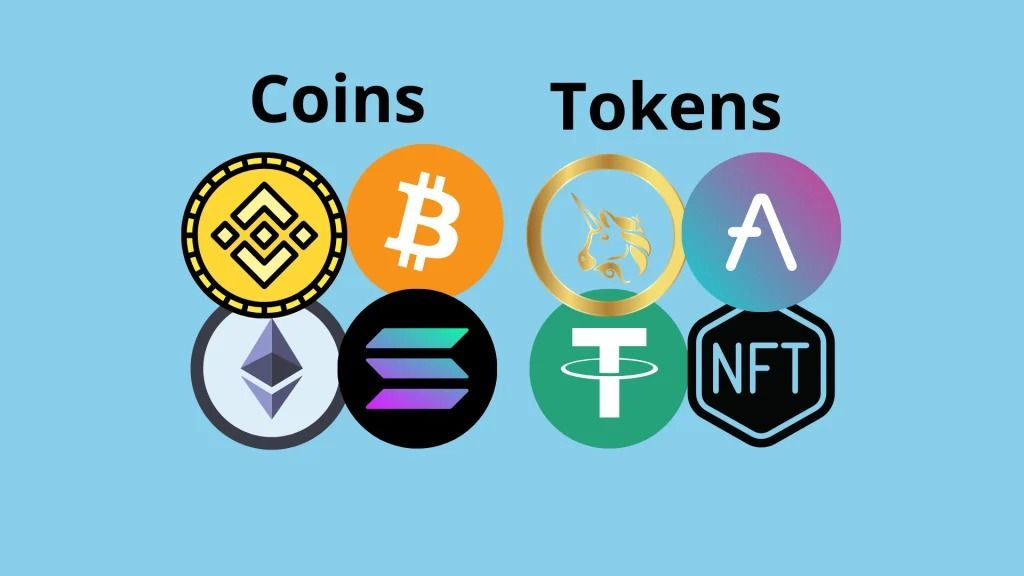
From Token to Coin: The process of technical “independence”
Many people confuse these terms, but their difference lies in the infrastructure:
- Token:It is an asset that “lives” on a foreign network. For example, many projects are born as ERC-20 tokens within the Ethereum network while developing their own technology.
- Coin (Native currency):It is the main asset of its own mainnet. When a project finishes its network and becomes independent, its asset ceases to be a token and becomes the native currency (Coin) that powers that ecosystem.
Swaps and migrations: Security risks and how to avoid them
A Mainnet Swap is the technical procedure of moving assets from one blockchain to another. This process is done to migrate from a third-party network to one’s own network or to take advantage of substantial improvements in security and scalability.
- Exchange protocols:The process usually involves sending the old tokens to a “burn” address to receive the new assets on the updated network.
- Execution risks:The main danger lies in phishing scams and expiry deadlines. If the swap is not performed within the period established by the official team, the old assets could lose their value and liquidity.
- Error mitigation:It is imperative to verify the migration addresses solely through the project’s official channels. Never trust links provided by third parties or direct messages on social networks; verifying the source is your only protection against fraud.
Layers 2, Rollups and Bridges
In the current landscape, the mainnet has evolved to establish itself as the “settlement layer” and security, while daily operations have moved towards more agile solutions.
| Technology | Strategic function |
Why it is used in 2026 |
| Mainnet (Layer 1) | Security Base: Acts as the definitive ledger and the immutable source of truth. | Reserved for high-volume settlements and for providing final security to upper layers. |
| Layers 2 (L2) | Scalability: Networks built on the mainnet to process transactions massively. | Enable daily use thanks to drastically reduced fees and higher speed. |
| Rollups | Technical Efficiency: “Packages” hundreds of transactions into one to send to the mainnet. | Inherit the security of the mainnet but operate with the agility of a private network. |
| Bridges (Bridges) | Interoperability: Protocols that allow the transfer of assets between different blockchains. | Essential for moving liquidity between the mainnet and the various Layers 2. |

In short, while the mainnet guarantees that your asset exists and is secure, Layers 2 allow you to use it economically. Bridges are the road connecting both worlds, and their security depends directly on the user’s prudence in choosing the route.
How to select the correct network
The correct selection of infrastructure is the determining factor to guarantee the integrity of your funds. A discrepancy in this step results in an irreversible loss, as in the Mainnet there are no transaction revocation mechanisms. Follow this 3-step Check-list before executing any movement:
- Identify the network/standard you are using:Before initiating the send, verify under which protocol your asset operates in the source wallet or platform. It is not enough to identify the cryptocurrency (e.g., USDT), you must identify its technical “wrapper” or standard (e.g., ERC-20 for Ethereum, TRC-20 for Tron or BEP-20 for BNB Chain).
- Confirm that the destination supports that same network:Access the “Receive” or “Deposit” option on the destination platform and confirm that it supports exactly the same network identified in the previous step. Important: Same cryptocurrency does not imply same network. If you send USDT via the Polygon network to an address that only accepts USDT via the Ethereum network, the funds will become inaccessible in most cases.
- Send a small amount first:To mitigate operational risks, never mobilize your entire capital on the first attempt, especially if it is a new address you have not interacted with before.
What happens in case of a network error?
If due to an operational failure you have sent funds through an incorrect network, consider the following recovery variables (with no guarantee of success):
- Self-custody:If you own the private keys to the destination address, it is possible to recover the assets by configuring the correct network in a compatible wallet.
- Third-party platforms (Exchanges):If the error occurred towards an exchange, you must contact their technical support. Keep in mind that many platforms do not offer recovery services for network errors or may apply high management fees.
- Total incompatibility:In cases where the source and destination networks are architecturally incompatible, the assets are usually considered permanently lost.
| Action |
Protocol and recommendation |
| Network Identification | Verify the technical standard of the asset (e.g., ERC-20, TRC-20) at the source. Do not rely solely on the asset name. |
| Destination Validation | Confirm that the receiving platform supports the selected network. Same coin does not guarantee network compatibility. |
| Test Send | Perform a minimum test transfer before mobilizing the total capital to validate the sending route. |
| Error in Self-Custody | If you own the private keys, import your seed phrase into a compatible wallet and configure the correct network to recover the funds. |
| Error to Exchange | Contact technical support immediately. Recovery is subject to their internal policies and may involve high fees. |
| Total Incompatibility | In transfers between networks without compatible technical bridges, the assets are considered permanently irrecoverable. |
Frequently asked questions
- Why are mainnets important?The successful launch of a mainnet is the fruit of a long work process. It indicates that the project has achieved its objectives, offering tools, products and applications that function through the mainnet.
- Are Mainnet and Blockchain the same?Blockchain is the technology, the Mainnet is the specific network that uses that technology to operate with real value.
- Can I transfer tokens from Testnet to Mainnet?Absolutely not. Test tokens have no value nor technical connection with real ones.
- Why doesn’t my crypto have its own mainnet?Because many projects prefer to be “tokens” and take advantage of the security of already established networks like Ethereum or Polygon instead of spending resources on creating their own.
In summary, the importance of a mainnet stems from its ability to test or disprove the potential of a project from its creation to its final implementation. I hope you have been able to understand what a Mainnet is and what functions it performs. Take control of your finances with the security of understanding where you are operating. Ready to start? Download the Bitnovo App and operate on Mainnet in just 3 minutes. Your crypto, your rules.
As a key figure in the birth of Bitcoin, Nick Szabo, rightly pointed out: “Blockchains don’t just replace banks; they replace blind trust with mathematical and immutable trust.”