



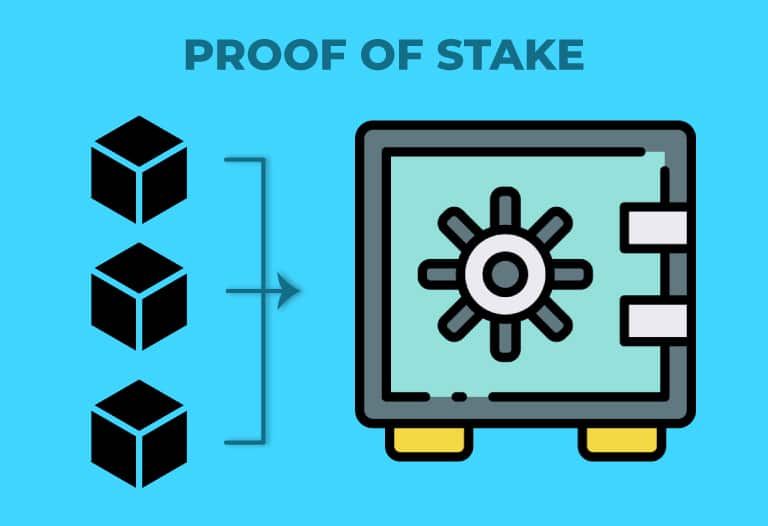
Proof of Stake, is one of the two most used consensus protocols in blockchain technology. Its name in English is Proof of Stake, from which the acronym PoS is derived, by which it is known. The objective of this algorithm, as in PoW, is to create consensus among all the parties that make up the network.

The nodes that work in PoS are called validators. The decision about which node should validate a block is made randomly, but giving greater probability to those who meet a series of criteria. Among these criteria we can mention the amount of currency reserved and the time of participation in the network, but others can be defined.
Once established, the process of selecting nodes randomly begins and when it ends, the chosen nodes will be able to validate transactions or create new blocks.
History and evolution of Proof of Stake
The Proof of Stake protocol was created by the renowned developer Sunny King, in the year 2011. In 2012, King formally presented the whitepaper of PPCoin, where he made clear how the PoS algorithm worked. The goal was to solve some known problems of the PoW protocol. Among them, the following stand out:
- The lack of scalability and speed.The mining process (PoW) introduces high latency due to its complexity. On the other hand, Proof of Stake (PoS) avoids it, since validation is quickly performed by nodes with high coin holdings, which results in greater network speed and scalability.
- The high energy consumption of the mining process.The mining process in PoW requires great computing power, which generally comes from machines with high electricity consumption. PoS changes the mining process for a participation process reflected in the holding of coins or in the time within the network.
- The decentralization of the network.The main problem of PoW (Proof of Work) networks is the growing centralization, where large mining groups concentrate the power of the network in the hands of a few; PoS (Proof of Stake) seeks to remedy this, implementing a system that diversifies and democratizes access to participation in network tasks.
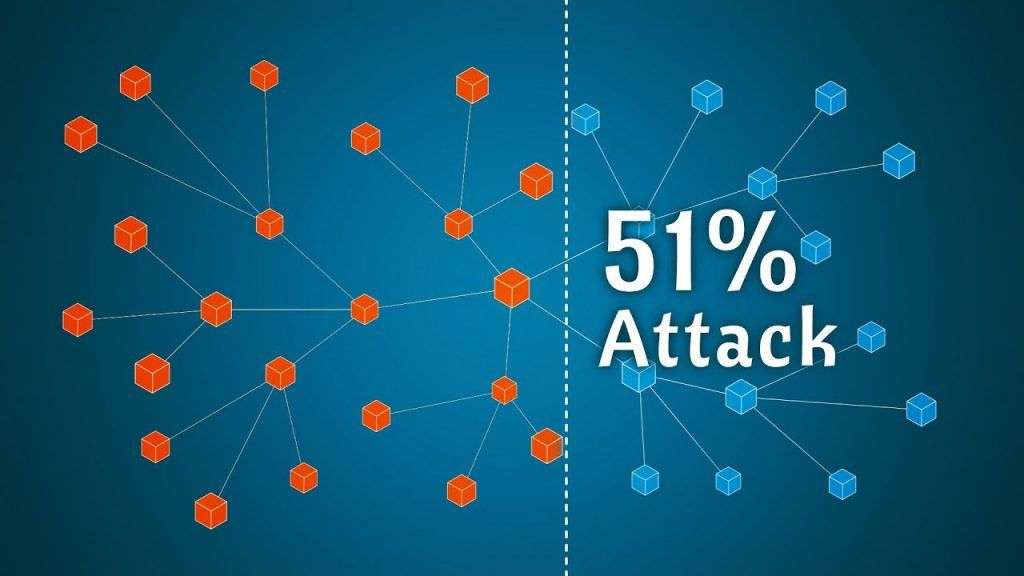
- Remove financial interest from 51% attacks.In PoW networks, a 51% attack (manipulating the network with 51% of the computing power) is a constant risk. In PoS, the same attack would require 51% of all coins, but the attacker would face a collapse in the value of the currency and large economic losses, which makes this cost a powerful deterrent to maintain security.
Emblematic and current projects with PoS
The Proof of Stake (PoS) model has been adopted by numerous renowned blockchains, driving innovation and efficiency in the sector. Below, we highlight some of the most influential:
- Peercoin:It was the first project to implement a hybrid PoW/PoS model with the main objective of reducing energy consumption.
- Dash and Zcash:They implemented the concept of PoS in their validation schemes, although with specific architectures.
- Ethereum:After a long and detailed development process, Ethereum completed its transition from PoW to PoS with the update “The Merge” in September 2022.
- Ethena (ENA):It is a new DeFi 2.0 project that stands out for its innovative staking model and the promise of high performance.
- Stablecoins (e.g. USDT):Although they do not use PoS to secure their own chain, they offer stable rewards through staking or lending models, integrating into the PoS ecosystem.
- Cardanois a pioneering blockchain in the use of PoS, having developed its own protocol called Ouroboros.
- Solanauses a sophisticated model that combines Proof of Stake (PoS) with Proof of History (PoH). This combination allows Solana to achieve extremely high transaction speeds and low costs.
- Polkadotemploys a PoS consensus mechanism called GRANDPA/BABE. Its “parachains” architecture allows multiple specialized blockchains (parachains) to run in parallel, connected to a main chain (Relay Chain).
How does Proof of Stake work?
The Proof of Stake algorithm uses a pseudo-random selection process to select validators from a group of nodes. The system uses a combination of factors, such as staking age, an element of randomness, and the node’s wealth.
In Proof of Stake systems, blocks are “forged” instead of being mined. However, it is possible that the term “mining” is still occasionally used. Most Proof of Stake cryptocurrencies are launched with a supply of “pre-forged” coins to allow nodes to start immediately.
Users who participate in the forging process must lock a certain amount of coins in the network as their stake. The size of the stake determines the probability of a node being selected as the next validator: the larger the stake, the higher the probability. Unique methods are added to the selection process to avoid favoring only the richest nodes in the network.
Comparison between PoS and PoW
Both consensus mechanisms help blockchains synchronize data, validate information, and process transactions. Each method has proven to be effective for maintaining a blockchain, although each has advantages and disadvantages. However, the two algorithms have very different approaches.
In the PoS system, block creators are called validators. A validator checks transactions, verifies activity, votes on outcomes, and maintains records. In the PoW system, block creators are called miners. Miners work to solve a hash problem that verifies transactions. In return for solving it, they receive a cryptocurrency as a reward.
To create a block in PoS, you need to own enough coins or tokens to qualify as a validator. In contrast, PoW miners must invest in processing equipment and pay high energy costs to solve the calculations.
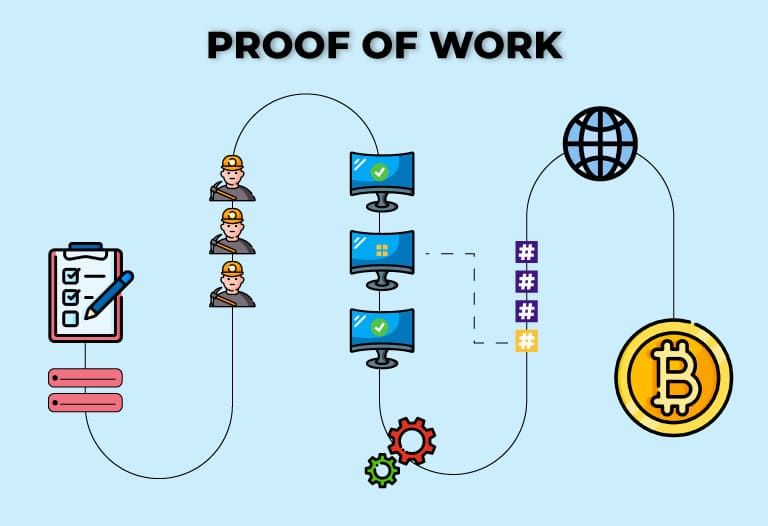
The high equipment and energy costs in PoW limit access to mining and improve blockchain security. PoS blockchains require less processing power to validate blocks and transactions. This mechanism also reduces network congestion and eliminates the reward-based incentive inherent to PoW blockchains.
|
PROOF OF STAKE |
PROOF OF WORK |
| Block creators are called validators. | Block creators are called miners. |
| Participants must own coins or tokens to become validators. | Participants must buy equipment and energy to become miners. |
| Energy efficiency | Not energy efficient. |
| Security through community control | Robust security due to expensive initial requirements |
| Validators receive transaction fees as a reward. | Miners receive block rewards and fees. |
Advantages of Proof of Stake

Proof of Stake has many clear advantages over Proof of Work. For this reason, new blockchains almost always use Proof of Stake. Here are some of its advantages:
- As the needs of users and blockchains change, Proof of Stake can too. This is evident when looking at the large number of adaptations available. The mechanism is versatile and can easily adapt to most blockchain use cases.
- More users are encouraged to run nodes as it is more affordable. This incentive and the random allocation process also make the network more decentralized.
- Energy efficiency.Proof of Stake is much more energy efficient than Proof of Work. The cost of participation depends on the economic cost of staking coins, rather than the computational cost of solving puzzles. This mechanism leads to a significant reduction in the energy needed to run the consensus mechanism.
- Since Proof of Stake does not depend on physical machines to generate consensus, it is more scalable. Large mining farms or securing energy supplies are not necessary. Adding more validators to the network is cheaper, simpler, and more accessible.
- Staking acts as a financial motivation element to prevent the validator from processing fraudulent transactions. If the network detects a fraudulent transaction, the validator will lose a part of their stake and their right to participate in the future. As long as the stake is greater than the reward, the validator will lose more coins than they would gain through fraudulent activities.
Risks and disadvantages of PoS
In the PoS consensus system, users generally must own cryptocurrencies before they can participate in the consensus and obtain more. To host a full validator node on Ethereum, a user needs to deposit 32 ETH, which is very expensive. Another disadvantage of PoS is that, in blockchains with smaller networks, a high minimum deposit could lead to centralization.
Although Proof of Stake has many advantages over Proof of Work, it also has some weak points:
- In a standard Proof of Stake mechanism, there is no element that prevents mining on both sides of a fork. With Proof of Work, mining both sides would lead to wasted energy. With Proof of Stake, the cost is much lower, meaning people can “stake” on both sides of a fork.
- To start staking, you need a supply of the blockchain’s native tokens. This forces you to buy the token through an exchange or another method. Depending on the amount needed, you may need to make a significant investment to start staking effectively. In the case of Proof of Work, you can buy cheap mining equipment or even rent it. With such equipment you can join a pool and start validating and earning profits quickly.
- 51% attack.Although Proof of Work is also prone to 51% attacks, they can be significantly easier with Proof of Stake. If the price of a token collapses or the blockchain has a low market capitalization, in theory it could be cheap to buy more than 50% of the tokens and control the network.
Trends and future of Proof of Stake in 2025
The Proof of Stake (PoS) protocol is constantly evolving, with innovation focusing on optimizing validator selection and reward management. New algorithms and staking models are being explored to improve the distribution of participation and prevent centralization.
Another crucial aspect is the improvement of security, with ongoing research to strengthen resistance against slashing attacks (penalization for malicious behavior) and guarantee the robustness of the code. The emergence of “liquid” PoS (liquid staking) adds a layer of utility and liquidity, allowing users to use a representative token of their stake in other DeFi applications while it continues to generate rewards.
Despite its advantages, challenges persist such as the high barrier to entry due to the initial stake, which is being addressed with delegated staking and pools. The key goal of the community remains to ensure that the PoS model promotes genuine decentralization and does not become a new form of power concentration, this time based on capital accumulation.

The success and continuous improvement of PoS are vital for a future of more scalable and sustainable blockchains. As more networks adopt these mechanisms, a more efficient, accessible, and ecological blockchain ecosystem is expected.
How to participate and stake safely
To participate safely in PoS networks and generate passive income, follow these key steps:
- Buy and lock the tokens (Stake)
The first step is to acquire the tokens of the cryptocurrency that uses PoSand then “lock” or “deposit” them in a compatible wallet or on the staking This locking process is what turns your coins into “stake” and allows you to generate rewards. - Choose trusted validators or platforms
The security of your investment depends on where and with whom you stake. You must choose validators, pools or staking brokersthat have a solid reputation and a proven track record of good performance. Research their commission rate, their uptime history, and whether they have been subject to slashing Avoid unknown platforms or validators that promise unrealistic returns. - Evaluate risks and know about “Slashing”
It is essential to evaluate the risks. The most significant risk is “slashing”, a penalty where you lose a part of your tokens if the validator you chose acts maliciously or disconnects for a long time. Additionally, your tokens are usually “locked” for a period, meaning you will not be able to sell them immediately. Understanding these risks is crucial for making informed decisions. - Continuous education to avoid losses
The importance of knowledge and educationcannot be underestimated. Scams and configuration errors are common causes of losses. Never share your private keys and always use hardware wallets for large amounts. Stay updated on protocol changes and security best practices to mitigate any potential risk. - Generation of passive income
Stakingis a practical way to generate passive income through the rewards granted for securing the network. These rewards are paid in the same cryptocurrency that you have locked. In addition to direct staking, “liquid” PoS (liquid staking) allows you to use a representative token of your stake in other Decentralized Finance (DeFi) applications such as loans or liquidity provision, maximizing the potential of your locked assets.

Frequently asked questions about Proof of Stake
- What are the risks of staking with PoS?The risks of staking cryptocurrencies with PoS include lack of liquidity while your coins are in staking, lack of regulatory practices with cryptocurrencies, price volatility, and the fact that you are not guaranteed to obtain future returns on the cryptocurrency you are putting in staking.
- How can I stake my cryptocurrencies with Proof of Stake?You can stake your cryptocurrencies on a Proof of Stake network by acquiring the native cryptocurrency of that blockchain and transferring your digital coins to the staking address. Compatible cryptocurrency wallets provide investors with access to the staking
- What is the future of PoS?The future looks promising. Many cryptocurrency investors believe that a PoS network will become the dominant consensus mechanism for blockchain, as it requires much less energy and computing power than PoW However, there is no guarantee that PoS will continue to gain popularity, since it is considered less secure than PoW.

To conclude, the way we add blocks of transactions to a network has changed significantly since Bitcoin. It is no longer necessary to depend on computing power to generate cryptographic consensus. The Proof of Stake system has many advantages, and history has shown that it works. As time passes, Bitcoin will be one of the few remaining Proof of Work networks. For now, it seems that Proof of Stake is here to stay.
Or as blockchain analyst Juan Pérez indicates: “The path towards a more scalable and sustainable future for blockchains is intrinsically linked to the success and continuous improvement of protocols like Proof of Stake.”