



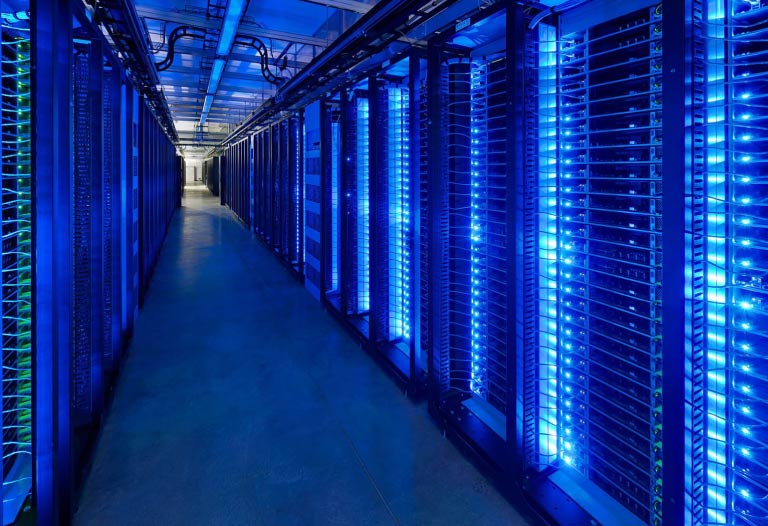
If you’ve been reading this blog for a while, you already know that the banking system is a complete failure. They make you wait days for a single transaction or charge you fees that make no sense. However, today we have an advantage over them, and that advantage is blockchain technology.
With blockchain, transactions are processed constantly, 24 hours a day, 365 days a year—but you already knew that. So, why am I bringing this up now? Because all of this is possible thanks to mining. This process uses computing power to solve complex mathematical puzzles, review transaction information, and verify it. This is how new blocks are created and information is added to the blockchain.
It’s incredible because with mining, all the nonsense from banks disappears, and you can take part in it—and even profit from it. The thing is, anyone who wants to become a miner will eventually face the challenge of setting up their own Mining Rig. If you’re someone who gives up easily or prefers to follow the system like a sheep, then this isn’t for you.
But if you’re like me—wanting to improve your financial situation and be part of something big—stick around, because I’m about to tell you how you can join this movement.
What is a Mining Rig? The answer your bank never gave uou
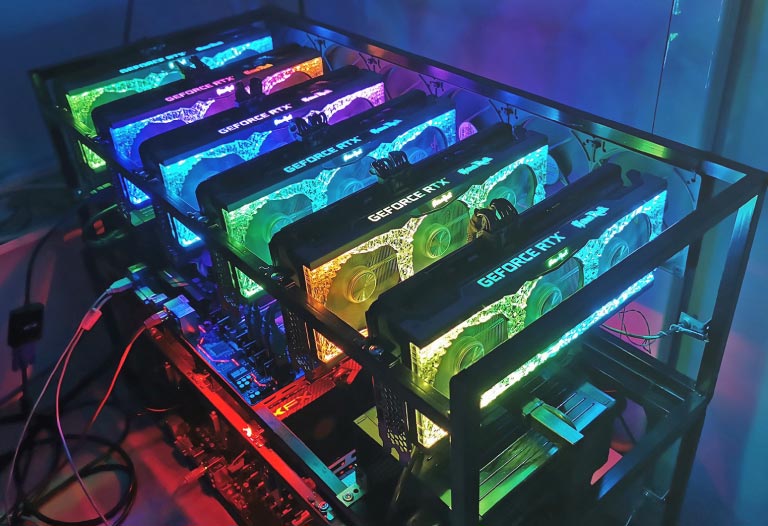
A mining rig is basically a specialized computer designed for a single mission: solving complex mathematical problems that validate transactions and secure the blockchain network through the Proof-of-Work system (PoW). Sounds long, but it’s not that complicated—let me explain.
The Bitcoin blockchain processes more than 500.000 daily transactions without intermediaries. This is possible thanks to thousands of computers working to confirm every transaction. That’s where mining rigs come into play.
Unlike your regular PC, which is designed for multiple tasks, a mining rig is optimized for one thing: generating hash after hash, competing against thousands of miners for the next block reward.
Basically, it’s like having a money-making machine running 24/7. You can have one of these too—if you read the whole article and decide to stop depending on banks.
Types of Rigs for people who don’t ask for permission: ASICs vs. GPUs
When we talk about rigs, we’re really talking about what weapons you’ll use in the mining battle. There are two key ones—ASICs and GPUs—though CPUs still exist, but they’re not as relevant anymore. Let’s break it down so you can go from zero to mining expert in minutes.
- ASICs (Application-Specific Integrated Circuit): The armored tanks of mining. Machines built for a single algorithm, like SHA-256 in Bitcoin. Unstoppable in power and efficiency but also expensive, noisy, and completely inflexible. If the algorithm changes, you can always use them as luxury paperweights—and that’s about it.
- GPUs (Graphics Processing Unit): The people’s champions. Graphics cards serving mining—flexible and versatile. After The Merge, they’re no longer useful for ETH, but still stand strong with coins like Ravencoin (RVN) or Monero (XMR). Plus, if you get tired of mining, you can still use them for gaming—as long as your mom doesn’t yell at you for playing more than 4 hours. 😅
- CPUs (Central Processing Unit): The grandfathers of mining. When Satoshi got creative and launched Bitcoin, you could mine with your laptop. Now they do very little except for a few specific altcoins—but still, give credit where it’s due.
Oh, and speaking of forgotten heroes—there were also FPGA (Field Programmable Gate Array) devices. They were the secret weapon of veteran miners: more efficient than GPUs, more flexible than ASICs. The problem? A real headache to configure. Over time, they faded away, but they marked an important phase in mining’s evolution.
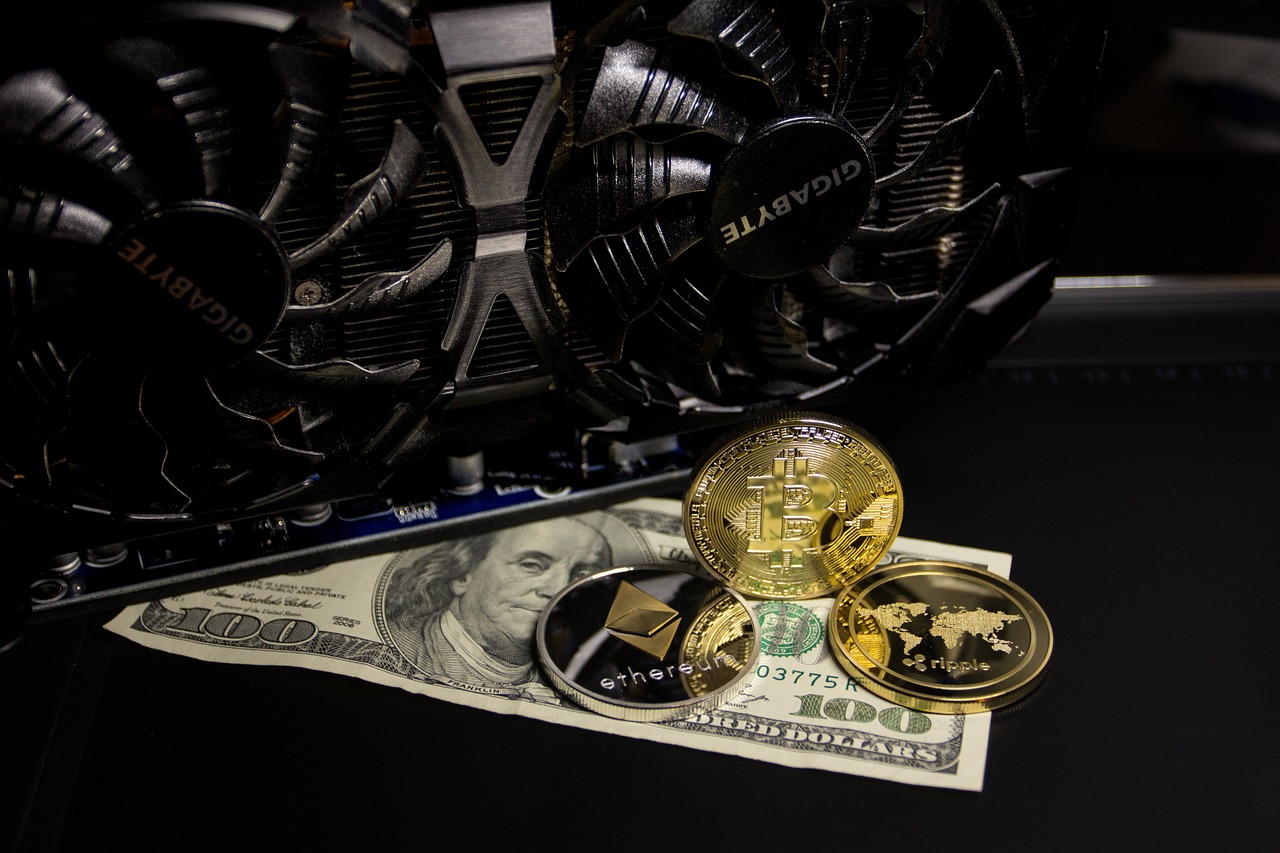
The components that make you unstoppable (almost)
Building your own mining rig is the closest thing you’ll ever do to assembling a digital army. Every component counts.
Graphics Cards (GPUs): The heart pumping hashrate—so yes, the most important part (though everything matters here). What matters most is energy efficiency. Every watt matters. Each year the same top performers appear—if it works well, why change it?
In 2025, the models that are on fire include:
- NVIDIA RTX 4090: Unmatched hash rate in high-end mining thanks to its 24 GB of GDDR6X memory. Perfect for algorithms requiring lots of memory like Autolykos (Ergo) or Ethash—but beware, this beast devours power, so always balance output vs. consumption.
- AMD RX 7900: A true high-end model with exceptional mining performance and lower power usage.
The explanation is very simple. These GPUs combine muscle with endurance, although it is important to remember that cost must always be balanced with production.
- Motherboard: Your motherboard must support multiple GPUs without breaking a sweat. A great example is the ASUS B250 Mining Expert, which can host up to 19 GPUs if balanced correctly. Usually, setups range between 12 and 14 GPUs to avoid issues.
- Power Supply (PSU): A rig without a quality PSU is like a Ferrari with a toy fuel tank. You need serious capacity and Platinum or Titanium certifications for stability. If your PSU fails, you lose more than power—you lose money.
- Other Components: A basic CPU is enough to coordinate tasks, while 8–16 GB of RAM and a 120 GB SSD keep things running smoothly. Cooling is crucial too—you’ll need well-placed fans or an open structure to prevent your GPUs from melting mid-mine.
The X factor no one tells you about: Profitability in 2025
Now comes the divide between dreamers and doers. This isn’t investment advice; it’s just the truth so you don’t fall for hype. Mining profitability is not a guarantee—it’s a constantly changing equation of several variables:
- Cryptocurrency Price: You already know the drill—crypto is volatile. If your mind coin falls in price, so does your profit. If it rises, great—but nothing is guaranteed.
- Electricity Cost: The direct killer of mining profitability. A rig consuming 2,000 W 24/7 could cost you:
- 0.1393 €/kWh (average residential rate): 272.6 €/month (in Spain)
- 0.08 €/kWh (industrial rate): 160 €/month
- 0.30 €/kWh (premium rate): 600 €/month
Electricity will often determine whether your rig is profitable. Look for cheaper providers or countries with lower energy costs.
- Network Difficulty: The blockchain’s self-defense system. Every 2,016 blocks (around every two weeks), Bitcoin adjusts its difficulty to maintain 10-minute blocks. More difficulty = Less BTC for the same workload.
- Bitcoin Halving: Every four years, Bitcoin halves the mining reward per block. The next halving is scheduled for April 2028, cutting rewards from 6.25 BTC to 3.125 BTC. It often sparks bullish cycles but also kicks out inefficient miners.
Your first step isn’t mining—It’s controlling your crypto
Let’s be real—mining isn’t for the weak. It’s complex, challenging, and resource-intensive, but rewarding for those who commit.
It requires significant upfront capital, technical knowledge, and nerves of steel for volatility. Before dreaming of becoming the next mining tycoon, you must master the basics: full control of your digital assets.
Mining without knowing how to store, transfer, and manage crypto securely is like trying to run before learning to walk. First things first.

Ready to challenge the system? Open your account at Bitnovo
If you’re ready to take the leap, start with a platform that gives you real control, solid education, and the confidence to navigate this ecosystem. Bitnovo is the go-to platform to buy, sell, and manage your cryptocurrencies with total freedom and transparency.
No banks. No waiting. No absurd commissions. Plus, we tell you the raw truth and help you grow in the crypto world. What are you waiting for?